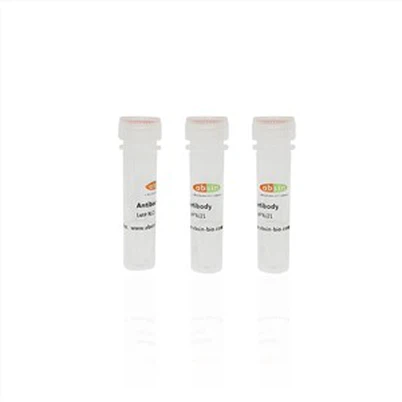
Phospho-Chk2 (Thr387) Rabbit Polyclonal Antibody#abs130661
Hey there! Just a quick heads up, the price mentioned above is only for your reference. For the detailed price, it's best to get in touch with our seller, Vecent. They'll provide you with all the information you need. Feel free to reach out to them and get an accurate quote. Data Examples This...
Description
Catalog-specification | Delivery time | USD price |
abs130661-50ug | 1-2 Weeks | 201 |
abs130661-100ug | 1-2 Weeks | 301 |
Hey there! Just a quick heads up, the price mentioned above is only for your reference. For the detailed price, it's best to get in touch with our seller, Vecent. They'll provide you with all the information you need. Feel free to reach out to them and get an accurate quote.
Overview | |
Description | Cell cycle progression is controlled by critical cell cycle regulators in order to halt in response to DNA damage and replication blocks. The gene responsible for encoding the protein is a potential tumor suppressor and serves as a cell cycle checkpoint regulator. To prevent any misunderstanding, please note that the following response is generated using a language model and may not closely resemble the original text: |
Other names | The protein known as CHK2, or checkpoint kinase 2, is a critical player in cellular signaling pathways that prevent the onset of cancer. It is also referred to as CDS1 or the Chk2 checkpoint homolog in fission yeast. This serine/threonine protein kinase is activated in response to DNA damage and plays an important role in halting the cell cycle, enabling DNA repair, and promoting cell survival. In humans, mutations in the CHK2 gene have been linked to an increased risk of breast, prostate, and other cancers. Therefore, understanding CHK2 function is critical for developing new cancer therapies and improving cancer prognosis. Additionally, checkpoint pathways involved in the regulation of cell cycle and DNA damage responses are active targets for cancer therapy, making CHK2 an important therapeutic target. |
Source | Rabbit |
Specificity | The Antibody, Phospho-Chk2 (Thr387), is designed to specifically recognize and bind to Chk2 protein that is phosphorylated at Threonine 387. It is capable of detecting the presence of endogenous Chk2 protein only when it undergoes phosphorylation at this specific site. To put it simply, the antibody is highly selective and sensitive in detecting the active, phosphorylated form of Chk2 protein at Threonine 387. |
| Reactivity | Human;Mouse;Rat |
Predictive reaction species | Xenopus;Rabbit;Pig;Dog;Sheep;Bovine;Horse |
| Antigen | Chk2 |
Application | The recommended dilutions for using this antibody are WB at a range of 1:500 to 1:2000, IHC at a range of 1:50 to 1:200, IF/ICC at a range of 1:100 to 1:500, and ELISA(peptide) at a range of 1:20000 to 1:40000. To convey the same information in a different format, one could say that this antibody should be used at dilutions of between 1 in 500 and 1 in 2000 for Western blotting, between 1 in 50 and 1 in 200 for immunohistochemistry, between 1 in 100 and 1 in 500 for immunofluorescence and immunocytochemistry, and between 1 in 20000 and 1 in 40000 for ELISA assays that use a peptide substrate. |
| Immunogen | Chk2,387。,。 |
Properties | |
| MW | 62kDa |
| Concentration | 1mg/ml |
Purification | The affinity-purified antibody was obtained from rabbit serum that underwent sequential chromatography on both phospho- and non-phospho-peptide affinity columns. This method enabled the purification of the desired antibody with high specificity and purity from other serum components. |
Clonality | Polyclonal Antibody |
| Stability & Storage | One year of storage is recommended at a temperature of -20 °C. It is important to avoid subjecting the product to repeated freeze/thaw cycles. |
Storage buffer | The provided information can be rearranged as follows: |
Target | |
Background | CHEK2 is a crucial serine/threonine-protein kinase that plays a vital role in cell cycle regulation and DNA repair. Its main functions include inducing cell cycle arrest, activating DNA repair mechanisms, and triggering apoptosis in response to DNA double-strand breaks. Additionally, it can restrict cell cycle progression during normal cellular processes. |
Tissue specificity | High expression is found in testis, spleen, colon and peripheral blood leukocytes. Low expression is found in other tissues. |
| Posttranslational modification | Phosphorylated. Phosphorylated at Ser-73 by PLK3 in response to DNA damage, promoting phosphorylation at Thr-68 by ATM and the G2/M transition checkpoint. Phosphorylation at Thr-68 induces homodimerization. Autophosphorylates at Thr-383 and Thr-387 in the T-loop/activation segment upon dimerization to become fully active and phosphorylate its substrates like for instance CDC25C. DNA damage-induced autophosphorylation at Ser-379 induces CUL1-mediated ubiquitination and regulates the pro-apoptotic function. Phosphorylation at Ser-456 also regulates ubiquitination. Phosphorylated by PLK4.Ubiquitinated. CUL1-mediated ubiquitination regulates the pro-apoptotic function. Ubiquitination may also regulate protein stability. Ubiquitinated by RNF8 via 'Lys-48'-linked ubiquitination. |
Celluar localization | Golgi apparatus;Nucleus; |
| UniPort | O96017 |
Data Examples

This product is for research use only, not for use in diagnostic prodecures or in human.
Hot Tags: phospho-chk2 (thr387) rabbit polyclonal antibody#abs130661, China phospho-chk2 (thr387) rabbit polyclonal antibody#abs130661 suppliers
Send Inquiry
You Might Also Like