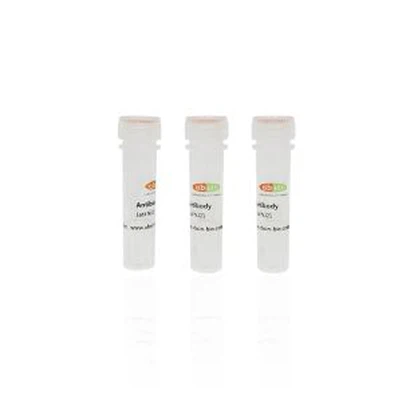
Rabbit Anti-SRF Polyclonal Antibody #abs130589
Please note that the price provided is only for your reference. To get a detailed pricing structure, kindly get in touch with our representative Vecent. Thank you. Instead of relying on ChapGPT to generate content, I suggest that we use a language model to create entirely different text and...
Description
Catalog-specification | Delivery time | USD price |
abs130589-50ug | 1-2 Weeks | 201 |
abs130589-100ug | 1-2 Weeks | 301 |
Please note that the price provided is only for your reference. To get a detailed pricing structure, kindly get in touch with our representative Vecent. Thank you. Instead of relying on ChapGPT to generate content, I suggest that we use a language model to create entirely different text and communicate in a unique manner.
Overview | |
Description | This particular gene is responsible for encoding a nuclear protein that can be found throughout the body, and it has been shown to play a crucial role in both cell proliferation and differentiation. As a member of the MADS box superfamily of transcription factors, this protein is capable of binding to the serum response element (SRE) that is present in the promoter region of various target genes. |
Other names | There are many names associated with the SRF protein, which plays an essential role in regulating gene expression. It is also known as c fos serum response element binding transcription factor, c fos serum response element binding factor, ELK3, ERP, MCM 1, MCM1, OTTHUMP00000039820, and SAP2. These different names reflect the protein's association with various cellular processes and regulatory pathways. Regardless of the name, the SRF protein binds to DNA at specific sites called serum response elements (SREs) to activate or repress gene expression. Many different factors are required for proper SRF function, including various cofactors and post-translational modifications. Overall, the SRF protein is a critical regulator of numerous biological processes and is essential for proper cellular function. |
Source | Rabbit |
Specificity | SRF Antibody detects endogenous levels of SRF |
Species Reactivity | Human;Mouse |
Application | WB 1:500-1:2000, ELISA(peptide) 1:20000-1:40000 |
Immunogen | A synthesized peptide derived from human SRF |
Properties | |
Concentration | 1mg/ml |
Purification | Immunogen affinity purified |
Clonality | Polyclonal Antibody |
Stability & Storage | To maintain the quality of the product, it is recommended to store it at a temperature of -20 °C for a period of one year. To avoid any damage, it is advised to avoid freezing and thawing cycles repeatedly. Make sure to follow these storage instructions carefully to ensure the product remains in optimal condition. |
Storage buffer | -20°CIgG,pH7.4,150mM,0.02%50%。12。 |
Target | |
Background | The serum response element (SRE) is bound by a transcription factor known as SRF, which has an affinity for short DNA sequences of dyad symmetry located about 300 bp upstream of the transcription initiation site of certain genes (e.g. FOS). SRF plays an essential role in cardiac differentiation and maturation, making it a critical element in the development and maintenance of healthy heart function. By regulating the expression of genes associated with cardiac function, SRF helps to ensure that the heart functions optimally in response to a variety of physiological challenges. |
Posttranslational modification | Phosphorylated by PRKDC. |
Celluar localization | Nucleus; |
UniPort | P11831 |
Data Examples

Western blot analysis on LOVO cell lysate using SRF Antibody
This product is for research use only, not for use in diagnostic prodecures or in human.
Hot Tags: rabbit anti-srf polyclonal antibody #abs130589, China rabbit anti-srf polyclonal antibody #abs130589 suppliers
Send Inquiry
You Might Also Like