

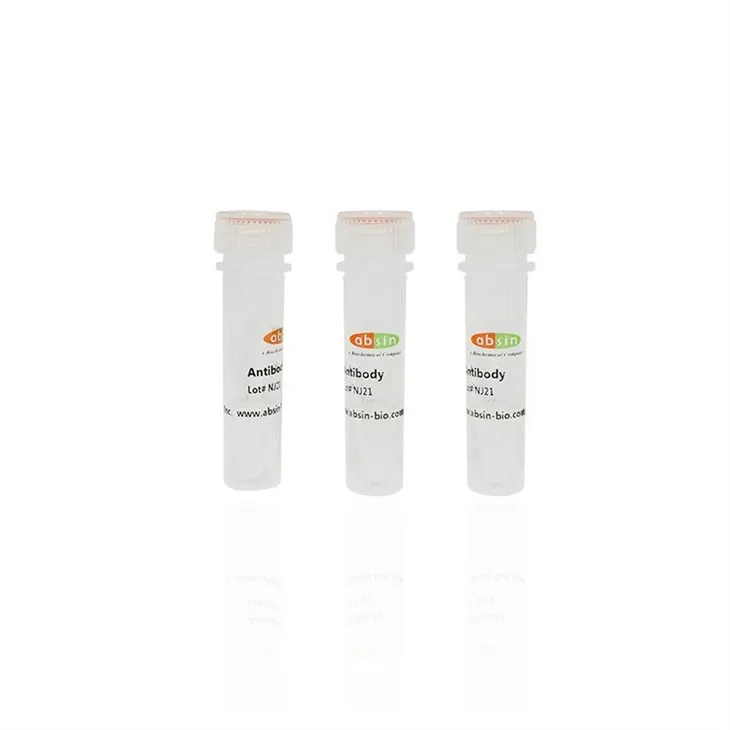
Rabbit Anti-CD166 Polyclonal Antibody#abs132689
Please note that the price mentioned above is only for your reference. For the specific details of the price, kindly get in touch with our seller Vecent. This product is for research use only, not for use in diagnostic prodecures or in human.
Description
| Catalog-specification | Delivery time | USD price |
abs132689-50ug | 1-2 Weeks | 201.0 |
abs132689-100ug | 1-2 Weeks | 301.0 |
Please note that the price mentioned above is only for your reference. For the specific details of the price, kindly get in touch with our seller Vecent.
| Overview | |
catalog | abs132689 |
Description | A molecule responsible for cell adhesion is known to specifically bind to CD6. Through both heterophilic and homophilic interactions, it facilitates the extension of neurites by neurons. This molecule likely plays a role in the interaction between T- and B-cells with activated leukocytes. Moreover, it is significant in mediating communication between different cells of the nervous system. |
| Other names | ALCAM is an acronym for Activated Leukocyte Cell Adhesion Molecule. This molecule is also sometimes referred to as ALCAM protein or CD166 antigen. Another name for this protein is CD166. ALCAM is encoded by the FLJ3851 gene and is also sometimes referred to as FLJ38514 or MGC71733. ALCAM is an important protein involved in cell-cell adhesion and plays a key role in a variety of physiological processes. |
| Source | Rabbit |
| Specificity | The total CD166 can be detected by using CD166 antibody, which is capable of identifying endogenous levels of this protein. In other words, this antibody targets all forms of CD166 present within the sample. |
| Species Reactivity | Human;Mouse;Rat |
| Antigen | CD166 |
| Application | WB 1:500-1:2000, ELISA(peptide) 1:20000-1:40000 |
| Immunogen | A synthesized peptide. |
| MW | 100-105 kDa |
| Properties | |
Concentration | 1mg/ml |
| purification | Peptide affinity chromatography was utilized to purify the antiserum, and SulfoLink™ Coupling Resin was employed in this process. |
| Clonality | Polyclonal Antibody |
| Stability & Storage | To maintain quality, it is recommended to store at a temperature of -20 °C for a duration of one year. It is important to avoid subjecting the product to repeated cycles of freezing and thawing. |
| Storage buffer | The solution contains Rabbit IgG in a phosphate-buffered saline with a pH value of 7.4 and a concentration of 150 mM of NaCl. Additionally, it contains 0.02% sodium azide, 50% glycerol, and is free of any other preservatives or additives. The Rabbit IgG is highly purified and is suitable for a variety of applications in research and diagnostic settings. The solution is stored at -20°C to ensure maximum stability and should be thawed before use. |
Target | |
Background | Cell adhesion molecule that mediates both heterotypic cell-cell contacts via its interaction with CD6, as well as homotypic cell-cell contacts (PubMed:7760007, PubMed:15496415, PubMed:15048703, PubMed:16352806, PubMed:23169771, PubMed:24945728). Promotes T-cell activation and proliferation via its interactions with CD6 (PubMed:15048703, PubMed:16352806, PubMed:24945728). Contributes to the formation and maturation of the immunological synapse via its interactions with CD6 (PubMed:15294938, PubMed:16352806). Mediates homotypic interactions with cells that express ALCAM (PubMed:15496415, PubMed:16352806). Required for normal hematopoietic stem cell engraftment in the bone marrow (PubMed:24740813). Mediates attachment of dendritic cells onto endothelial cells via homotypic interaction (PubMed:23169771). Inhibits endothelial cell migration and promotes endothelial tube formation via homotypic interactions (PubMed:15496415, PubMed:23169771). Required for normal organization of the lymph vessel network. Required for normal hematopoietic stem cell engraftment in the bone marrow. Plays a role in hematopoiesis; required for normal numbers of hematopoietic stem cells in bone marrow. Promotes in vitro osteoblast proliferation and differentiation (By similarity). Promotes neurite extension, axon growth and axon guidance; axons grow preferentially on surfaces that contain ALCAM. Mediates outgrowth and pathfinding for retinal ganglion cell axons (By similarity). |
| Tissue specificity | Detected on hematopoietic stem cells derived from umbilical cord blood (PubMed:24740813). Detected on lymph vessel endothelial cells, skin and tonsil (PubMed:23169771). Detected on peripheral blood monocytes (PubMed:15048703). Detected on monocyte-derived dendritic cells (at protein level) (PubMed:16352806). Detected at low levels in spleen, placenta, liver (PubMed:9502422). Expressed by activated T-cells, B-cells, monocytes and thymic epithelial cells (PubMed:7760007). Isoform 1 and isoform 3 are detected in vein and artery endothelial cells, astrocytes, keratinocytes and artery smooth muscle cells (PubMed:15496415). Expressed by neurons in the brain. Restricted expression in tumor cell lines. Detected in highly metastasizing melanoma cell lines (PubMed:9502422). |
| Posttranslational modification | Glycosylated. |
| Celluar localization | Extracellular region or secreted;Plasma Membrane; |
| UniPort | Q13740 |
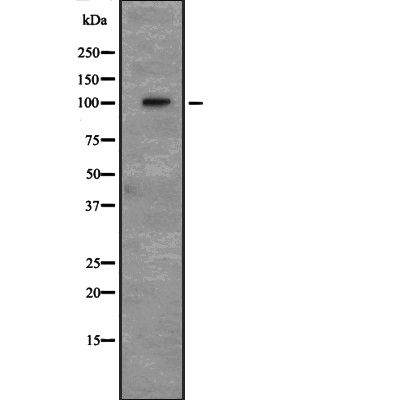
| Western blot analysis of CD166 expression in HEK293 cells ,The lane on the left is treated with the antigen-specific peptide. |
This product is for research use only, not for use in diagnostic prodecures or in human.
Hot Tags: rabbit anti-cd166 polyclonal antibody#abs132689, China rabbit anti-cd166 polyclonal antibody#abs132689 suppliers
Send Inquiry
You Might Also Like
-
Rabbit Anti-TIMP1 Polyclonal Antibody#abs131990
-

Phospho-Catenin-beta (Ser37) Rabbit Polyclonal Antib...
-
Rabbit Anti-COX6C Polyclonal Antibody #abs130556
-

Rabbit Anti-TTF2 Polyclonal Antibody #abs130545
-
Rabbit Anti-Involucrin Polyclonal Antibody #abs130123
-
Rabbit Anti-beta Actin Polyclonal Antibody #abs119600