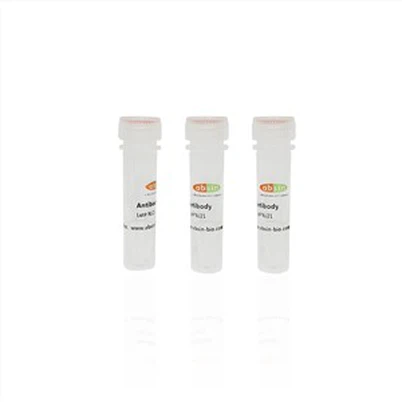
Rabbit Anti-AurA Polyclonal Antibody#abs131422
Please note that the price mentioned above is only for your reference. For the detailed price, we recommend you to get in touch with our seller Vecent. They will be happy to assist you with all the information you need. It's important to know that the quote may vary depending on various factors,...
Description
| Catalog-specification | Delivery time | USD price |
abs131422-100ug | 1-2 Weeks | 301.0 |
abs131422-50ug | 1-2 Weeks | 201.0 |
Please note that the price mentioned above is only for your reference. For the detailed price, we recommend you to get in touch with our seller Vecent. They will be happy to assist you with all the information you need. It's important to know that the quote may vary depending on various factors, so we advise you to contact our seller for accurate pricing details. Thank you for considering our product, and we look forward to hearing from you soon.
| Overview | |
catalog | abs131422 |
Description | This protein plays a crucial role in regulating the progression of the cell cycle and ensuring normal mitosis. Throughout mitosis, it associates with the centrosome and the spindle microtubules to aid in centrosome maturation, spindle assembly, maintenance of spindle bipolarity, centrosome separation, as well as mitotic checkpoint control. |
| Other names | Aurora kinase A, also known as AURKA or AURA, is a protein involved in cell division and regulation. It belongs to the family of serine/threonine kinases and plays a crucial role in the control of mitosis. The gene encoding AURKA is often amplified in breast tumors, leading to increased levels of the protein in cancer cells. AURKA is also known as STK15 or STK6 and is closely related to another kinase called Aurora-related kinase 1 (ARK-1). It is involved in multiple cellular processes and is regulated by a protein called PPP1R47, which acts as a regulatory subunit. The function of AURKA is mediated through the phosphorylation of various target proteins. It is essential for proper cell division and is highly expressed in actively dividing cells. AURKA has been extensively studied and is considered a potential target for cancer therapy. |
| Source | Rabbit |
| Specificity | The AurA Antibody is capable of detecting total endogenous levels of AurA. This means that it can effectively locate and identify all existing AurA proteins within a sample. If one wishes to analyze and study AurA, their research will undoubtedly benefit from utilizing this specific antibody. It is important to note that this antibody is designed to recognize only AurA, and should not be used to analyze other proteins. |
| Species Reactivity | Human;Mouse;Rat |
| Predictive reaction species | Pig;Dog;Horse |
| Antigen | AurA |
| Application | The suggested dilution ratios for Western blot (WB) range from 1:500 to 1:2000. For immunofluorescence (IF) or immunocytochemistry (ICC), the recommended dilution ratios are 1:100 to 1:500. As for ELISA using peptide, an appropriate dilution range would be 1:20000 to 1:40000. It is important to note that these dilution ratios are based on the original text information. |
| Immunogen | A synthesized peptide derived from human AurA. |
| MW | 46 kDa |
| Properties | |
Concentration | 1mg/ml |
| purification | The antiserum was purified by peptide affinity chromatography using SulfoLink™ Coupling Resin . |
| Clonality | Polyclonal Antibody |
| Stability & Storage | Store at -20 °C for one year. Avoid repeated freeze/thaw cycles |
| Storage buffer | Rabbit IgG in phosphate buffered saline , pH 7.4, 150mM NaCl, 0.02% sodium azide and 50% glycerol.Store at -20 °C.Stable for 12 months from date of receipt. |
Target | |
Background | Mitotic serine/threonine kinase that contributes to the regulation of cell cycle progression. Associates with the centrosome and the spindle microtubules during mitosis and plays a critical role in various mitotic events including the establishment of mitotic spindle, centrosome duplication, centrosome separation as well as maturation, chromosomal alignment, spindle assembly checkpoint, and cytokinesis. Required for initial activation of CDK1 at centrosomes. Phosphorylates numerous target proteins, including ARHGEF2, BORA, BRCA1, CDC25B, DLGP5, HDAC6, KIF2A, LATS2, NDEL1, PARD3, PPP1R2, PLK1, RASSF1, TACC3, p53/TP53 and TPX2. Regulates KIF2A tubulin depolymerase activity. Required for normal axon formation. Plays a role in microtubule remodeling during neurite extension. Important for microtubule formation and/or stabilization. Also acts as a key regulatory component of the p53/TP53 pathway, and particularly the checkpoint-response pathways critical for oncogenic transformation of cells, by phosphorylating and stabilizing p53/TP53. Phosphorylates its own inhibitors, the protein phosphatase type 1 (PP1) isoforms, to inhibit their activity. Necessary for proper cilia disassembly prior to mitosis. |
| Tissue specificity | Highly expressed in testis and weakly in skeletal muscle, thymus and spleen. Also highly expressed in colon, ovarian, prostate, neuroblastoma, breast and cervical cancer cell lines. |
| Posttranslational modification | Activated by phosphorylation at Thr-288; this brings about a change in the conformation of the activation segment. Phosphorylation at Thr-288 varies during the cell cycle and is highest during M phase. Autophosphorylated at Thr-288 upon TPX2 binding. Thr-288 can be phosphorylated by several kinases, including PAK and PKA. Protein phosphatase type 1 (PP1) binds AURKA and inhibits its activity by dephosphorylating Thr-288 during mitosis. Phosphorylation at Ser-342 decreases the kinase activity. PPP2CA controls degradation by dephosphorylating Ser-51 at the end of mitosis.Ubiquitinated by the E3 ubiquitin-protein ligase complex SCF(FBXL7) during mitosis, leading to its degradation by the proteasome. Ubiquitinated by CHFR, leading to its degradation by the proteasome (By similarity). Ubiquitinated by the anaphase-promoting complex (APC), leading to its degradation by the proteasome. |
| Celluar localization | Cytoskeleton;Cytosol;Nucleus; |
| UniPort | O14965 |

Western blot analysis of AurA expression in COS7 cells
This product is for research use only, not for use in diagnostic prodecures or in human.
Hot Tags: rabbit anti-aura polyclonal antibody#abs131422, China rabbit anti-aura polyclonal antibody#abs131422 suppliers
Send Inquiry
You Might Also Like