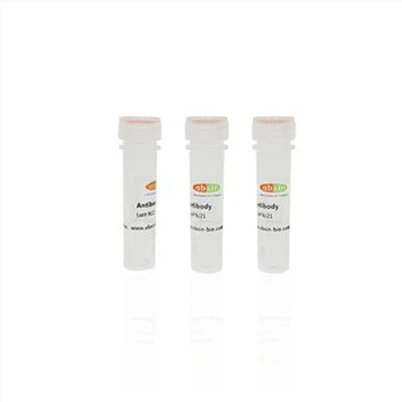
Phospho-p130 Cas (Tyr410) Rabbit Polyclonal Antibody#abs130975
Please note that the price mentioned above is for your reference only. For detailed pricing information, we invite you to contact our seller, Vecent. We assure you that they will provide you with all the necessary information you need. So, don't hesitate to give them a call to get a clearer...
Description
Catalog-specification | Delivery time | USD price |
abs130975-50ug | 1-2 Weeks | 201 |
abs130975-100ug | 1-2 Weeks | 301 |
Please note that the price mentioned above is for your reference only. For detailed pricing information, we invite you to contact our seller, Vecent. We assure you that they will provide you with all the necessary information you need. So, don't hesitate to give them a call to get a clearer understanding of the prices and other related details.
Overview | |
Description | This protein acts as a hub for multiple protein-protein interactions and is heavily involved in cell signaling processes revolving around tyrosine kinases and cell adhesion. Its essential role in coordinating these events makes it a pivotal factor in inducing cell migration. |
Other names | p130Cas is a protein that plays a significant role in breast cancer anti-estrogen resistance. It belongs to the CAS scaffolding protein family and is also known as BCAR1 or BCAR1_HUMAN. The primary function of p130Cas is to regulate cellular activities associated with breast cancer progression and resistance to estrogen therapy. |
Source | Rabbit |
Specificity | The Antibody for Phospho-p130 Cas (Tyr410) is able to identify p130 Cas at its natural levels only when it has been phosphorylated at Tyrosine 410. This means it is able to detect the specific modification of the p130 Cas that occurs at this site. |
| Reactivity | Human;Mouse;Rat |
Predictive reaction species | Pig |
| Antigen | p130 Cas |
Application | For detecting our target protein, recommended dilutions for western blotting are 1:500 to 1:2000, for immunohistochemistry are 1:50 to 1:200, for immunofluorescence and immunocytochemistry are 1:100 to 1:500, and for ELISA using peptide antigen are 1:20000 to 1:40000. Please ensure to follow the recommended protocol and optimize the dilution according to your experimental conditions. |
| Immunogen | A peptide has been synthesized from human p130 Cas, specifically focusing on the phosphorylation site of Tyrosine 410. The synthesized peptide closely resembles the original sequence and has been created using advanced laboratory techniques. This peptide is expected to serve as a crucial tool for researchers in further understanding the role of p130 Cas phosphorylation at Tyrosine 410 and its implications in various cellular processes. Overall, the synthesized peptide is a promising contribution to the scientific community's ongoing efforts towards advancing our understanding of human biology. |
Properties | |
| MW | 130kDa |
| Concentration | 1mg/ml |
Purification | We performed sequential chromatography on phospho- and non-phospho-peptide affinity columns to purify the antibody from rabbit serum. The purification process involved affinity purification using purified rabbit serum. |
Clonality | Polyclonal Antibody |
| Stability & Storage | To ensure the preservation of the product, it is recommended to store it at a temperature of -20 °C for a period of one year. It is important to avoid subjecting the product to multiple cycles of freezing and thawing. |
Storage buffer | This rabbit IgG is stored in a buffer containing phosphate and saline, with a pH of 7.4, 150mM NaCl, 0.02% sodium azide and 50% glycerol, and can be stored safely at -20°C. It can remain stable for up to 12 months from the day of its receipt. |
Target | |
Background | This protein acts as a crucial mediator of signal transduction in tyrosine kinase-related cellular signaling pathways, particularly those involved in cell adhesion. It is also associated with the promotion of cell migration. Breast cancer cells that exhibit high levels of this protein have demonstrated resistance to antiestrogen treatment. |
Tissue specificity | Widely expressed with an abundant expression in the testis. Low level of expression seen in the liver, thymus, and peripheral blood leukocytes. The protein has been detected in a B-cell line. |
| Posttranslational modification | PTK2/FAK1 activation mediates phosphorylation at the YDYVHL motif; phosphorylation is most likely catalyzed by SRC family members. SRC-family kinases are recruited to the phosphorylated sites and can phosphorylate other tyrosine residues. Tyrosine phosphorylation is triggered by integrin-mediated adhesion of cells to the extracellular matrix.Dephosphorylated by PTPN14 at Tyr-128. |
Celluar localization | Cytoskeleton;Cytosol; |
| UniPort | P56945 |
Data Examples

Western blot analysis of p130 Cas phosphorylation expression in NIH-3T3 whole cell lysates,The lane on the left is treated with the antigen-specific peptide.
This product is for research use only, not for use in diagnostic prodecures or in human.
Hot Tags: phospho-p130 cas (tyr410) rabbit polyclonal antibody#abs130975, China phospho-p130 cas (tyr410) rabbit polyclonal antibody#abs130975 suppliers
Send Inquiry
You Might Also Like