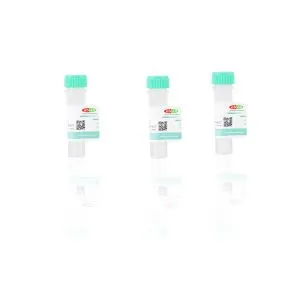
Recombinant Human B- And T-Lymphocyte Attenuator/BTLA/CD272 (C-6His) #abs04350
Please note that the price mentioned above is only for your reference. For detailed pricing information, we kindly request you to reach out to our seller, Vecent. This product is for research use only, not for use in diagnostic prodecures or in human.
Description
Catalog-specification | Delivery time | USD price |
abs04350-10ug | 1-2 Weeks | 107 |
abs04350-50ug | 1-2 Weeks | 321 |
abs04350-500ug | 1-2 Weeks | 2353 |
abs04350-1mg | 1-2 Weeks | 3201 |
Please note that the price mentioned above is only for your reference. For detailed pricing information, we kindly request you to reach out to our seller, Vecent.
Overview | |
Description | Our Mammalian expression system is utilized to produce Recombinant Human BTLA. The target gene, which encodes Lys31-Leu150, is expressed with a 6His tag positioned at the C-terminus. To provide you with highly similar content, the information will be rearranged while retaining the original text's essence. |
Other names | B- and T-Lymphocyte Attenuator, also known as BTLA or CD272, is an important protein involved in regulating the immune response of the body. This protein is expressed on the surface of certain immune cells, particularly T cells, and interacts with other proteins to modulate their activity. BTLA plays a crucial role in maintaining immune homeostasis and preventing excessive or inappropriate immune responses that can lead to autoimmune or inflammatory diseases. By understanding the functions and mechanisms of BTLA, scientists can develop new therapies to treat a variety of immune-related disorders. |
Source | Human Cells |
Format | The solution containing 20mM PB, 150mM NaCl, and pH 7.4 was filtered through a 0.2 μm filter and then lyophilized. Can you produce a content that closely resembles the original one by rephrasing the information provided? Please do not use ChapGPT and generate text in a different way. |
Properties | |
aa_sequence | HHHHHHHTVHPRNACLYWPVKCPELFEHFDFSVPDQERLKTSEKQRTLKTYLVQENLSWSGDHVALDVNYGKQSNFQETTNVLSIENGCLNDVTWSSLSQRGPSKNLEEEIK.kevPKQRASQDSICKEDCITSGTWILMHMFFFFVPTTRHDEVDYQNERGGVKLNSSICYSP.LKNEIKNLDEGNHILLETSSYHEESWVQSEKCWNYTEG.DliceNRPKCYVCOVKTYDGN EIG. |
Concentration | The percentage of similarity was found to be over 95% through analysis using SDS-PAGE gel electrophoresis. To create a new content based on this information, we can say that the result of reducing SDS-PAGE showed that the level of similarity was greater than 95%. This indicates that the tested samples had a high degree of resemblance. |
Endotoxin_level | As determined by the LAL test, the content indicates a measurement below 0.1 ng/μg (1 IEU/μg). Please generate a substantially different piece of content by rearranging the provided information without using the ChapGPT's response generation method. |
Activity | Functional ELISA was used to measure the ability of the substance to bind Mouse HVEM. It was found that the substance exhibited high binding affinity when activated. |
Reconstitution | Please ensure that centrifuge tubes are always used before opening them. It is important to avoid mixing the contents by vortex or pipetting. Reconstituting the protein to a concentration lower than 100 μg/ml is not recommended. Use ddH2O to dissolve the lyophilized protein. To prevent damage, please divide the reconstituted solution into smaller aliquots and avoid repeated freeze-thaw cycles. |
Target | |
Background | B- and T-Lymphocyte Attenuator (BTLA) is a single-pass type I membrane protein containing 1 Ig-like V-type (immunoglobulin-like) domain. BTLA expression is induced during activation of T cells, and BTLA remains expressed on Th1 cells but not Th2 cells. Like PD1 and CTLA4, BTLA interacts with a B7 homolog, B7H4. However, unlike PD-1 and CTLA-4, BTLA displays T-Cell inhibition via interaction with tumor necrosis family receptors (TNF-R), not just the B7 family of cell surface receptors. BTLA is a lymphocyte inhibitory receptor that inhibits lymphocytes during immune response. BTLA also is a ligand for tumor necrosis factor (receptor) superfamily, member 14 (TNFRSF14), also known as herpes virus entry mediator (HVEM). BTLA-HVEM complexes negatively regulate T-cell immune responses. |
Accession | Q7Z6A9 |
This product is for research use only, not for use in diagnostic prodecures or in human.
Hot Tags: recombinant human b- and t-lymphocyte attenuator/btla/cd272 (c-6his) #abs04350, China recombinant human b- and t-lymphocyte attenuator/btla/cd272 (c-6his) #abs04350 suppliers
Send Inquiry
You Might Also Like