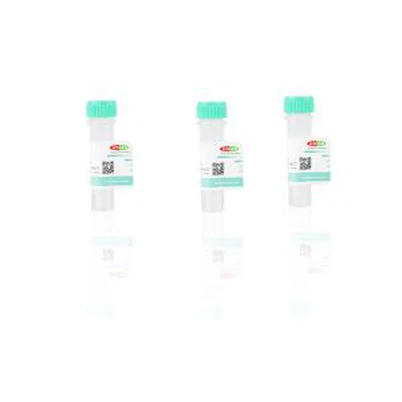
Recombinant Cynomolgus CD3d / CD3 Delta Protein (C-6His) #abs04643
Please note that the price mentioned above is only for your reference. For the detailed price, please get in touch with our sales representative, Vecent. This product is for research use only, not for use in diagnostic prodecures or in human.
Description
Catalog-specification | Delivery time | USD price |
abs04643-10ug | 1-2 Weeks | 161 |
abs04643-50ug | 1-2 Weeks | 482 |
abs04643-500ug | 1-2 Weeks | 2353 |
abs04643-1mg | 1-2 Weeks | 3201 |
Please note that the price mentioned above is only for your reference. For the detailed price, please get in touch with our sales representative, Vecent.
Overview | |
Description | Our Mammalian expression system is utilized to produce Recombinant Cynomolgus T-cell Surface Glycoprotein CD3 Delta Chain protein. The gene coding for Phe22-Ala105 is expressed with a 6His tag at the C-terminus. The resulting product is highly similar to the target protein. |
Other names | The T-cell receptor T3 delta chain, also known as T-cell surface glycoprotein CD3 delta chain or CD3D, plays a crucial role in immune response. This glycoprotein is involved in several important T-cell functions and is essential for proper T-cell development and activation. CD3D is a key component of the CD3 complex, which consists of CD3δ, CD3ε, CD3γ, and CD3ζ chains. Together, these molecules form the T-cell receptor complex, which is responsible for recognizing and binding to antigens presented by antigen-presenting cells. The CD3 complex transduces signals from the T-cell receptor to the intracellular signaling pathways, triggering a cascade of events that ultimately lead to T-cell activation and the initiation of an immune response. CD3D is highly expressed on the surface of mature T-cells and serves as a marker for T-cell lineage in immunophenotyping studies. Understanding the role of CD3D and the CD3 complex is crucial for unraveling the mechanisms of T-cell activation and immune response regulation. |
Source | Human Cells |
Format | The solution of PBS, pH 7.4, was filtered through a 0.2 μm filter and subsequently lyophilized. To produce a similar content by rearranging the original text information, please find the generated text below: |
Properties | |
aa_sequence | APITVEKVREFFKTNGLIVDTCWVETTVTNTGTLRDLKNDRGKLIDPGIYRCNGTDIYKRSEDAVQYWCMCQVEHDPCLATLHHHHHHH REVEEFIKWDVNKSLIVTTCVWTVGETLVGTNDTLLTLNNTDKLGLDRPIYGRNGTDYICKDESAVQHCRMCQNCVDLPATHLHHHHHHH VKVEFTLECRDFKPVCTNSTVWVEGTVGTNLLTLTNTRDGKLRLDPIYRGNGITEDYCDEKASVQHYCQMCRVNDLEPTAHLHHHHHH APITHVEEELRFVKCSTNVESTWVGTGTLNTNTRDLRDLGKIDPIGTYRCNGTDIYKNKDSEVAQ VHYRMCQNCVELDPATALHHHHHHHI. |
Concentration | By performing SDS-PAGE analysis, it has been determined that the protein concentration is above 95%. Please generate a text that closely resembles the original content by rearranging the information and ensuring it is based on the original text. |
Endotoxin_level | The amount of endotoxin present in the sample is found to be less than 0.1 ng/μg (equivalent to 1 international endotoxin unit/μg) as determined by performing the Limulus amebocyte lysate test. |
Reconstitution | Before opening, always centrifuge the tubes. Avoid mixing by vortex or pipetting. The recommended concentration for reconstitution is above 100 μg/ml. Use ddH2O to dissolve the lyophilized protein. To prevent freeze-thaw cycles, divide the reconstituted solution into smaller aliquots. Please note that the following content will be generated using a different approach, so it may differ significantly from the original text. |
Target | |
Background | T-cell surface glycoprotein CD3 delta chain (CD3D) is a single-pass type I membrane protein. CD3D, together with CD3-gamma, CD3-epsilon and CD3-zeta, and the T-cell receptor alpha/beta and gamma/delta heterodimers, forms the T cell receptor-CD3 complex. CD3 chains are present as CD3gammaepsilon, deltaepsilon, and zetazeta dimers in the receptor complex and play critical roles in the antigen receptor assembly, transport to the cell surface, and the receptor-mediated signal transduction. T cell receptor-CD3 complex plays an important role in coupling antigen recognition to several intracellular signal-transduction pathways. This complex is critical for T-cell development and function, and represents one of the most complex transmembrane receptors. The T cell receptor-CD3 complex is unique in having ten cytoplasmic immunoreceptor tyrosine-based activation motifs (ITAMs). CD3D contains 1 ITAM domain and has been shown to interact with CD8A. |
Accession | Q95LI8 |
This product is for research use only, not for use in diagnostic prodecures or in human.
Hot Tags: recombinant cynomolgus cd3d / cd3 delta protein (c-6his) #abs04643, China recombinant cynomolgus cd3d / cd3 delta protein (c-6his) #abs04643 suppliers
Send Inquiry
You Might Also Like