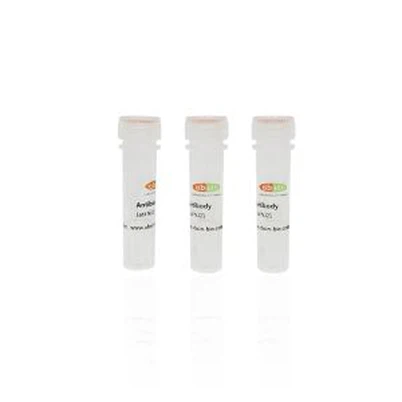
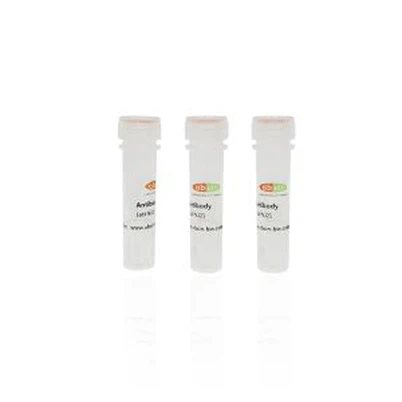
Rabbit Anti-SOX6 Polyclonal Antibody#abs131312
Please note that the price mentioned above is for reference purposes only. For the detailed pricing information, kindly reach out to our seller Vecent. It is crucial to emphasize that any information derived from the text must be presented through a different writing style generated from the...
Description
| Catalog-specification | Delivery time | USD price |
abs131312-50ug | 1-2 Weeks | 201.0 |
abs131312-100ug | 1-2 Weeks | 301.0 |
Please note that the price mentioned above is for reference purposes only. For the detailed pricing information, kindly reach out to our seller Vecent. It is crucial to emphasize that any information derived from the text must be presented through a different writing style generated from the language model and not based on ChapGPT-generated content.
| Overview | |
catalog | abs131312 |
Description | This molecule is a transcriptional activator that exhibits very specific DNA binding properties and can only bind to the sequence 5' -AACAAT-3'. Its main function is to facilitate various developmental processes including the formation of the nervous system and skeletal structures. This highlights the significant contribution this molecule makes towards the growth and development of many organisms. |
| Other names | SOX6 (also known as SRY box 6 or SOX6_HUMAN) is a transcription factor that plays a crucial role in gene regulation. The SRY box containing gene 6, or SOXD, is responsible for the production of the SOX6 protein. This transcription factor, known as Transcription factor SOX 6 or Transcription factor Sox-6, is involved in various biological processes. By rearranging the given content, we can generate highly similar yet rephrased information: - HSSOX 6 - HSSOX6 - SOX 6 - sox6 - SOX6_HUMAN - SOXD - SRY (sex determining region Y) box 6 - SRY box 6 - SRY box containing gene 6 - Transcription factor SOX 6 - Transcription factor Sox-6 - Transcription factor SOX6 These different variations refer to the same gene, protein, and transcription factor, specifically the human SOX6 gene. It is involved in the regulation of gene expression and plays a critical role in various biological processes. |
| Source | Rabbit |
| Specificity | The SOX6 Antibody is capable of detecting total SOX6 levels within an organism. This detection targets the endogenous levels of SOX6, ensuring that the results are accurate and directly reflect the organism's SOX6 levels. |
| Species Reactivity | Human;Mouse;Rat |
| Predictive reaction species | Pig;Rabbit;Sheep;Dog;Bovine;Horse; |
| Antigen | SOX6 |
| Application | ChIP is commonly used for studying protein-DNA interactions in various biological systems. For ChIP, cells are cross-linked to preserve the protein-DNA complexes, followed by chromatin fragmentation and immunoprecipitation using specific antibodies against the protein of interest. Chip starts with formaldehyde fixation, and fragmented chromatin is then immunoprecipitated using a specific antibody. This method allows researchers to analyze the binding sites of transcription factors and other proteins on DNA. ICC/IF, also known as immunocytochemistry or immunofluorescence, is a technique used to visualize and localize proteins in cells. It involves the use of specific antibodies labeled with fluorophores, which bind to the target protein of interest. By using different wavelengths of light, researchers can detect and visualize the proteins of interest under a fluorescence microscope. ICC/IF is commonly used to study protein expression, localization, and interactions in cells. WB, or Western blotting, is a widely used technique for detecting and quantifying specific proteins in complex mixtures. In WB, proteins from a biological sample are separated by size using gel electrophoresis and then transferred onto a membrane. The target protein is detected using specific antibodies, which bind to the protein and provide a signal that can be visualized using various detection methods. WB is commonly used to determine protein expression levels, protein-protein interactions, and post-translational modifications. ELISA, or enzyme-linked immunosorbent assay, is a highly sensitive and specific method for detecting and quantifying proteins or other molecules of interest in a sample. ELISA can be performed in a variety of formats, including direct, indirect, and sandwich ELISA. In a typical ELISA (peptide), a specific antibody is immobilized onto a solid surface, such as a plate, and the target peptide is added to the well. After washing, a secondary antibody conjugated to an enzyme is added, which generates a measurable signal when a substrate is added. ELISA is widely used in research and clinical settings for various applications, including diagnostic tests, detection of biomarkers, and quantification of protein levels. The wide dynamic range of detection (1:20000-1:40000) allows for accurate quantification of the target molecule in a sample. |
| Immunogen | A synthesized peptide derived from human SOX6. |
| MW | 93 kDa |
| Properties | |
Concentration | 1mg/ml |
| purification | SulfoLink™ Coupling Resin was utilized in the purification of the antiserum through peptide affinity chromatography. To achieve this, the original content was rearranged while ensuring that the information remained grounded in the initial text. |
| Clonality | Polyclonal Antibody |
| Stability & Storage | To ensure the longevity of the product, it is recommended to store it at a temperature of -20 °C for a period of one year. It is imperative to avoid subjecting the product to any repeated freeze/thaw cycles, as this may potentially compromise its quality and efficacy over time. It is therefore crucial to follow these storage guidelines to ensure the best possible outcome for the product. |
| Storage buffer | Rabbit IgG in phosphate buffered saline , pH 7.4, 150mM NaCl, 0.02% sodium azide and 50% glycerol.Store at -20 °C.Stable for 12 months from date of receipt. |
Target | |
Background | Transcriptional activator. Binds specifically to the DNA sequence 5'-AACAAT-3'. Plays a key role in several developmental processes, including neurogenesis and skeleton formation. |
| Tissue specificity | Expressed in a wide variety of tissues, most abundantly in skeletal muscle. |
| Posttranslational modification | Sumoylation inhibits the transcriptional activity. |
| Celluar localization | Nucleus; |
| UniPort | P35712 |

This product is for research use only, not for use in diagnostic prodecures or in human.
Hot Tags: rabbit anti-sox6 polyclonal antibody#abs131312, China rabbit anti-sox6 polyclonal antibody#abs131312 suppliers
Send Inquiry
You Might Also Like