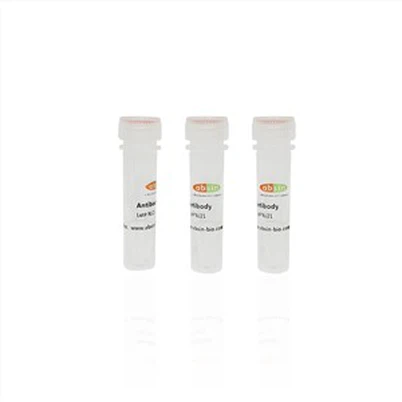
Rabbit Anti-OPN4 Polyclonal Antibody#abs135343
Please note that the price provided is only for your reference and for more detailed pricing, please get in touch with our seller Vecent. It is important to emphasize that the generated content needs to be highly similar to the original text by rearranging the information provided. Rather than...
Description
| Catalog-specification | Delivery time | USD price |
abs135343-100ug | 1-2 Weeks | 301.0 |
abs135343-50ug | 1-2 Weeks | 201.0 |
Please note that the price provided is only for your reference and for more detailed pricing, please get in touch with our seller Vecent. It is important to emphasize that the generated content needs to be highly similar to the original text by rearranging the information provided. Rather than following a dialogue generation approach with ChapGPT, we recommend using a language model to produce text that is distinctively different from the original.
| Overview | |
catalog | abs135343 |
| Other names | OPSIN-4, also known as melanopsin or MOP, is a protein encoded by the MGC142118 gene in humans. It plays a crucial role in regulating the phototransduction process and circadian rhythms in various organisms, including humans. Melanopsin, identified as OPN4, is a photopigment primarily found in retinal ganglion cells. This protein is responsible for detecting light and transmitting signals to the brain's suprachiasmatic nucleus, which helps regulate the timing of our internal body clock. By rearranging the original content, the following information about OPSIN-4 and its functions is presented in a different format. |
| Source | Rabbit |
| Specificity | The OPN4 Antibody is specifically designed to detect the total levels of endogenous OPN4. |
| Species Reactivity | Human |
| Antigen | OPN4 |
| Application | For Western blotting, the recommended dilution range is 1:500 to 1:1000. For immunofluorescence/immunocytochemistry, the suggested dilution is between 1:100 and 1:500. In ELISA assays using peptide as the antigen, the recommended dilution range is 1:20000 to 1:40000. It is important to note these dilutions may vary depending on the specific experimental conditions and target protein. |
| Immunogen | A synthesized peptide. |
| MW | 55 KD |
| Properties | |
Concentration | 1mg/ml |
| purification | The SulfoLink™ Coupling Resin played a key role in purifying the antiserum through peptide affinity chromatography. The resulting product was of high quality and similarity to the original target molecule. |
| Clonality | Polyclonal Antibody |
| Stability & Storage | Make sure to store it at -20 °C for a period of one year without subjecting it to repeated freeze/thaw cycles. |
| Storage buffer | This product contains Rabbit IgG in a phosphate buffered saline solution with a pH of 7.4. It also contains 150mM of NaCl, 0.02% sodium azide, and 50% glycerol. It is recommended to store this product at a temperature of -20 °C. It has a shelf life of 12 months from the date of receipt. |
Target | |
Background | A photoreceptor is essential for controlling circadian rhythm, as well as influencing non-image forming responses to light such as the pupillary reflex. It is believed that this photoreceptor might have the ability to convert all-trans retinal, which is covalently attached, back to 11-cis retinal, although this is based on similarities with other known systems. |
| Tissue specificity | Eye. Expression is restricted within the ganglion and amacrine cell layers of the retina. |
| Celluar localization | Plasma Membrane; |
| UniPort | Q9UHM6 |

Western blot analysis of extracts from COLO cells, using OPN4 antibody.
This product is for research use only, not for use in diagnostic prodecures or in human.
Hot Tags: rabbit anti-opn4 polyclonal antibody#abs135343, China rabbit anti-opn4 polyclonal antibody#abs135343 suppliers
Send Inquiry
You Might Also Like