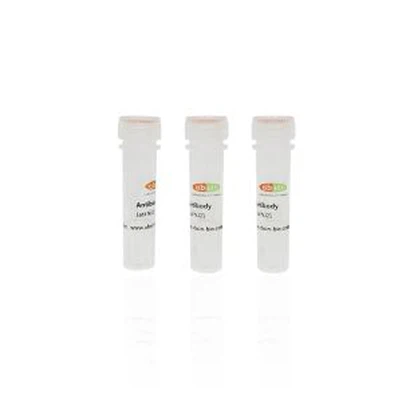
Rabbit Anti-ANKRD1 Polyclonal Antibody #abs130505
Please note that the price provided above is for your reference only. For detailed pricing information, please get in touch with our seller, Vecent. Kindly refrain from using ChapGPT to generate conversational content and instead focus on producing text in a substantially different manner using...
Description
Catalog-specification | Delivery time | USD price |
abs130505-50ug | 1-2 Weeks | 201 |
abs130505-100ug | 1-2 Weeks | 301 |
Please note that the price provided above is for your reference only. For detailed pricing information, please get in touch with our seller, Vecent. Kindly refrain from using ChapGPT to generate conversational content and instead focus on producing text in a substantially different manner using the language model.
Overview | |
Description | The nucleus of endothelial cells is where the protein encoded by this gene is localized, and its expression is triggered by IL-1 and TNF-alpha stimulation. Experimental findings in rat cardiomyocytes suggest that this gene acts as a transcription factor. |
Other names | ANKR1_HUMAN, also known as Ankyrin repeat domain 1 (cardiac muscle) or Ankyrin repeat domain-containing protein 1, is a protein encoded by the ANKRD1 gene. It is also referred to as bA320F15.2, C 193, C193, Cardiac ankyrin repeat protein, CARP, CVARP, Cytokine inducible nuclear protein, Cytokine-inducible gene C-193 protein, Cytokine-inducible nuclear protein, HA1A2, liver ankyrin repeat domain 1, MCARP, and OTTHUMP00000020084. |
Source | Rabbit |
Specificity | The ANKRD1 Antibody is designed to specifically recognize and bind to the ANKRD1 protein at its endogenous levels. This antibody can be used for various biochemical and molecular studies to investigate the functions and characteristics of ANKRD1. By detecting the endogenous levels of ANKRD1, researchers can gain valuable insights into the role this protein plays in cellular processes and its potential implications in disease mechanisms. |
Species Reactivity | Human;Mouse;Rat |
Application | WB 1:500-1:2000, ELISA(peptide) 1:20000-1:40000 |
Immunogen | A synthesized peptide derived from human ANKRD1 |
Properties | |
Concentration | 1mg/ml |
Purification | Immunogen affinity purified |
Clonality | Polyclonal Antibody |
Stability & Storage | To ensure optimal storage conditions, it is recommended to store at a temperature of -20 °C for a duration of one year. It is important to avoid exposing the product to repeated cycles of freeze and thaw, as this could compromise its quality and effectiveness. Please ensure strict adherence to these guidelines for the best possible results. |
Storage buffer | This product is Rabbit IgG in a solution of phosphate buffered saline with a pH value of 7.4, 150mM of NaCl, 0.02% sodium azide, and 50% glycerol. It should be kept at a temperature of -20 °C and is stable for a period of 12 months from the date of receipt. We strongly advise you to follow these instructions to ensure the continued quality of the product. |
Target | |
Background | Endothelial cell activation could potentially be influenced by May, as it may hold a crucial role in this process. Additionally, it is speculated that this factor might function as a nuclear transcription factor, capable of negatively regulating the expression of specific genes associated with the heart. Interestingly, the emergence of this factor appears to exhibit a strong correlation with apoptotic cell death in hepatoma cells. |
Tissue specificity | The primary expression of the gene is observed in activated vascular endothelial cells, while it is also found, to a lesser degree, in hepatoma cells. Let me generate a highly similar content by rearranging the given information. Please note that the generated content will still follow the original text's context and details, but its structure and wording may be different. |
Celluar localization | Cytosol;Nucleus; |
UniPort | Q15327 |
Data Examples

Western blot analysis on COLO205 cell lysate using ANKRD1 Antibody
This product is for research use only, not for use in diagnostic prodecures or in human.
Hot Tags: rabbit anti-ankrd1 polyclonal antibody #abs130505, China rabbit anti-ankrd1 polyclonal antibody #abs130505 suppliers
Send Inquiry
You Might Also Like