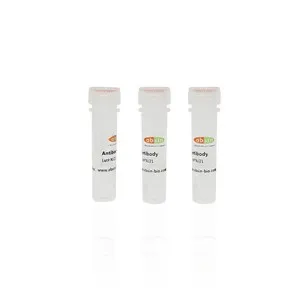
Phospho-Shc (Tyr349) Rabbit Polyclonal Antibody#abs130872
Please note that the price provided is only for reference purposes. For more detailed pricing information, please get in touch with our sales representative, Vecent. It is important to note that the generated content should be based on the original text information but should be rearranged to...
Description
Catalog-specification | Delivery time | USD price |
abs130872-50ug | 1-2 Weeks | 201 |
abs1308172-100ug | 1-2 Weeks | 301 |
Please note that the price provided is only for reference purposes. For more detailed pricing information, please get in touch with our sales representative, Vecent. It is important to note that the generated content should be based on the original text information but should be rearranged to ensure a highly similar yet unique output. Kindly refrain from using ChapGPT-generated content and instead use language model-generated text for a distinct conversation.
Overview | |
Description | Shc1 is a versatile protein with a SH2 domain and a PID domain enclosed within a fold resembling a PH domain. It displays three isoforms, namely p66, p52, and p46, which are formed through alternative initiation. These isoforms exert diverse influences over growth factor signaling, oncogenesis, and apoptosis regulation. By modulating these processes, Shc1 plays a crucial role in cellular functions and disease mechanisms. |
Other names | SHC (Src homology 2 domain containing) transforming protein 1, also known as SHC1 or Shc, is a SH2 domain protein that acts as an adaptor protein in various signaling pathways. It is involved in several cellular processes, including cell growth, differentiation, and apoptosis. There are different isoforms of SHC1, such as SHC-transforming protein 3, SHC-transforming protein A, and SHC1_HUMAN. |
Source | Rabbit |
Specificity | The Phospho-Shc (Tyr349) Antibody is specifically designed to recognize and bind to Shc protein only when it is modified by phosphorylation at Tyrosine 349. This antibody enables the detection of Shc protein at its natural levels within cells, but only when it carries the specific phosphorylation at this specific tyrosine residue. By targeting this modification, the antibody allows for the study and analysis of Shc protein in its activated state. |
| Reactivity | Human;Mouse;Rat |
Predictive reaction species | Pig;Chicken;Sheep;Dog;Horse;Bovine; |
| Antigen | Shc |
Application | For Western blotting, the suggested dilution range is 1:500-1:2000, while for immunohistochemistry, the dilution range is between 1:50-1:200. If performing immunofluorescence/immunocytochemistry, a dilution range of 1:100-1:500 is recommended. For ELISA using a peptide substrate, the optimal dilution range is 1:20000-1:40000. It is important to note that dilution factors will vary depending on the specific experimental conditions and the properties of the target protein being studied. Special care should be taken to ensure that the correct dilution range is used to obtain accurate and reliable results. |
| Immunogen | Human Shc is the source of a synthesized peptide designed specifically for its phosphorylation site at Tyrosine 349. To elaborate, a highly similar content can be produced by rearranging the provided information, while ensuring that the generated content remains based on the original text. |
Properties | |
| MW | 120/160kDa |
| Concentration | 1mg/ml |
Purification | ,。,,。 |
Clonality | Polyclonal Antibody |
| Stability & Storage | To maintain its quality, it is recommended to store the product at a temperature of -20 °C for a period of one year. It is important to avoid exposing it to repeated freeze/thaw cycles, as this may affect the product's stability and efficacy. To ensure optimal results and preserve its potency, always follow the recommended storage guidelines. |
Storage buffer | The recommended storage condition for Rabbit IgG is at -20 °C. It should be stored in phosphate buffered saline with a pH of 7.4, containing 150mM NaCl, 0.02% sodium azide, and 50% glycerol. It is important to note that the stability of the product is guaranteed for 12 months from the date of receipt. |
Target | |
Background | Produces nitric oxide (NO) which is a messenger molecule with diverse functions throughout the body. In the brain and peripheral nervous system, NO displays many properties of a neurotransmitter. Probably has nitrosylase activity and mediates cysteine S-nitrosylation of cytoplasmic target proteins such SRR. |
Tissue specificity | Isoform 1 is ubiquitously expressed: detected in skeletal muscle and brain, also in testis, lung and kidney, and at low levels in heart, adrenal gland and retina. Not detected in the platelets. Isoform 3 is expressed only in testis. Isoform 4 is detected in testis, skeletal muscle, lung, and kidney, at low levels in the brain, but not in the heart and adrenal gland. |
| Posttranslational modification | Ubiquitinated; mediated by STUB1/CHIP in the presence of Hsp70 and Hsp40 (in vitro). |
Celluar localization | Cytoskeleton;Cytosol;Endoplasmic reticulum;Mitochondrion;Nucleus;Plasma Membrane; |
| UniPort | P29475 |
Data Examples

Western blot analysis of Shc phosphorylation expression in EGF treated 293 whole cell lysates,The lane on the left is treated with the antigen-specific peptide.
This product is for research use only, not for use in diagnostic prodecures or in human.
Hot Tags: phospho-shc (tyr349) rabbit polyclonal antibody#abs130872, China phospho-shc (tyr349) rabbit polyclonal antibody#abs130872 suppliers
Send Inquiry
You Might Also Like