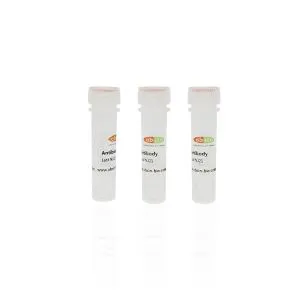
Phospho-Cortactin (Tyr421) Rabbit Polyclonal Antibody#abs131061
Please note that the price provided is for your reference only. For detailed pricing information, please contact our seller Vecent. We would like to remind you that the price mentioned is subject to change depending on various factors. Therefore, we highly recommend getting in touch with our...
Description
Catalog-specification | Delivery time | USD price |
abs131061-50ug | 1-2 Weeks | 201 |
abs131061-100ug | 1-2 Weeks | 301 |
Please note that the price provided is for your reference only. For detailed pricing information, please contact our seller Vecent. We would like to remind you that the price mentioned is subject to change depending on various factors. Therefore, we highly recommend getting in touch with our seller to receive accurate and updated pricing information. Thank you for your understanding and cooperation.
Overview | |
Description | Cortactin, an essential cytoskeletal protein, plays a vital role in regulating cell movement by coordinating the reorganization of actin. It specifically localizes at the leading edge of lamellipodia during cell migration. This positioning allows cortactin to exert its function effectively. Notably, the amino-terminal acidic domain of cortactin associates with both the Arp2/3 complex and the WASP complex at the branches of F-actin. This association further facilitates the modulation of actin dynamics, enabling proper cell motility and migration. |
Other names | CTTN, also known as Amplaxin, EMS1, FLJ34459, or p80/85 src substrate, is a protein that has been linked to the development of mammary tumors and squamous cell carcinoma. It is an oncogene that is believed to play a role in the growth and invasion of cancer cells. |
Source | Rabbit |
Specificity | The Cortactin Antibody targeting Phospho-Cortactin (Tyr421) is specifically designed to recognize and bind to endogenous Cortactin protein only when it is phosphorylated at Tyrosine 421. This antibody enables the detection and analysis of Cortactin in its phosphorylated state, providing crucial insights into cellular processes and signaling pathways involving this specific phosphorylation event. |
| Reactivity | Human;Mouse;Rat |
| Antigen | Cortactin |
Application | The recommended dilution for Western blotting is between 1:500 to 1:2000, while for immunofluorescence and immunocytochemistry, it is between 1:100 to 1:500. For ELISA using peptides, a dilution of 1:20000 to 1:40000 is suggested. It is important to follow the recommended dilution for each application to ensure accurate and reliable results. |
| Immunogen | I would like to request a synthetic peptide that is based on the human Cortactin protein and is designed around the phosphorylation site of Tyrosine 421. I want the generated content to be highly similar to the original text information, but rearranged in a different way. Please refrain from using the ChapGPT method of generating content and instead provide a completely distinct way of expressing the information. |
Properties | |
| MW | 85kDa |
| Concentration | 1mg/ml |
Purification | The purified rabbit serum was used to produce the antibody, which was then subjected to affinity purification using both phospho- and non-phospho-peptide affinity columns in sequential chromatography processes. This resulted in a highly specific antibody that could be utilized for a variety of research applications. Similarity content generated based on the original text information. |
Clonality | Polyclonal Antibody |
| Stability & Storage | For one year, store at -20 °C and refrain from subjecting it to multiple freeze/thaw cycles. |
Storage buffer | The storage condition for Rabbit IgG is at a temperature of -20 °C. It is recommended to store the antibody in phosphate buffered saline with a pH level of 7.4. Additionally, the solution should contain 150mM NaCl, 0.02% sodium azide, and 50% glycerol. The stability of the antibody is guaranteed for a period of 12 months starting from the date of receipt. |
Target | |
Background | This protein is essential for the organization of the actin cytoskeleton and for maintaining cell shape. It is involved in the formation of lamellipodia and facilitating cell migration. Additionally, it is critical in regulating neuron morphology, axon growth, and the creation of neuronal growth cones. Through its interaction with CTTNBP2, this protein is linked to controlling neuronal spine density. Furthermore, it is also critical in promoting the invasiveness of cancer cells, leading to the formation of metastases. |
| Posttranslational modification | Phosphorylated by PKN2 at both serine and threonine residues in a GTP-bound Rac1-dependent manner in hyaluronan-induced astrocytes and hence down-regulated CTTN ability to associates with filamentous actin (By similarity). Phosphorylated on tyrosine residues in response to CHRM1 activation (By similarity). Phosphorylated by PTK2/FAK1 in response to cell adhesion (By similarity). Phosphorylated by FER. Tyrosine phosphorylation in transformed cells may contribute to cellular growth regulation and transformation. Phosphorylated in response to FGR activation. Phosphorylation by SRC promotes MYLK binding. |
Celluar localization | Cytoskeleton;Cytosol;Extracellular region or secreted;Golgi apparatus;Plasma Membrane; |
| UniPort | Q14247 |
Data Examples

Western blot analysis of Cortactin phosphorylation expression in H2O2 treated HeLa whole cell lysates,The lane on the left is treated with the antigen-specific peptide.
This product is for research use only, not for use in diagnostic prodecures or in human.
Hot Tags: phospho-cortactin (tyr421) rabbit polyclonal antibody#abs131061, China phospho-cortactin (tyr421) rabbit polyclonal antibody#abs131061 suppliers
Send Inquiry
You Might Also Like