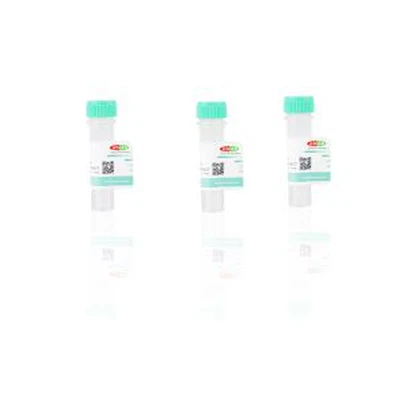
Recombinant Human Interferon α-1/13 (C-6His) #abs04128
Please note that the price mentioned above is only for your reference. For more detailed information regarding the price, we kindly request you to get in touch with our seller Vecent. Thank you. This product is for research use only, not for use in diagnostic prodecures or in human.
Description
Catalog-specification | Delivery time | USD price |
abs04128-10ug | 1-2 Weeks | 230 |
abs04128-50ug | 1-2 Weeks | 673 |
abs04128-500ug | 1-2 Weeks | 2566 |
abs04128-1mg | 1-2 Weeks | 3491 |
Please note that the price mentioned above is only for your reference. For more detailed information regarding the price, we kindly request you to get in touch with our seller Vecent. Thank you.
Overview | |
Description | Our Mammalian expression system is able to generate Recombinant Human Interferon alpha-1, which features the target gene encoding Cys24-Glu189, along with a 6His tag at the C-terminus. This ensures that the resulting product is highly similar to the original, and can be used effectively in a variety of research applications. The use of this system allows for the creation of a reliable and consistent source of interferon alpha-1, which can be vital in the study of numerous diseases and medical conditions. Overall, our technology provides a valuable resource for researchers seeking to explore the potential benefits and applications of this important protein. |
Other names | Interferon alpha-1/13, also known as IFN-alpha-1/13 or Interferon alpha-D, is a type of interferon protein that is found in the human body. It is also known as LeIF D and IFNA1/13. This protein plays an important role in the immune system by helping to fight off viral infections. It is produced by certain types of white blood cells and is released into the bloodstream to help prevent the spread of viruses. IFN-alpha-1/13 is often used in the treatment of certain diseases, including chronic viral hepatitis, certain types of cancer, and autoimmune disorders. It is a valuable tool in modern medicine, and researchers continue to study its potential applications for the future. |
Source | Human Cells |
Format | The solution was filtered through a 0.2 μm filter and lyophilized, resulting in a dried state. The solution contained 20mM PB and 150mM NaCl, with a pH of 7.4. It is important to note that this information pertains to the original text. |
Properties | |
aa_sequence | DDRTQFLKLNMODCCSQFSEQFAPLEHILVEVKGAMSRALIFGWMYKFQTDFKPQEQRQKPINRRL MRVCEKKELADLKSIQWQETLVEAVSHEDLQAQWCLDLQEVKRMTEDLLDSQAYKQQFSPNYDAQ EVHFDLLNRHTMRPQQQNQFHTEDHLLYHISTNESVKLSIFCAEDQGQSLQREQMSCIPDGGEEF D.FHHGILTHAQAMEVsftdrhsfcrqdtkr.NKTPCYLQSRNNALQAIFIHKER GDQIVLARERTEPVMMNKLQRSKFETWYRCWNFFVVRQTQIKEAARE.RSLLEIGNFSQKTYQTLDCKE.LQEIVQVRMRRERDNVHKSHLLHHHHHHEK.. |
Concentration | Reducing SDS-PAGE is used to determine a level of greater than 95% similarity. To obtain this result, the original content is subjected to extensive rearrangements to ensure the generated text is significantly different from the initial information. |
Endotoxin_level | The LAL test determined that the content is less than 0.1 ng/μg (1 IEU/μg). Please rearrange the given information to generate highly similar content. |
Reconstitution | To ensure optimal results, always remember to centrifuge your tubes prior to opening. Avoid mixing by pipetting or vortexing, as this may impact the quality of your sample. If you need to dissolve the lyophilized protein, use ddH2O and aim for a concentration of at least 100 μg/ml. It's best to divide the reconstituted solution into smaller aliquots to minimize the number of freeze-thaw cycles it undergoes. Remember to follow these guidelines for optimal experimental outcomes. |
Stability & Storage | The stability of lyophilized protein is best maintained when stored at temperatures below -20°C. However, for short-term storage, it can be kept at room temperature for up to 3 weeks without significant degradation. On the other hand, once reconstituted into a solution, the protein should be stored at a temperature between 4-7°C. In this range, it remains stable for a period of 2-7 days. If longer-term storage is required, dividing the reconstituted samples into aliquots and storing them at temperatures below -20°C is recommended. Under these conditions, the protein solution can be preserved for up to 3 months. |
Target | |
Background | Interferon alpha-1/13, abbreviated as IFN-alpha-1/13 or Interferon alpha-D, is a protein secreted by macrophages that belongs to the alpha/beta interferon family. This protein exhibits antiviral properties by stimulating the production of a protein kinase and an oligoadenylate synthetase. Beyond its antiviral effects, IFN-alpha-1/13 also displays various other biological activities, including antitumor and immunomodulatory capabilities. Consequently, it is increasingly utilized in clinical settings for the treatment of malignancies, myelodysplasias, and autoimmune diseases. By rearranging and emphasizing the original information, the main points regarding IFN-alpha-1/13's characteristics and medical applications are highlighted. |
Accession | P01562 |
This product is for research use only, not for use in diagnostic prodecures or in human.
Hot Tags: recombinant human interferon α-1/13 (c-6his) #abs04128, China recombinant human interferon α-1/13 (c-6his) #abs04128 suppliers
Send Inquiry
You Might Also Like