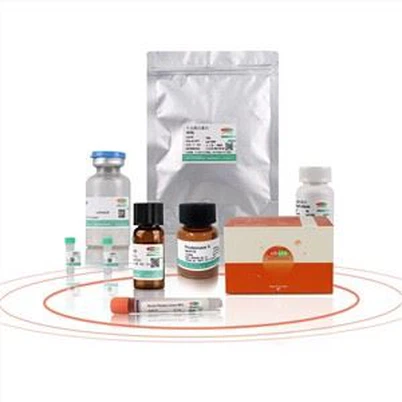
Tissue Mitochondria Isolation Kit
Please note that the price listed here is for reference only. For exact pricing, please get in touch with our seller, Vecent. It is important to clarify that the price mentioned should not be taken as the final cost and that you must contact our representative to know the accurate pricing details.
Description
| SKU-Pack Size | Availability | Price |
| abs9344-50T | In stock | $70.00 |
Please note that the price listed here is for reference only. For exact pricing, please get in touch with our seller, Vecent. It is important to clarify that the price mentioned should not be taken as the final cost and that you must contact our representative to know the accurate pricing details.
Description | |
| Description | The mitochondria play a vital role in cell respiration and provide the necessary energy for various cellular activities through the process of oxidation. To isolate mitochondria effectively, it is crucial to maintain their integrity and purity. This can be achieved through fractional separation techniques, involving low-speed centrifugation to eliminate nuclei and cell debris, followed by high-speed gradient centrifugation to separate the mitochondria. For convenient and rapid isolation of mitochondria from animal tissues, the Tissue Mitochondria Isolation Kit is recommended. This kit allows for the separation of mitochondria, while also obtaining cytoplasmic proteins that have been removed from the mitochondria. This provides an opportunity to analyze the release of mitochondrial proteins, such as cytochrome C, into the cytoplasm. The mitochondria obtained using this kit typically possess intact inner and outer membranes and retain their physiological functions, including the ability to detect mitochondrial membrane potential. The proteins extracted from the isolated mitochondria can be further analyzed using techniques such as SDS-PAGE, Western blotting, and two-dimensional electrophoresis. This allows for detailed protein analysis and characterization. The Tissue Mitochondria Isolation Kit is suitable for extracting mitochondria from both animal soft tissues (such as the brain and liver) and hard tissues (including the myocardium and skeletal muscle). It contains four components: component A, which is Mitochondria Lysis buffer (100ml, stored at -20°C); component B, which is Mitochondria Stock buffer (10ml, stored at -20°C); component C, which is Protein Stock buffer (5x, 20ml, stored at room temperature); and component D, which is PMSF (100x, 1.5ml, stored at -20°C). Overall, the Tissue Mitochondria Isolation Kit provides a convenient and efficient method for isolating mitochondria from animal tissues, allowing for further analysis of their physiological functions and protein composition. |
| Usage | To initiate the washing process, begin by selecting a fresh tissue sample (avoid using frozen tissue as it is not appropriate). Swiftly measure out a weight ranging from 50-100 mg. Proceed by rinsing the tissue once with pre-cooled PBS. For ease of handling, place the tissue on ice and carefully slice it into small 3mm2 fragments. For homogenization lysis, take a pre-cooled Mitochondria Lysis buffer and add 10 times the volume. If the goal is to obtain cytoplasmic protein, it is recommended to add PMSF beforehand until the PMSF concentration reaches 1×. Place the mixture in a Dounce homogenizer, which is kept on an ice bath. Homogenize the mixture by performing 10-20 passes with the Dounce homogenizer. It is important to note that the number of homogenization passes required may vary depending on the specific tissues or homogenizers used. Therefore, it is crucial to optimize this parameter based on individual needs and conditions. To remove unwanted components such as cell nuclei, unbroken cells, and large membrane debris, use centrifugation at 600g for 5 minutes at a temperature of 4° C. However, if you require purer mitochondria, opt for a higher centrifugal speed of 2000g for 3 minutes. Though this may result in a decrease in the extraction rate of mitochondria from the same number of cells, it will yield a superior sample. Remember to adjust the centrifuge settings accordingly to achieve the desired outcome. 4. Transfer the supernatant to a clean centrifuge tube and centrifuge at 12000g at 4°C for 10 minutes. Note: If you need to obtain higher purity mitochondria, you can change the centrifugation speed of this step to 6000g for 10 minutes. The disadvantage is that the extraction rate of mitochondria with the same number of cells will decrease. 5. Discard the supernatant and precipitate as mitochondria. If you want to obtain cytoplasmic proteins with mitochondria removed, collect the supernatant in this step, and be careful not to touch the precipitate when collecting the supernatant. Subsequently, the collected supernatant was centrifuged at 12000g for 10 min at 4°C, and the supernatant was the cytoplasmic protein from which mitochondria were removed. 6. Storage: Discard the supernatant and suspend the pellet in an appropriate buffer. If used for the analysis of mitochondrial enzyme activity or function, the mitochondrial pellet should be resuspended in Mitochondria Stock buffer; if used for the analysis of mitochondrial protein, the obtained cytoplasmic protein should be stored in 1×Protein Stock buffer, that is, by cytoplasmic protein: Protein Stock buffer (5×)=1:4 ratio mix; if used for two-dimensional electrophoresis, use an appropriate storage solution. |
| Storage Temp. | Store at -20°C for 12 months, Component C store at room temperature. |
| Application | Research use only, not for clinical diagnosis or other purposes. |
| General Notes | 1. Reagents (such as PMSF) do not need to be used for different experiments, and do not need to be used after the experimental conditions are mature. 2. If it is not used to prepare mitochondrial protein, Mitochondria Lysis buffer does not need to be added to PMSF. If used to prepare mitochondrial protein samples, Mitochondria Lysis buffer needs to be added with PMSF. PMSF must be added within 1 to 2 minutes before the reagent is added to the sample, so as to avoid the rapid failure of PMSF in the aqueous solution. 3. All steps of separating mitochondria should be carried out on ice or 4°C. The solution used should be ice bath or 4°C pre-cooled, and the total operation time should be controlled within 1h as far as possible. 4. Usually, the two centrifugation speeds before and after the separation of mitochondria are 1000g and 12000g. If higher purity is desired, but the yield of mitochondria is not high, the two centrifugation speeds can be 2000g and 6000g. 5. For your safety and health, please wear lab coats and disposable gloves for operation. |
Properties | |
| Synonym | Tissue Mitochondria Isolation Kit |
| Appearance | Solution |
Hot Tags: tissue mitochondria isolation kit, China tissue mitochondria isolation kit suppliers
Send Inquiry
You Might Also Like