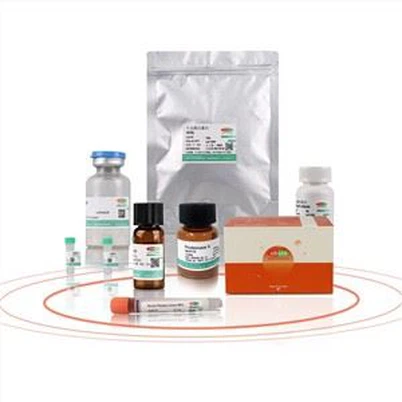
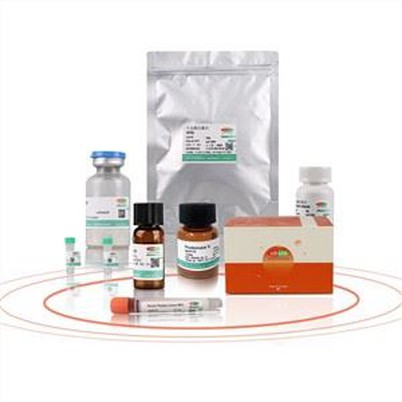
Nuclear And Cytoplasmic Protein Extraction Kit
Please note that the price mentioned above is for your reference only. To get the exact or detailed price, we advise you to get in touch with our seller Vecent.
Description
| SKU-Pack Size | Availability | Price |
| abs9345-50T | In stock | $120.00 |
Please note that the price mentioned above is for your reference only. To get the exact or detailed price, we advise you to get in touch with our seller Vecent.
Description | |
| Description | The extraction kit provided allows for the isolation of both cytoplasmic and nuclear proteins. By utilizing a hypotonic buffer, the cells are first swollen, then centrifuged to obtain plasma protein. The resulting pellet is then resuspended in a high-salt buffer to release nucleoproteins from the nucleus. This versatile kit can be used with various cell lines and tissues to extract functional plasma proteins and nuclear proteins. The isolated proteins can be effectively employed in a range of research techniques, such as western blotting, EMSA, DNA-protein interaction studies, DNase I blot analysis, and similar methodologies. The components included in the kit are as follows: a 10x lysis buffer A (7mL), a 5x lysis buffer B (14mL), an extraction buffer C (10mL), a 3x dilution and equilibration buffer D (90mL), a 1M DTT (0.4mL), a protease inhibitor (1mL), and a detergent (4mL). |
| Usage | experiment protocol: Ensure that all steps are carried out within a temperature range of 2~8°C. Pre-cool all reagents and equipment to this temperature before use. Thoroughly mix and melt all solutions before starting the procedure. Use a pre-cooled rotor and perform all centrifugation at 4°C to maintain optimal conditions. It is crucial to follow these steps to ensure accurate results and avoid any potential errors. The final concentration of protease inhibitor is 1%. Meanwhile, the DTT concentration at the end is 1 mM. To emphasize, these two components are present in the final mixture. To extract protein from a cell pellet of 100μL, detergent can be utilized in the separation process. It is important to note that if the sedimentation volume of the cell is not standard, then reagents should be added proportionally depending on the volume. This ensures accuracy and precision in experiments. Therefore, it is crucial to follow the protocol and make necessary adjustments to ensure reliable results. To obtain a final concentration of 0.1M, 1M DTT should be diluted 10 times with distilled water. This means that the original solution needs to be mixed with 10 times its volume in water, ensuring that the solution is thoroughly mixed to obtain a homogeneous mixture. Proper dilution techniques should be employed to ensure accurate measurement and mixing of the solution. To make 1× Lysis Buffer A, you need to dilute 10× Lysis Buffer A 10 times using distilled water. If your cells are fragile, use 1× Lysis Buffer B instead, which you can make by diluting 5× Lysis Buffer B five times using distilled water. Once you've prepared 500μL of either 1× Lysis Buffer A or B, add 5μL of 0.1M DTT and 5μL of protease inhibitor. This step is crucial for ensuring the integrity of your samples. So, take extra care to follow the instructions carefully. 3. Collect cells (1) The adherent cells grow to 70~90% full To dispose of the culture medium, first rinse the container twice with PBS before discarding it. After discarding the PBS, the container will be ready for use again. This process is necessary to maintain a sterile environment for the culture medium and prevent any contamination. After collecting the cells into a test tube with a conical bottom using a cell scraper, proceed to add fresh PBS. ⑤ Centrifuge at 450g for 5 minutes; ⑥ Discard the supernatant. (2) Suspended cells ① Put the cells in a suitable conical centrifuge tube; ② Centrifuge at 450g for 5 minutes; ③ Discard the supernatant; ④ Resuspend the cells in PBS, wash twice, and centrifuge at 450g for 5 minutes; ⑤ Discard the supernatant. 4. Estimate the cell sediment volume (PCV) 5. Add 500μL (5 times the volume of PCV) 1× Lysis Buffer A (containing DTT and protease inhibitor) to 100μL PCV. Avoid bubble formation. If the volume is small, transfer the suspended cells to a centrifuge tube. 6. Incubate on ice for 15 minutes to swell the cells. Take 5~10μL from the lysate and observe under a microscope. If a large number of cell lysis is observed under the microscope, or gel clumps are observed, the cells may be fragile. For fragile cells, 1× Lysis Buffer B can be used to lyse the cells. Because it is an isotonic solution, the incubation time is not considered. 7. Add detergent to the swollen cells containing lysate to make the final concentration 6% (add 6μL of detergent to 100μL of lysate), vortex vigorously for 10sec. 8. Immediately centrifuge at 10000~11000g for 30sec. To assess the degree of lysis, take a small amount of suspended cells before centrifugation and observe the cell nucleus under a microscope. Trypan blue dye solution (ST050) can be added to observe the lysis. Intact cells refuse to stain, lyse cells, and stain nuclei. If nuclear lysis is observed under the microscope, or gel clumps are observed, a lower concentration of detergent can be used to lyse the cells; If the cells cannot be lysed, the final concentration of detergent can be increased; For fragile cells, use a lower concentration of detergent, avoid vortexing the cells, and centrifuge at low speed. 9. Transfer the supernatant to a new centrifuge tube, which is the cytoplasmic protein. 10. Add 1μL 0.1M DTT and 1μL protease inhibitor to 98μL extraction buffer. If you want to extract the target protein at a low salt concentration, you need to dilute the extraction buffer with 1× dilution and equilibration buffer. Note: The salt concentration of the extraction buffer is 0.42M, which is suitable for normal extraction. For a specific protein, for better extraction, low or high salt may be required. If a low concentration of salt is required, use 1× dilution and equilibration buffer for dilution; if a high concentration of salt is required, sodium chloride can be added to the extraction buffer to achieve the required concentration. 11. Resuspend the nuclear pellet with 70μL (2/3 volume of PCV) extraction buffer containing DTT and protease inhibitors. 12. Put it at room temperature for 30 minutes, and vortex at high speed for 30 seconds every 2 minutes to avoid bubbles. 13. Centrifuge at 20000~21000g for 5min. 14. Transfer the supernatant to a new, pre-cooled centrifuge tube. 15. Quickly freeze the supernatant in liquid nitrogen and store at -70°C. 2. No detergent is used to extract nucleoprotein from 200μL cell pellet Note: If the volume is different, the reagents used need to be adjusted proportionally according to the situation. Detergents may interfere with the activity of the extracted protein. Therefore, the nucleoprotein can be extracted without detergent. The following procedure uses a homogenizer or syringe to prepare nuclear extracts. Note: At least 100μL PCV is required. For small-scale preparation (0.1~1mL), it is recommended to use a syringe (1mL) and needle (27 gauge). Due to the size of the needle, it may be difficult for liquids larger than 1 mL to pass through the syringe. 1. Dilute 1M DTT 10 times with distilled water to a final concentration of 0.1M. 2. Prepare 1× Lysis Buffer A. For protein extraction from fragile cells, prepare 1X Lysis Buffer B. Add 14μL 0.1M DTT and 14μL protease inhibitor to 1400μL 1× Lysis Buffer (A or B). 3. Collect cells (1) Adherent cells ① The adherent cells grow to 70~90% full; ② Discard the medium; ③ Rinse twice with PBS; ④ Discard PBS; ⑤ After adding fresh PBS, use a cell scraper to collect the cells into a test tube with a conical bottom; ⑥ Centrifuge at 450g for 5 minutes; ⑦ Discard the supernatant. (2) Suspended cells ① Put the cells in a suitable conical centrifuge tube; ② Centrifuge at 450g for 5 minutes; ③ Discard the supernatant; ④ Resuspend the cells in PBS, wash twice, and centrifuge at 450g for 5 minutes; ⑤ Discard the supernatant. 4. Estimate the cell sediment volume (PCV). 5. Add 1 mL (5 times the volume of PCV) 1× Lysis Buffer (A or B) (containing DTT and protease inhibitor) to 200 μL PCV. Gently resuspend the pellet to avoid bubble formation. If the volume is small, transfer the suspended cells to a centrifuge tube. Incubate on ice for 15 minutes to swell the cells. 6. Centrifuge the cell suspension at 420g for 5 minutes. Discard the supernatant and resuspend the pellet with 400μL (2 times the volume of PCV) 1× Lysis Buffer (A or B). 7. Cell fragmentation Using a glass homogenizer, transfer the cells to a glass tissue grinding tube. On ice, use a B-type pestle to grind up and down 5 times to avoid air bubbles. Or use a thinner hypodermic needle (27 gauge). During lysis, prevent air from entering the cell suspension. Pull the syringe slowly to inhale the liquid; then drain it slowly, repeat 5 times. Note: The number of homogenization (using a homogenizer or syringe) varies with different cells. After 5 times of homogenization, observe under a microscope. 80~90% of cells should be lysed. If the lysis is not sufficient, increase the number of homogenization until 80~90% of the cells are lysed. Trypan blue dye solution (ST050) can be added to observe the lysis. Whole cells refuse to be stained, but the nucleus of lysed cells can be stained. If nuclear lysis or rapid nuclei is seen, or gel clumps are observed, it indicates that the cells have been completely broken and the number of homogenizations cannot be increased. 8. Centrifuge at 10000~11000g for 20min. 9. Transfer the supernatant to a new test tube, which is the cytoplasmic protein. 10. Add 1.5μL 0.1M DTT and 1.5μL protease inhibitor to 147μL extraction buffer. If you want to extract the target white at a low salt concentration, you need to dilute the extraction buffer with 1× dilution and equilibration buffer. Note: The salt concentration of the extraction buffer is 0.42M, which is suitable for normal extraction. For a specific protein, for better extraction, low or high salt may be required. If a low concentration of salt is required, use 1× dilution and equilibration buffer for dilution; if a high concentration of salt is required, sodium chloride can be added to the extraction buffer to achieve the required concentration. 11. Resuspend the nuclear pellet with 140μL (2/3 volume PCV) extraction buffer containing DTT and protease inhibitors. If you are using a tissue homogenizer, it is recommended to perform 10 more homogenizations here. 12. Shake gently for 30 minutes. 13. Centrifuge at 20000~21000g for 5min. 14. Transfer the supernatant to a clean, pre-cooled test tube. 15. Quickly freeze the supernatant in liquid nitrogen and store at -70°C. 3. Extract nucleoprotein from 100mg tissue Note: The amount of reagents required can be adjusted in proportion to the specific weight of the tissue. 1. Dilute 1M DTT 10 times with distilled water, the final concentration is 0.1M. 2. Prepare 1× Lysis Buffer. For tissue samples, Lysis Buffer A is more effective than Lysis Buffer B. Therefore, 1× Lysis Buffer A is recommended. If the tissue is fragile, lysis buffer B should be used. Add 10μL 0.1M DTT and 10μL protease inhibitor to 1000μL 1× Lysis Buffer (A or B). 3. Rinse the tissue twice with PBS buffer and discard PBS. 4. Gently resuspend the tissue with 1000 μL (5 times the volume of PCV) 1× Lysis Buffer (A or B, containing DTT and protease inhibitor). 5. Homogenize the tissue until more than 90% of the cells are broken, and the cell nucleus can be observed under a microscope. 6. Centrifuge at 10,000~11,000g for 20min. 7. Transfer the supernatant to a new test tube as cytoplasmic protein. 8. Add 1.5μL 0.1M DTT and 1.5μL protease inhibitor to 147μL extraction buffer. Note: If you want to extract the target protein at a low salt concentration, you need to dilute the extraction buffer with 1× dilution and equilibration buffer. The salt concentration of the extraction buffer is 0.42M, which is suitable for normal extraction. For a specific protein, for better extraction, low or high salt may be required. If a low concentration of salt is required, use 1× dilution and equilibration buffer for dilution; if a high concentration of salt is required, sodium chloride can be added to the extraction buffer to achieve the required concentration. 9. Resuspend the nuclear pellet with 140μL (2/3 volume PCV) extraction buffer containing DTT and protease inhibitors. Short-term homogenization will be more conducive to the extraction of nucleoprotein. 10. Shake gently for 30 minutes. 11. Centrifuge at 20000~21000g for 5min. 12. Transfer the supernatant to a clean, pre-cooled test tube. 13. Quickly freeze the supernatant in liquid nitrogen and store at -70°C. Four, desalination According to this experimental procedure, the extracted nucleoprotein is resuspended in an extraction buffer, which is a high-salt solution. Usually, the extracted protein concentration is higher, and it can be diluted with 1× dilution and equilibration buffer. The protein in the high-salt buffer is sufficient for analysis such as EMSA and footprinting. If salt interferes with downstream experiments, use protein precipitation reagent (PR030) to remove the salt. The salt can also be removed by dialysis. The dialysis buffer is a 1× dilution and equilibration buffer containing 1 mM DTT and 1% protease inhibitor. |
| Storage Temp. | Store at -20°C for 12 months |
| General Notes | For your own safety, please protect yourself before using reagents, such as wearing lab coats, wearing gloves, etc. |
Properties | |
| Synonym | Nuclear and Cytoplasmic Protein Extraction Kit |
Hot Tags: nuclear and cytoplasmic protein extraction kit, China nuclear and cytoplasmic protein extraction kit suppliers
Send Inquiry
You Might Also Like