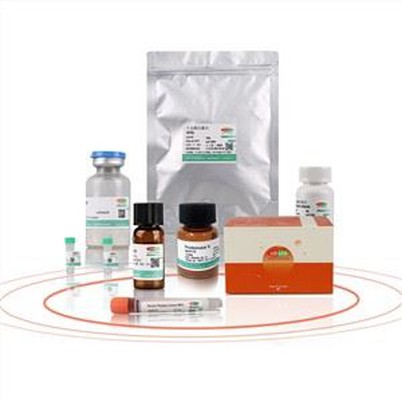
IP / CoIP Kit
Please note that the price stated above is for your reference only. For the actual and more detailed pricing, kindly get in touch with our sales representative named Vecent. 342/5000 Immunoprecipitation (IP/CoIP) exploits the specific affinity shared by antibodies and proteins to effectively...
Description
| SKU-Pack Size | Availability | Price |
| abs955-50tests | 1-2weeks | $420.00 $210.00 |
Please note that the price stated above is for your reference only. For the actual and more detailed pricing, kindly get in touch with our sales representative named Vecent.
342/5000
Immunoprecipitation (IP/CoIP) exploits the specific affinity shared by antibodies and proteins to effectively capture and enrich target proteins from complex samples. This technique involves the selective capture of antibodies that bind to the desired protein or antigen of interest. By doing so, it becomes possible to isolate and measure the target protein, as well as other biomacromolecules that interact with it, from the sample.
To ensure optimal experimental results, it is crucial to customize every step according to the specific circumstances prior to conducting the experiment.
Tailored cell lysis conditions should be carefully selected, taking into account the specific cell line or downstream management of the captured antigen. While mammalian cells can be directly lysed using stain removers due to their lack of cell wall structure, other cell types may require a level of mechanical shear force such as ultrasonic crushing. The recommended lysate, incubation time, volume and concentration conditions included below can serve as initial trials; however, final optimization should be customized based on the exact needs of the experiment.
Immunoprecipitation can be preceded by western blotting to confirm the presence of the target protein in cell lysates.
One, kit components
| The name of the reagent | volume | Preservation conditions |
| Lysis buffer | 30ml | 4 ℃ |
| 10*Wash buffer | 50ml | 4 ℃ |
| 1*SDS Sample buffer | 1ml | 4 ℃ |
| Protein A Agarose beads | 250ul | 4 ℃ |
| Protein GAgarose beads | 250ul | 4 ℃ |
:1 mM PMSF(ABS9146)。,。
2.use method
A. Prepare cell lysates
To prepare for treatment, the medium was blotted dry before introducing a new medium containing regulatory molecules that were carefully selected to act within a specific timeframe.
After the culture medium was removed, the cells were gathered and rinsed with ice-cold 1X PBS.
To begin with, eliminate PBS from the cell plate (10 cm) and instead add 0.5 mL of Lysis buffer that has been precooled on ice. After that, place the plate on ice and let it sit for a minimum of 5 minutes to incubate.
Collect the extract from the plate by scraping the cells and transfer it into a microcentrifuge tube, ensuring that the process is carried out on ice. It is important to handle the sample carefully to preserve its integrity and prevent degradation. Once collected, the sample can be used for further analysis or experimentation.
To effectively crush the ice, it is recommended to perform ultrasonic crushing three times. Each time should last for 5 seconds. This method ensures that the ice is broken down efficiently.
6. Microcentrifugation at 4 °C at 14,000 x g for 10 min. Transfer supernatant to new tube. The supernatant is the cell lysate. If necessary, the pyrolysis may be stored at -80 °C.
Note: After the cell lysates are prepared, western blotting can be performed to determine the presence of the target protein in the cell lysates.
B. Immunoprecipitation method
A) Cell lysate pre-clearance (optional step)
1. Add 5 μ L Protein A and 5 μ L Protein G to 500 μ L (containing 200-1000 ug total Protein) cell lysate.
2. Rotate and incubate at 4 °C for 30-60 minutes.
3. Centrifugation at 12000g at 4°C for 1 min. Reserve supernatant.
B) antigen antibody binding
1. Add 500 μ L (200 -- 1000 ug total protein) cell lysate (can be pre-cleaned cell lysate) to the new centrifuge tube.
2. Add monoclonal/polyclonal antibody (1-5 μg) to target protein.
3. Homologous antibodies of non-specific immunity were used as control.
4. Blend gently at 4 °C overnight.
C) Precipitation of immune complexes
1. After incubation overnight, add 5 μ L Protein A and 5 μ L Protein G.
2. Mix gently at 4 °C for 1-3 hours or overnight.
3. Centrifuge at 12,000 g for 1 minute, retain the precipitation.
4. Use 0.5 ml 1*Wash buffer to clean the precipitation, centrifuge at 12,000 g for 1 minute, and retain the precipitation.
5. Repeat step 4 for a total of 3 times.
Note: When cleaning and removing the supernatant, care should be taken to avoid suction of the filler
C. Western blotting was used for analysis
1. Suspend the precipitate in 20-40 μ L 1*SDS sample buffer, swirl the precipitate, then centrifuge for 30 seconds to remove beads and liquid from tube wall to tube bottom.
2. Heat the sample to 95-100 °C for 2-5 minutes, then centrifuge at 14,000 g for 1 minute, remove supernatant.
3. Load sample (15 -- 30 μ L) onto SDS-PAGE gel.
3. Method of kit preservation
The kit is stored at 4℃ and effective for 1 year.
Hot Tags: ip / coip kit, China ip / coip kit suppliers
Send Inquiry
You Might Also Like