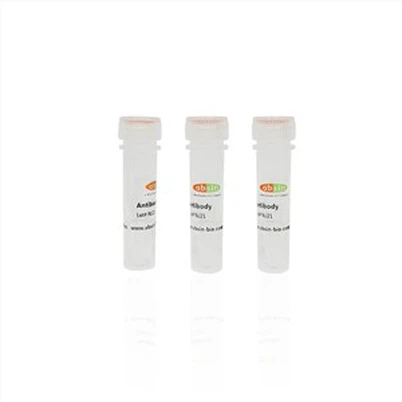
Rabbit Anti-SP100 Polyclonal Antibody#abs134549
Please note that the price provided is only for reference purposes. To obtain more detailed pricing information, please contact our seller, Vecent. It's important to ensure that the generated content is similar to the original text but with a distinct language model and not based on ChapGPT...
Description
| Catalog-specification | Delivery time | USD price |
abs134549-100ug | 1-2 Weeks | 301.0 |
abs134549-50ug | 1-2 Weeks | 201.0 |
Please note that the price provided is only for reference purposes. To obtain more detailed pricing information, please contact our seller, Vecent. It's important to ensure that the generated content is similar to the original text but with a distinct language model and not based on ChapGPT generated dialogue.
| Overview | |
catalog | abs134549 |
| Other names | Sp100, also known as DKFZp686E07254, FLJ00340, FLJ34579, or Lysp100b, is a nuclear antigen that plays an important role in cellular processes. This protein is associated with nuclear dots and is considered a nuclear autoantigen. It is also referred to as SP100 HMG nuclear autoantigen or Speckled 100 kDa. Sp100 has been extensively studied and its functions are still being explored. It is involved in various cellular processes, including gene regulation and nuclear organization. The exact mechanisms by which Sp100 functions are not fully understood, but it is believed to play a role in chromatin organization and transcriptional regulation. The significance of Sp100 in disease is highlighted by its association with certain autoimmune disorders. In patients with autoimmune diseases, such as primary biliary cirrhosis and systemic sclerosis, autoantibodies against Sp100 have been detected. These autoantibodies are often used as diagnostic markers for these diseases. In conclusion, Sp100 is an intriguing nuclear antigen that is involved in important cellular processes. Its association with autoimmune diseases further emphasizes its significance in human health and disease. Further research is necessary to fully elucidate the functions and mechanisms of this interesting protein. |
| Source | Rabbit |
| Specificity | The endogenous levels of total SP100 can be detected by using the SP100 Antibody. The antibody is designed to specifically recognize and bind to the total SP100 protein present in cells. This allows researchers to study the expression and localization of SP100 in various biological samples. The SP100 Antibody is a valuable tool for understanding the role and function of SP100 in different cellular processes. By detecting the endogenous levels of total SP100, scientists can gain insights into its involvement in various physiological and pathological conditions. |
| Species Reactivity | Human |
| Antigen | SP100 |
| Application | For Western Blotting, a dilution of 1:500 to 1:1000 is recommended, while for Immunohistochemistry, a dilution range of 1:50 to 1:200 is suitable. When it comes to Immunofluorescence/Immunocytochemistry, a dilution of 1:100 to 1:500 is ideal. For ELISA using peptide, a dilution range of 1:20000 to 1:40000 is recommended. It is essential to dilute the primary antibody appropriately to ensure accurate and reliable results, and these dilution ranges have been found to be highly effective. |
| Immunogen | A synthesized peptide. |
| MW | 0 KD |
| Properties | |
Concentration | 1mg/ml |
| purification | SulfoLink™ Coupling Resin was utilized to purify the antiserum through peptide affinity chromatography. |
| Clonality | Polyclonal Antibody |
| Stability & Storage | To maintain the integrity of the product, we recommend storing it at a temperature of -20 °C for a period of one year. It is crucial to avoid subjecting the product to repeated cycles of freezing and thawing as this can compromise its quality. Be sure to follow these guidelines to ensure optimal product performance. |
| Storage buffer | This product contains Rabbit IgG in a buffer solution of phosphate buffered saline (pH 7.4), 150mM NaCl, 0.02% sodium azide, and 50% glycerol. The recommended storage temperature is -20°C, and the product is stable for up to 12 months from the date of receipt. |
Target | |
Background | Together with PML, this tumor suppressor is a major constituent of the PML bodies, a subnuclear organelle involved in a large number of physiological processes including cell growth, differentiation and apoptosis. Functions as a transcriptional coactivator of ETS1 and ETS2 according to PubMed:11909962. Under certain conditions, it may also act as a corepressor of ETS1 preventing its binding to DNA according to PubMed:15247905. Through the regulation of ETS1 it may play a role in angiogenesis, controlling endothelial cell motility and invasion. Through interaction with the MRN complex it may be involved in the regulation of telomeres lengthening. May also regulate TP53-mediated transcription and through CASP8AP2, regulate FAS-mediated apoptosis. Also plays a role in infection by viruses, including human cytomegalovirus and Epstein-Barr virus, through mechanisms that may involve chromatin and/or transcriptional regulation. |
| Tissue specificity | Widely expressed. Sp100-B is expressed only in spleen, tonsil, thymus, mature B-cell line and some T-cell line, but not in brain, liver, muscle or non-lymphoid cell lines. |
| Posttranslational modification | Sumoylated. Sumoylation depends on a functional nuclear localization signal but is not necessary for nuclear import or nuclear body targeting.Sumoylated. Sumoylated with SUMO1. Sumoylation depends on a functional nuclear localization signal but is not necessary for nuclear import or nuclear body targeting. Sumoylation may stabilize the interaction with CBX5. |
| Celluar localization | Nucleus; |
| UniPort | P23497 |
This product is for research use only, not for use in diagnostic prodecures or in human.
Hot Tags: rabbit anti-sp100 polyclonal antibody#abs134549, China rabbit anti-sp100 polyclonal antibody#abs134549 suppliers
Send Inquiry
You Might Also Like