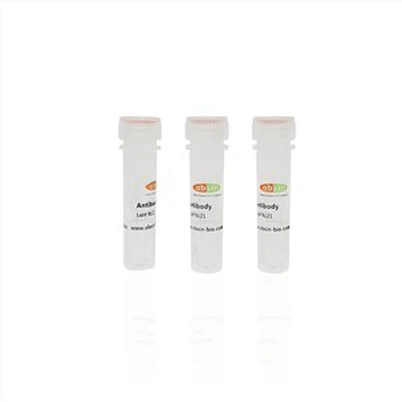
Rabbit Anti-NUMA1 Polyclonal Antibody#abs134551
Please note that the price provided above is only for reference, and for detailed pricing information, kindly get in touch with our seller, Vecent. It is important to understand that the price quoted here may differ based on various factors, and hence, we encourage you to speak to our...
Description
| Catalog-specification | Delivery time | USD price |
abs134551-100ug | 1-2 Weeks | 301.0 |
abs134551-50ug | 1-2 Weeks | 201.0 |
Please note that the price provided above is only for reference, and for detailed pricing information, kindly get in touch with our seller, Vecent. It is important to understand that the price quoted here may differ based on various factors, and hence, we encourage you to speak to our representative for an accurate quote. Thank you for considering us for your requirements.
| Overview | |
catalog | abs134551 |
| Other names | Nuclear matrix protein 22 (NMP 22), also known as centrophilin, plays a crucial role in stabilizing the mitotic spindle during cell division. It is a nuclear mitotic apparatus protein, often referred to as NUMA 1 or NuMA protein. The NUMA protein, encoded by the NUMA1 gene, is responsible for maintaining the structural integrity of the nucleus. One important function of centrophilin is its contribution to the stability of the mitotic spindle, which is crucial for accurate chromosome segregation during mitosis. The mitotic spindle is a dynamic structure composed of microtubules that help in the separation and distribution of chromosomes to the daughter cells. Centrophilin acts as a stabilizing factor for the mitotic spindle, ensuring its proper formation and function. In addition to its role in the mitotic spindle, centrophilin is also involved in other important cellular processes. It is a structural nuclear protein that plays a role in maintaining the overall nuclear architecture. It contributes to the organization and assembly of the nuclear matrix, which provides structural support to the nucleus. Moreover, centrophilin is known as SP H antigen, which has significance in certain diagnostic tests. Overall, centrophilin, also known as NMP 22, is a nuclear matrix protein that stabilizes the mitotic spindle in mitotic cells. Its involvement in maintaining nuclear architecture and its significance as SP H antigen adds to its importance in cellular functions and diagnostic applications. |
| Source | Rabbit |
| Specificity | The total NUMA1 levels in the body can be detected using the NUMA1 Antibody, which targets endogenous NUMA1. |
| Species Reactivity | Human;Mouse |
| Antigen | NUMA1 |
| Application | For Western blotting, the recommended dilution is between 1:500 and 1:1000. For immunohistochemistry, the optimum dilution range is between 1:50 and 1:200. When performing immunofluorescence or immunocytochemistry, a dilution range of 1:100 to 1:500 is recommended. For ELISA using peptides, a dilution range of 1:20000 to 1:40000 is recommended for optimal results. These dilutions have been determined through experimentation and are provided as a guideline for achieving accurate and reproducible results. It is important to note that the optimal dilution may vary based on the specific experiment conditions and sample type. Therefore, it is recommended to empirically determine the optimal dilution for each experiment. |
| Immunogen | A synthesized peptide. |
| MW | 240 KD |
| Properties | |
Concentration | 1mg/ml |
| purification | SulfoLink™ Coupling Resin was employed in the peptide affinity chromatography process to purify the antiserum. |
| Clonality | Polyclonal Antibody |
| Stability & Storage | To ensure maximum product potency, it is recommended to store at a temperature of -20°C for a period of one year. Repeated freeze and thaw cycles should be avoided to prevent damage to the product. It is important to follow these guidelines to maintain the quality and effectiveness of the stored material. |
| Storage buffer | Store Rabbit IgG in phosphate buffered saline at pH 7.4 containing 150mM NaCl, 0.02% sodium azide, and 50% glycerol. It is recommended to store it at -20 °C. This product remains stable for a period of 12 months from the date of receipt. |
Target | |
Background | Microtubule (MT)-binding protein that plays a role in the formation and maintenance of the spindle poles and the alignement and the segregation of chromosomes during mitotic cell division (PubMed:7769006, PubMed:17172455, PubMed:19255246, PubMed:24996901, PubMed:26195665, PubMed:27462074). Functions to tether the minus ends of MTs at the spindle poles, which is critical for the establishment and maintenance of the spindle poles (PubMed:12445386, PubMed:11956313). Plays a role in the establishment of the mitotic spindle orientation during metaphase and elongation during anaphase in a dynein-dynactin-dependent manner (PubMed:23870127, PubMed:24109598, PubMed:24996901, PubMed:26765568). In metaphase, part of a ternary complex composed of GPSM2 and G(i) alpha proteins, that regulates the recruitment and anchorage of the dynein-dynactin complex in the mitotic cell cortex regions situated above the two spindle poles, and hence regulates the correct oritentation of the mitotic spindle (PubMed:23027904, PubMed:22327364, PubMed:23921553). During anaphase, mediates the recruitment and accumulation of the dynein-dynactin complex at the cell membrane of the polar cortical region through direct association with phosphatidylinositol 4,5-bisphosphate (PI(4,5)P2), and hence participates in the regulation of the spindle elongation and chromosome segregation (PubMed:22327364, PubMed:23921553, PubMed:24996901, PubMed:24371089). Binds also to other polyanionic phosphoinositides, such as phosphatidylinositol 3-phosphate (PIP), lysophosphatidic acid (LPA) and phosphatidylinositol triphosphate (PIP3), in vitro (PubMed:24996901, PubMed:24371089). Also required for proper orientation of the mitotic spindle during asymmetric cell divisions (PubMed:21816348). Plays a role in mitotic MT aster assembly (PubMed:11163243, PubMed:11229403, PubMed:12445386). Involved in anastral spindle assembly (PubMed:25657325). Positively regulates TNKS protein localization to spindle poles in mitosis (PubMed:16076287). Highly abundant component of the nuclear matrix where it may serve a non-mitotic structural role, occupies the majority of the nuclear volume (PubMed:10075938). Required for epidermal differentiation and hair follicle morphogenesis (By similarity). |
| Posttranslational modification | Phosphorylation and dephosphorylation on Thr-2055 regulates the extent of cortical NUMA1 and the dynein-dynactin complex localization during mitotic metaphase and anaphase (PubMed:23921553). In metaphase, phosphorylation on Thr-2055 occurs in a kinase CDK1-dependent manner; this phosphorylation maintains low levels of cortical dynein-dynactin complex at metaphase, and hence proper spindle positioning (PubMed:7769006, PubMed:23921553, PubMed:24371089). In anaphase, dephosphorylated on Thr-2055 by phosphatase PPP2CA; this dephosphorylation stimulates its membrane association and with the dynein-dynactin complex its enrichment at the cell cortex, and hence robust spindle elongation (PubMed:23921553, PubMed:24371089). Probably also phosphorylated on Thr-2015 and Ser-2087 by CDK1; these phosphorylations may regulate its cell cortex recruitment during metaphase and anaphase (PubMed:23870127). Phosphorylated on Thr-1047, Ser-1769, Ser-1772, Ser-1789 and Ser-1834 by PLK1; these phosphorylations induce cortical dynein-dynactin complex dissociation from the NUMA1-GPSM2 complex and negatively regulates cortical dynein-dynactin complex localization (PubMed:22327364).ADP-ribosylated by TNKS at the onset of mitosis; ADP-ribosylation is not required for its localization to spindle poles (PubMed:16076287).O-glycosylated during cytokinesis at sites identical or close to phosphorylation sites, this interferes with the phosphorylation status (PubMed:20068230).Ubiquitinated with 'Lys-63'-linked polyubiquitin chains. Deubiquitination by the BRISC complex is important for the incorporation of NUMA1 into mitotic spindle poles and normal spindle pole function, probably by modulating interactions between NUMA1, dynein-dynactin complex and importin-beta. |
| Celluar localization | Cytoskeleton;Cytosol;Extracellular region or secreted;Golgi apparatus;Nucleus;Plasma Membrane; |
| UniPort | Q14980 |

Western blot analysis of extracts from A549 cells, using NUMA1 antibody.
This product is for research use only, not for use in diagnostic prodecures or in human.
Hot Tags: rabbit anti-numa1 polyclonal antibody#abs134551, China rabbit anti-numa1 polyclonal antibody#abs134551 suppliers
Send Inquiry
You Might Also Like