

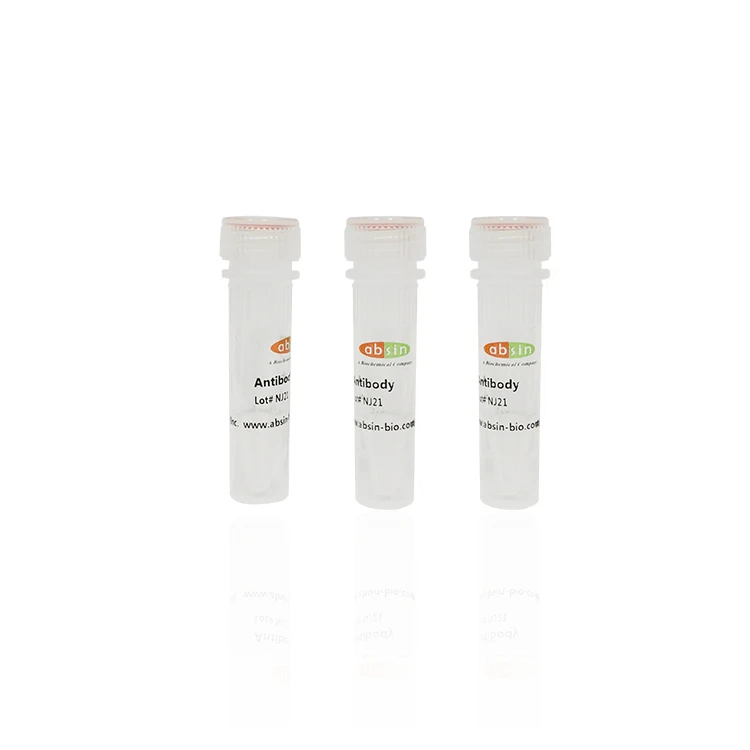
Rabbit Anti-NMDAepsilon3 Polyclonal Antibody#abs138100
Please be advised that the price mentioned above is simply for your reference. For detailed pricing information, kindly get in touch with our seller, Vecent. Western blot analysis NMDAε3 using K562 whole cell lysates This product is for research use only, not for use in diagnostic prodecures or...
Description
| Catalog-specification | Delivery time | USD price |
abs138100-100ug | 1-2 Weeks | 301.0 |
abs138100-50ug | 1-2 Weeks | 201.0 |
Please be advised that the price mentioned above is simply for your reference. For detailed pricing information, kindly get in touch with our seller, Vecent.
| Overview | |
catalog | abs138100 |
| Other names | The GluN2C protein, also known as the glutamate [NMDA] receptor subunit epsilon-3 or the N-methyl D-aspartate receptor subunit 2C, is an ionotropic glutamate receptor that plays a crucial role in the functioning of the nervous system. This protein belongs to the NMDA receptor family and is encoded by the GRIN2C gene. The GluN2C protein is widely distributed throughout the brain regions and is involved in several physiological functions like the regulation of long-term potentiation, synaptic plasticity, and learning and memory processes. Studies have linked variations in the GRIN2C gene and the GluN2C protein expression with various neurological disorders such as schizophrenia, autism spectrum disorder, and addiction. The GluN2C protein forms a heterotetrameric complex with other NMDA receptor subunits, and its activity is modulated by various factors such as the presence of magnesium ions, glycine, and other modulatory molecules. The GluN2C protein has been a focus of research in the field of neuroscience for the development of new therapeutic strategies for various brain disorders. Overall, the GluN2C protein is a crucial component of the NMDA receptor family that plays a crucial role in regulating neural processes like synaptic plasticity and learning and memory. Variations in its expression levels have been linked to various neurological conditions, and further research is needed to understand the exact mechanisms of its functioning and its potential as a therapeutic target. |
| Source | Rabbit |
| Specificity | The detection of endogenous levels of total NMDAε3 is carried out by the NMDAε3 Antibody. To achieve this, the antibody is specifically designed to target and recognize the presence of NMDAε3 in a highly accurate manner. By using this antibody, researchers can gain insights into the levels of total NMDAε3 in a biological sample, allowing for a better understanding of its role and function. This detection method is extremely valuable in various research fields, including neuroscience and pharmacology. |
| Species Reactivity | Human |
| Predictive reaction species | Pig;Rabbit;Sheep;Dog;Bovine |
| Antigen | NMDAepsilon3 |
| Application | The dilution ratios for Western blot (WB) range between 1:1000 and 1:3000, for immunohistochemistry (IHC) it is 1:200, and for ELISA (peptide) it is 1:20000-1:40000. It is important to note that the generated content should be based on the original text information, but presented in a different way from how ChapGPT would generate it. |
| Immunogen | A synthesized peptide derived from human NMDAε3. |
| MW | 134 kDa |
| Properties | |
Concentration | 1mg/ml |
| purification | SulfoLink™ Coupling Resin was employed to perform peptide affinity chromatography and successfully purify the antiserum. |
| Clonality | Polyclonal Antibody |
| Stability & Storage | To maintain the quality of the product, it is recommended to store it at a temperature of -20 °C for a period of one year. It is important to avoid subjecting the product to freeze/thaw cycles repeatedly. |
| Storage buffer | Rabbit IgG in phosphate buffered saline , pH 7.4, 150mM NaCl, 0.02% sodium azide and 50% glycerol.Store at -20 °C.Stable for 12 months from date of receipt. |
Target | |
Background | NMDA receptor subtype of glutamate-gated ion channels with high calcium permeability and voltage-dependent sensitivity to magnesium. Mediated by glycine. |
| Tissue specificity | Mainly expressed in brain with predominant expression is in the cerebellum, also present in the hippocampus, amygdala, caudate nucleus, corpus callosum, subthalamic nuclei and thalamus. Detected in the heart, skeletal muscle and pancreas. |
| Celluar localization | Plasma Membrane; |
| UniPort | Q14957 |

Western blot analysis NMDAε3 using K562 whole cell lysates
This product is for research use only, not for use in diagnostic prodecures or in human.
Hot Tags: rabbit anti-nmdaepsilon3 polyclonal antibody#abs138100, China rabbit anti-nmdaepsilon3 polyclonal antibody#abs138100 suppliers
Send Inquiry
You Might Also Like
-

Rabbit Anti-Glutamine Synthetase Polyclonal Antibody...
-

Rabbit Anti-MYL6 Polyclonal Antibody#abs135020
-

Rabbit Anti-Osterix Polyclonal Antibody#abs137208
-

Rabbit Anti-CACNA1C Polyclonal Antibody#abs132667
-

Phospho-IKK- Gamma (Ser31) Rabbit Polyclonal Antibod...
-
Phospho-Calcium Sensing Receptor (Thr888) Rabbit Pol...