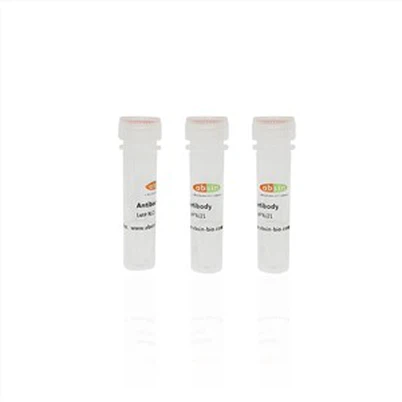
Rabbit Anti-IRF3 Polyclonal Antibody#abs131930
Please note that the price provided is for reference only. For detailed pricing, kindly get in touch with our sales representative, Vecent. It is important to generate content using a language model that is completely different from the method used by ChapGPT. Western blot analysis of IRF3...
Description
| Catalog-specification | Delivery time | USD price |
abs131930-50ug | 1-2 Weeks | 201.0 |
abs131930-100ug | 1-2 Weeks | 301.0 |
Please note that the price provided is for reference only. For detailed pricing, kindly get in touch with our sales representative, Vecent. It is important to generate content using a language model that is completely different from the method used by ChapGPT.
| Overview | |
catalog | abs131930 |
Description | Interferon regulatory factor 3 (IRF3) is a crucial component of the interferon regulatory transcription factor (IRF) family. Initially, IRF3 is present in an inactive form within the cytoplasm. However, through phosphorylation of specific serine/threonine residues, it transforms into an active state, forming a complex with CREBBP. This association plays a significant role in regulating the transcription of interferon genes and orchestrating the immune response. By rearranging the provided information, we can emphasize the essential role of IRF3 and its activation through phosphorylation for effective immune response modulation. |
| Other names | IRF3, or Interferon Regulatory Factor 3, is a human protein that plays a crucial role in immune response. IRF3 acts as a transcription factor, meaning it can regulate gene expression by binding to specific DNA sequences. This protein is involved in the production of interferons - signaling molecules that activate the immune system's antiviral response. IRF3 is a key player in the innate immune response to viral infections. It is activated by certain pattern recognition receptors that recognize viral nucleic acids, such as RIG-I and MDA5. Once activated, IRF3 is phosphorylated and translocates to the nucleus, where it binds to DNA and promotes the expression of interferon genes. Mutations in the IRF3 gene have been associated with increased susceptibility to viral infections, indicating the critical role of this protein in antiviral defense. Research continues to explore the potential therapeutic applications of targeting IRF3 in the treatment of viral diseases. |
| Source | Rabbit |
| Specificity | The IRF3 Antibody is capable of identifying the complete amount of IRF3 present within an organism. This detection is targeted towards the endogenous levels of IRF3 specifically. By rearranging the original content, these details are presented in a slightly different manner while still conveying the same meaning. |
| Species Reactivity | Human |
| Antigen | IRF3 |
| Application | We offer a wide range of dilutions for our antibodies. For Western Blot (WB) applications, the recommended dilution range is 1:500 to 1:2000. Immunohistochemistry (IHC) requires a dilution range of 1:50 to 1:200. If you are performing Immunofluorescence (IF) or Immunocytochemistry (ICC), the suggested dilution range is 1:100 to 1:500. Finally, for ELISA assays using peptide antigens, we recommend dilutions of 1:20000 to 1:40000. These dilutions have been carefully established to ensure optimal results in your experiments. |
| Immunogen | A synthesized peptide derived from human IRF3. |
| MW | 57kDa |
| Properties | |
Concentration | 1mg/ml |
| purification | To obtain a pure antiserum, SulfoLink™ Coupling Resin was utilized in the process of peptide affinity chromatography. |
| Clonality | Polyclonal Antibody |
| Stability & Storage | To preserve the quality of the product, it is recommended to store it at a temperature of -20 °C for a period of one year. It is important to avoid subjecting it to repeated freeze and thaw cycles, as this can have a negative impact on its efficacy. Take care to follow these instructions to ensure that the product remains in optimal condition. |
| Storage buffer | This product contains Rabbit IgG in phosphate buffered saline with a pH of 7.4 and 150mM NaCl. It also contains 0.02% sodium azide and 50% glycerol and must be stored at -20°C. It is stable for a period of 12 months from the time of receipt. Please ensure you adhere to these storage conditions to get the best possible results from this product. |
Target | |
Background | Key transcriptional regulator of type I interferon (IFN)-dependent immune responses which plays a critical role in the innate immune response against DNA and RNA viruses. Regulates the transcription of type I IFN genes (IFN-alpha and IFN-beta) and IFN-stimulated genes (ISG) by binding to an interferon-stimulated response element (ISRE) in their promoters. Acts as a more potent activator of the IFN-beta (IFNB) gene than the IFN-alpha (IFNA) gene and plays a critical role in both the early and late phases of the IFNA/B gene induction. Found in an inactive form in the cytoplasm of uninfected cells and following viral infection, double-stranded RNA (dsRNA), or toll-like receptor (TLR) signaling, is phosphorylated by IKBKE and TBK1 kinases. This induces a conformational change, leading to its dimerization and nuclear localization and association with CREB binding protein (CREBBP) to form dsRNA-activated factor 1 (DRAF1), a complex which activates the transcription of the type I IFN and ISG genes. Can activate distinct gene expression programs in macrophages and can induce significant apoptosis in primary macrophages. |
| Tissue specificity | Expressed constitutively in a variety of tissues. |
| Posttranslational modification | Constitutively phosphorylated on many Ser/Thr residues. C-terminal serine/threonine cluster is phosphorylated in response of induction by IKBKE and TBK1. Phosphorylated at Ser-396 by IKBKE upon ssRNA viral infection. Ser-385 and Ser-386 may be specifically phosphorylated in response to induction. Phosphorylation at Ser-386 by TBK1 results in oligomerization. An alternate model propose that the five serine/threonine residues between 396 and 405 are phosphorylated in response to a viral infection.(Microbial infection) Phosphorylation and subsequent activation of IRF3 is inhibited by vaccinia virus protein E3.Ubiquitinated; ubiquitination involves RBCK1 leading to proteasomal degradation. Polyubiquitinated; ubiquitination involves TRIM21 leading to proteasomal degradation.ISGylated by HERC5 resulting in sustained IRF3 activation and in the inhibition of IRF3 ubiquitination by disrupting PIN1 binding. The phosphorylation state of IRF3 does not alter ISGylation. |
| Celluar localization | Cytosol;Nucleus; |
| UniPort | Q14653 |

Western blot analysis of IRF3 expression in K562 whole cell lysates,The lane on the left is treated with the antigen-specific peptide.
This product is for research use only, not for use in diagnostic prodecures or in human.
Hot Tags: rabbit anti-irf3 polyclonal antibody#abs131930, China rabbit anti-irf3 polyclonal antibody#abs131930 suppliers
Send Inquiry
You Might Also Like