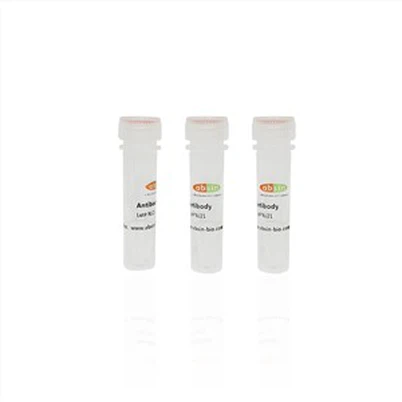
Rabbit Anti-Histone H4R3me2a Polyclonal Antibody#abs136474
Please note that the price provided is for your reference only. For more detailed pricing information, please contact Vecent, our dedicated seller. We want to ensure that you have accurate information when making your purchase decision so please do not hesitate to reach out to us for further...
Description
| Catalog-specification | Delivery time | USD price |
abs136474-100ug | 1-2 Weeks | 301.0 |
abs136474-50ug | 1-2 Weeks | 201.0 |
Please note that the price provided is for your reference only. For more detailed pricing information, please contact Vecent, our dedicated seller. We want to ensure that you have accurate information when making your purchase decision so please do not hesitate to reach out to us for further details.
| Overview | |
catalog | abs136474 |
Description | Histones, which are basic nuclear proteins found in eukaryotes, play a crucial role in forming the nucleosome structure of the chromosomal fiber. Nucleosomes are composed of about 146 base pairs of DNA wrapped around a histone octamer consisting of pairs of four core histones: H2A, H2B, H3, and H4. To further compact the chromatin fiber, a linker histone called H1 interacts with the DNA between nucleosomes, giving rise to higher order chromatin structures. Interestingly, the gene associated with this particular histone, H4, lacks introns and produces transcripts without polyA tails. Instead, these transcripts feature a unique palindromic termination element. In summary, histones and their interactions with DNA play a vital role in organizing and compacting genetic material within the nucleus. |
| Other names | H4; H4.k; H4/a; H4/b; H4/c; H4/d; H4/e; H4/g; H4/h; H4/I; H4/j; H4/k; H4/m; H4/n; H4/p; H4_HUMAN; H4F2; H4F2iii; H4F2iv; H4FA; H4FB; H4FC; H4FD; H4FE; H4FG; H4FH; H4FI; H4FJ; H4FK; H4FM; H4FN; H4M; HIST1H4A; HIST1H4B; HIST1H4C; HIST1H4D; HIST1H4E; HIST1H4F; HIST1H4H; HIST1H4I; HIST1H4J; HIST1H4K; HIST1H4L; HIST2H4; HIST2H4A; Hist4h4; Histone 1 H4a; Histone 1 H4b; Histone 1 H4c; Histone 1 H4d; Histone 1 H4e; Histone 1 H4f; Histone 1 H4h; Histone 1 H4i; Histone 1 H4j; Histone 1 H4k; Histone 1 H4l; Histone 2 H4a; histone 4 H4; Histone H4; MGC24116; dJ160A22.1; dJ160A22.2; dJ221C16.1; dJ221C16.9; FO108; Here are some rearranged versions: 1. MGC24116; Histone H4; Histone 1 H4a; Histone 1 H4b; Histone 1 H4c; Histone 1 H4d; Histone 1 H4e; Histone 1 H4f; Histone 1 H4h; Histone 1 H4i; Histone 1 H4j; Histone 1 H4k; Histone 1 H4l; Histone 2 H4a; histone 4 H4; H4; H4.k; H4/a; H4/b; H4/c; H4/d; H4/e; H4/g; H4/h; H4/I; H4/j; H4/k; H4/m; H4/n; H4/p; H4_HUMAN; H4F2; H4F2iii; H4F2iv; H4FA; H4FB; H4FC; H4FD; H4FE; H4FG; H4FH; H4FI; H4FJ; H4FK; H4FM; H4FN; H4M; HIST1H4A; HIST1H4B; HIST1H4C; HIST1H4D; HIST1H4E; HIST1H4F; HIST1H4H; HIST1H4I; HIST1H4J; HIST1H4K; HIST1H4L; HIST2H4; HIST2H4A; Hist4h4; dJ160A22.1; dJ160A22.2; dJ221C16.1; dJ221C16.9; FO108; 2. H4FG; H4FH; H4FI; H4FJ; H4FK; H4FM; H4FN; H4M; H4FN; H4M; HCI; H4FH; H4FE; H4FI; H4FE; H4FG; H4FJ; H4F2iii; H4IHUANF4; H4FJ; H4FA; H4FN; H4M; FO108; H4FE; H4FH; H4FI; H4FG; H4FN; H4FJ; H4FK; H4FM; H4FM; H4FK; H4FA; H4FI; H4FB; H4FC; H4FD; H4FG; H4FH; H4FN; H4MET; H4MH; H4MH; H4MH; H4MH; H4MH; H4/HU; H4/k; H4/m; H4/n; H4/I; H4dJ160A22.1; H4/I; H4/j; H4/F; H4/I; H4/j; H4/F; H4/I; H4/n; H4M; H4/1H/4A; H4M; H4/c; H4/k; H4/m; H4/n; H4H; H4FC; H4FD; H4FE; H4FG; H4FH; H4FG; H4FK; H4FM; H4FN; H4MH; H4MH; H4/h; H4/h; H4/h; H4/h; H4/h; H4/h; H4/h; H4/h; H4/h; H4/h; H4/h; H4/h; H4/h; H4/h; H4/h; H4/h; H4/h; H4/h; H4/h; H4/HU; H4/K; H4FM; H4/F; H4/J; H4HOGENE; H4F2; H4F2iv; H4FE; H4FH; H4FI; Histone 1 H4a; Histone 1 H4b; Histone 1 H4c; Histone 1 H4d; Histone 1 H4e; Histone 1 H4f; Histone 1 H4h; Histone 1 H4i; Histone 1 H4j; Histone 1 H4k; Histone 1 H4l; Histone 2 H4a; H4FJ; H4FK; 3. H4FH; H4FI; H4FJ; H4FK; H4FM; H4FN; H4M; Histone 2 H4a; histone 4 H4; H4; H4.k; H4/a; H4/b; H4/c; H4/d; H4/e; H4/g; H4/h; H4/I; H4/j; H4/k; H4/m; H4/n; H4/p; H4_HUMAN; H4F2; H4F2iii; H4F2iv; H4FA; H4FB; H4FC; H4FD; H4FE; H4FG; H4FA; H4FI; H4FB; H4FC; H4FD; H4_map; H4FEFG; H4FH; H4FI; H4FJ; H4FK; H4FM; H4FN; H4M; Hist1H4A; Hist1H4B; Hist1H4C; Hist1H4D; Hist1H4E; Hist1H4F; Hist1H4H; Hist1H4I; Hist1H4J; Hist1H4K; Hist1H4L; Hist2H4; Hist2H4A; H4FJ; H4FK; H4FI; H4FA; H4FB; H4FC; H4FD; H4FE; H4FG; H4FH; H4FI; H4FJ; H4FK; H4FM; H4FN; H4M; histone 4 H4; Histone H4; MGC24116; dJ160A22.1; dJ160A22.2; dJ221C16.1; dJ221C16.9; FO108; |
| Source | Rabbit |
| Specificity | The total levels of endogenous Histone H4R3me2a can be detected using the Histone H4R3me2a Antibody. This antibody is designed to specifically recognize and bind to Histone H4R3me2a in biological samples. |
| Species Reactivity | Human;Mouse;Rat |
| Antigen | Histone H4R3me2a |
| Application | WB 1:500-1:2000, IF 1:50-1:200, IP 1:50-1:100, CHIP 1:50-1:200, ELISA(peptide) 1:20000-1:40000 can be used as dilution ratios for various laboratory techniques. These dilutions help in achieving optimum sensitivity and accuracy in detecting and analyzing proteins or peptides. When performing Western Blot (WB), it is recommended to dilute the primary antibody at a ratio of 1:500 to 1:2000. This allows for effective detection of the target protein on the membrane. For Immunofluorescence (IF), a dilution ratio of 1:50 to 1:200 is commonly used for the primary antibody. This ensures specific binding to the target antigen, enabling visualization under a fluorescence microscope. In Immunoprecipitation (IP), a range of 1:50 to 1:100 is preferred when diluting the antibody. This facilitates the removal of specific proteins from a complex mixture, thereby allowing their subsequent analysis. Chromatin Immunoprecipitation (CHIP) involves the enrichment and identification of DNA sequences associated with specific proteins. The primary antibody used in CHIP experiments is generally diluted at a ratio of 1:50 to 1:200, ensuring efficient immunoprecipitation of the protein-DNA complexes. Enzyme-Linked Immunosorbent Assay (ELISA) using peptide antigens requires the primary antibody to be diluted at a ratio of 1:20000 to 1:40000. This level of dilution ensures optimal sensitivity for detecting the peptide of interest. In conclusion, selecting appropriate dilution ratios for each laboratory technique is crucial for obtaining reliable and accurate results in protein or peptide analysis. |
| Immunogen | H4,,。 |
| MW | 11kDa |
| Properties | |
Concentration | 1mg/ml |
| purification | The antiserum was purified by peptide affinity chromatography using SulfoLink™ Coupling Resin . |
| Clonality | Polyclonal Antibody |
| Stability & Storage | Store at -20 °C for one year. Avoid repeated freeze/thaw cycles |
| Storage buffer | Rabbit IgG in phosphate buffered saline , pH 7.4, 150mM NaCl, 0.02% sodium azide and 50% glycerol.Store at -20 °C.Stable for 12 months from date of receipt. |
Target | |
Background | Core component of nucleosome. Nucleosomes wrap and compact DNA into chromatin, limiting DNA accessibility to the cellular machineries which require DNA as a template. Histones thereby play a central role in transcription regulation, DNA repair, DNA replication and chromosomal stability. DNA accessibility is regulated via a complex set of post-translational modifications of histones, also called histone code, and nucleosome remodeling. |
| Posttranslational modification | Acetylation at Lys-6 (H4K5ac), Lys-9 (H4K8ac), Lys-13 (H4K12ac) and Lys-17 (H4K16ac) occurs in coding regions of the genome but not in heterochromatin.Citrullination at Arg-4 (H4R3ci) by PADI4 impairs methylation.Monomethylation and asymmetric dimethylation at Arg-4 (H4R3me1 and H4R3me2a, respectively) by PRMT1 favors acetylation at Lys-9 (H4K8ac) and Lys-13 (H4K12ac). Demethylation is performed by JMJD6. Symmetric dimethylation on Arg-4 (H4R3me2s) by the PRDM1/PRMT5 complex may play a crucial role in the germ-cell lineage.Monomethylated, dimethylated or trimethylated at Lys-21 (H4K20me1, H4K20me2, H4K20me3). Monomethylation is performed by SET8. Trimethylation is performed by KMT5B and KMT5C and induces gene silencing.Phosphorylated by PAK2 at Ser-48 (H4S47ph). This phosphorylation increases the association of H3.3-H4 with the histone chaperone HIRA, thus promoting nucleosome assembly of H3.3-H4 and inhibiting nucleosome assembly of H3.1-H4.Ubiquitinated by the CUL4-DDB-RBX1 complex in response to ultraviolet irradiation. This may weaken the interaction between histones and DNA and facilitate DNA accessibility to repair proteins. Monoubiquitinated at Lys-92 of histone H4 (H4K91ub1) in response to DNA damage. The exact role of H4K91ub1 in DNA damage response is still unclear but it may function as a licensing signal for additional histone H4 post-translational modifications such as H4 Lys-21 methylation (H4K20me).Sumoylated, which is associated with transcriptional repression.Crotonylation (Kcr) is specifically present in male germ cells and marks testis-specific genes in post-meiotic cells, including X-linked genes that escape sex chromosome inactivation in haploid cells. Crotonylation marks active promoters and enhancers and confers resistance to transcriptional repressors. It is also associated with post-meiotically activated genes on autosomes. |
| Celluar localization | Extracellular region or secreted;Nucleus; |
| UniPort | P62805 |

Western blot analysis of extracts of HeLa cellline and H3 protein expressed in E.coli., usingH4R3 me2a antibody|Dot-blot analysis of all sorts of methylation peptidesusing H4R3 me2a antibody|Immunofluorescence analysis of 293T cell usingH4R3 me2a antibody. Blue: DAPI for nuclear staining.
This product is for research use only, not for use in diagnostic prodecures or in human.
Hot Tags: rabbit anti-histone h4r3me2a polyclonal antibody#abs136474, China rabbit anti-histone h4r3me2a polyclonal antibody#abs136474 suppliers
Send Inquiry
You Might Also Like