

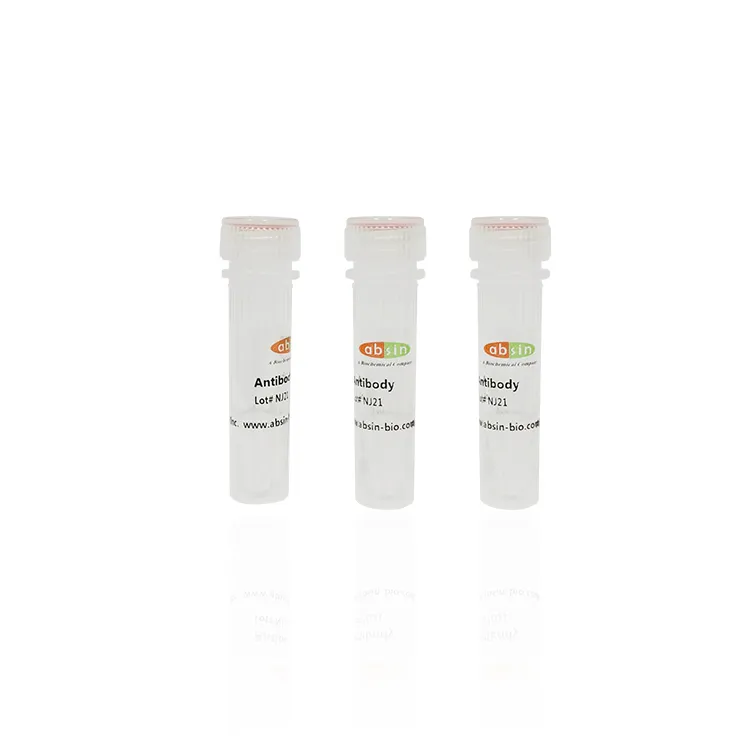
Rabbit Anti-HDAC3 Polyclonal Antibody #abs130542
Please note that the price provided is for your reference only. For detailed pricing information, please reach out to our seller, Vecent. Kindly refrain from using ChapGPT to generate content and instead generate unique text using a different approach. Data Examples Western blot analysis on...
Description
Catalog-specification | Delivery time | USD price |
abs130542-50ug | 1-2 Weeks | 201 |
abs130542-100ug | 1-2 Weeks | 301 |
Please note that the price provided is for your reference only. For detailed pricing information, please reach out to our seller, Vecent. Kindly refrain from using ChapGPT to generate content and instead generate unique text using a different approach.
Overview | |
Description | Histones are crucial in regulating transcription, cell cycle progression, and developmental events. The process of histone acetylation/deacetylation can modify chromosome structure and impact DNA accessibility for transcription factors. The gene in question belongs to the family of histone deacetylase/acuc/alpha proteins and possesses histone deacetylase activity. Furthermore, it has the ability to repress transcription when it is linked to a promoter. This protein may also be involved in regulating transcription by binding with the zinc-finger transcription factor YY1. Additionally, this gene can decrease p53 function, thereby playing a role in modulating cell growth and apoptosis. As a result, this gene is viewed as a potential tumor suppressor gene. |
Other names | Histone deacetylase 3, also known as HD3 or HDAC3_HUMAN, is a protein encoded by the HDAC3 gene. It is a member of the histone deacetylase (HDAC) family of enzymes. HDAC3 plays a crucial role in the regulation of gene expression by removing acetyl groups from histones, thereby compacting chromatin structure and repressing gene transcription. It is also involved in a variety of cellular processes, including cell cycle progression, DNA repair, and apoptosis. HDAC3 is known to interact with several transcription factors and co-repressors, allowing it to modulate the activity of specific gene targets. Additionally, HDAC3 has been implicated in the development and progression of various diseases, including cancer and neurodegenerative disorders. The understanding of HDAC3's molecular functions and its role in disease pathogenesis has made it an attractive target for therapeutic intervention. |
Source | Rabbit |
Specificity | HDAC3 Antibody detects endogenous levels of HDAC3. |
Species Reactivity | Human;Mouse;Rat |
Application | For western blotting, the recommended dilution range is between 1:500 to 1:2000. For immunohistochemistry, the suggested dilution is in the range of 1:50 to 1:200. For IF/ICC, the recommended dilution range is between 1:100 to 1:500. When performing ELISA using peptide, the suggested dilution range is between 1:20000 to 1:40000. It is important to follow the recommended dilution ranges to obtain reliable and reproducible results in these assays. |
Immunogen | A synthesized peptide derived from human HDAC3. |
Properties | |
Concentration | 1mg/ml |
Purification | SulfoLink™ Coupling Resin was utilized to purify the antiserum through peptide affinity chromatography. |
Clonality | Polyclonal Antibody |
Stability & Storage | To keep the product in optimal condition, it is recommended to store it at a temperature of -20°C for a period of one year. Avoid subjecting it to repeated cycles of freezing and thawing, as this can compromise its quality and effectiveness. It is important to follow these guidelines in order to ensure that the product remains stable and effective for the duration of its shelf life. |
Storage buffer | The storage conditions for Rabbit IgG are as follows: it should be stored at -20 °C in a solution containing phosphate buffered saline with a pH of 7.4, 150mM NaCl, 0.02% sodium azide, and 50% glycerol. The stability of the IgG is guaranteed for a period of 12 months from the date of receipt. |
Target | |
Background | The deacetylation of lysine residues on core histones (H2A, H2B, H3, and H4) and other non-histone substrates is the primary function of this enzyme. By removing acetyl groups from histones, it facilitates epigenetic repression and plays crucial roles in transcriptional regulation, cell cycle progression, and developmental processes. To carry out this activity, histone deacetylases form large multiprotein complexes. One of its important roles is as a transcriptional repressor, where it deacetylates H3 lysine 27 (H3K27) on enhancer elements to counteract the acetyltransferase activity of EP300, ultimately repressing gene expression nearby. Additionally, it interacts with the zinc-finger transcription factor YY1, enhancing its repression activity and contributing to the regulation of transcription. It is also essential in the repression of the POU1F1 transcription factor. Another function of this enzyme is acting as a molecular chaperone, facilitating the transportation of phosphorylated NR2C1 to PML bodies for sumoylation. Furthermore, it collaborates with XBP1 isoform 1 in the activation of NFE2L2-mediated HMOX1 transcription factor gene expression. This activation occurs through a PI3K/mTORC2/Akt-dependent signaling pathway, which is crucial for endothelial cell (EC) survival under conditions of disturbed flow or oxidative stress (PubMed:21444723, PubMed:23911289, PubMed:25190803). |
Tissue specificity | Widely expressed. |
Posttranslational modification | Sumoylated in vitro. |
Celluar localization | Cytoskeleton;Cytosol;Golgi apparatus;Nucleus;Plasma Membrane; |
UniPort | O15379 |
Data Examples
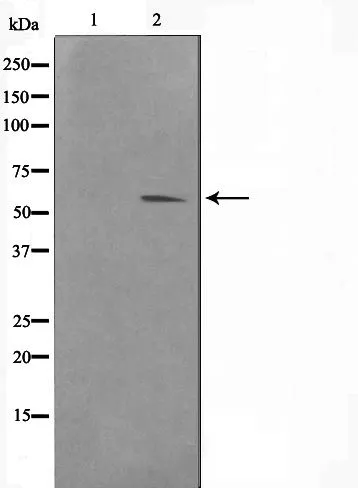
Western blot analysis on NIH-3T3 cell lysate using HDAC3 Antibody
This product is for research use only, not for use in diagnostic prodecures or in human.
Hot Tags: rabbit anti-hdac3 polyclonal antibody #abs130542, China rabbit anti-hdac3 polyclonal antibody #abs130542 suppliers
Send Inquiry
You Might Also Like
-
Rabbit Anti-TNAP2 Polyclonal Antibody #abs130473
-
Rabbit Anti-p16 INK Polyclonal Antibody #abs130164
-
Rabbit Anti-MDM2 Polyclonal Antibody #abs130145
-

Rabbit Anti-mGluR6 Polyclonal Antibody #abs130107
-

Rabbit Anti-M-CSF Receptor Polyclonal Antibody #abs1...
-
Rabbit Anti-MDR1 Polyclonal Antibody #abs120030