


Rabbit Anti-CD81 Polyclonal Antibody#abs132701
Please note that the price provided above is only for reference purposes. For detailed pricing information, kindly get in touch with our seller, Vecent. It is important to keep in mind that the price may vary depending on a number of factors. So, to get a clear understanding of the cost...
Description
| Catalog-specification | Delivery time | USD price |
abs132701-50ug | 1-2 Weeks | 201.0 |
abs132701-100ug | 1-2 Weeks | 301.0 |
Please note that the price provided above is only for reference purposes. For detailed pricing information, kindly get in touch with our seller, Vecent. It is important to keep in mind that the price may vary depending on a number of factors. So, to get a clear understanding of the cost involved, we recommend contacting Vecent directly.
| Overview | |
catalog | abs132701 |
Description | The regulation of lymphoma cell growth is a crucial process that may be influenced by a certain protein. This protein is known to interact with a 16-kDa Leu-13 protein and together they form a complex that may be involved in signal transduction. Additionally, studies suggest that this protein may act as a viral receptor for HCV. Its role in these processes has yet to be fully elucidated, but its potential significance in lymphoma growth and viral infection makes it an area of active research. |
| Other names | TAPA1, also known as CD81, is a cell surface protein with a molecular weight of 26 kDa. It is an antigen targeted by the antiproliferative antibody 1. TAPA1, or CD81, belongs to the tetraspanin family and is encoded by the CD81 gene in humans. It is involved in various cellular processes and functions. TAPA1 is also referred to as TSPAN28 or S5.7 in some contexts. It plays a significant role in immune function and has been associated with Common Variable Immunodeficiency Disorder 6 (CVID6). |
| Source | Rabbit |
| Specificity | The CD81 antibody is capable of detecting total CD81 protein at its natural levels in the body. This indicates that the antibody can recognize and bind to the native CD81 protein present in biological samples. |
| Species Reactivity | Human;Mouse;Rat |
| Predictive reaction species | Horse |
| Antigen | CD81 |
| Application | ,:WB 1:500-1:2000,IF/ICC 1:100-1:500,ELISA()1:20000-1:40000。 |
| Immunogen | A synthesized peptide. |
| MW | 26 kDa |
| Properties | |
Concentration | 1mg/ml |
| purification | Using SulfoLink™ Coupling Resin, the antiserum underwent purification through peptide affinity chromatography. The resulting product is highly purified and free from unwanted contaminants, ensuring the highest quality of the antiserum. |
| Clonality | Polyclonal Antibody |
| Stability & Storage | Store at -20 °C for one year. Avoid repeated freeze/thaw cycles |
| Storage buffer | Rabbit IgG in phosphate buffered saline, pH 7.4, 150mM NaCl, 0.02% sodium azide and 50% glycerol. |
Target | |
Background | May play an important role in the regulation of lymphoma cell growth. Interacts with a 16-kDa Leu-13 protein to form a complex possibly involved in signal transduction. May act as the viral receptor for HCV. |
| Tissue specificity | Hematolymphoid, neuroectodermal and mesenchymal tumor cell lines. |
| Posttranslational modification | Not glycosylated. |
| Celluar localization | Extracellular region or secreted;Plasma Membrane; |
| UniPort | P60033 |
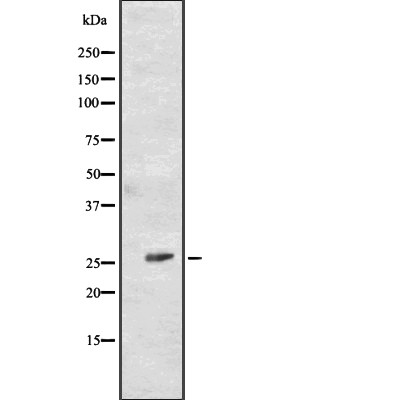
Western blot analysis of CD81 expression in HEK293 cells ,The lane on the left is treated with the antigen-specific peptide.
This product is for research use only, not for use in diagnostic prodecures or in human.
Hot Tags: rabbit anti-cd81 polyclonal antibody#abs132701, China rabbit anti-cd81 polyclonal antibody#abs132701 suppliers
Send Inquiry
You Might Also Like


