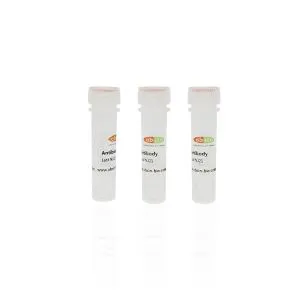
Rabbit Anti-CD55 Polyclonal Antibody#abs131355
Please be aware that the price provided is for your reference only. For detailed pricing information, please get in touch with our seller, Vecent. Kindly note that the content generated here is based on the original text information but presented in a distinctly different manner. This product is...
Description
| Catalog-specification | Delivery time | USD price |
abs131355-50ug | 1-2 Weeks | 201.0 |
abs131355-100ug | 1-2 Weeks | 301.0 |
Please be aware that the price provided is for your reference only. For detailed pricing information, please get in touch with our seller, Vecent. Kindly note that the content generated here is based on the original text information but presented in a distinctly different manner.
| Overview | |
catalog | abs131355 |
Description | This particular protein is capable of identifying C4b and C3b fragments that bind with hydroxyl or amino groups on the surface of a cell. This occurs when nascent C4b and C3b are produced during the activation of C4 and C3. |
| Other names | CD55, also known as CD55 antigen or Cromer blood group system, is a molecule that plays a crucial role in regulating the complement system. It is encoded by the CD55 gene and belongs to the decay accelerating factor (DAF) family. CD55 functions as a GPI-anchored protein, exerting its effect by accelerating the decay of the complement system, hence its name "complement decay accelerating factor." The importance of CD55 in the Cromer blood group system cannot be understated. The Cromer blood group antigens are expressed on CD55 molecules and are associated with various phenotypes. These antigens are classified by the presence or absence of certain epitopes on CD55, leading to different blood group phenotypes. CD55, or DAF, acts as a protective factor by preventing the complement system from excessively activating and damaging self-cells. By accelerating the decay of complement components such as C3 and C5 convertases, CD55 efficiently regulates the activation of the complement cascade and protects cells from complement-mediated lysis. The CD55 molecule is glycosylphosphatidylinositol (GPI)-anchored, meaning it is attached to the cell membrane via a GPI anchor. This GPI-linked form of CD55 is the predominant isoform expressed on cell surfaces. In addition to the GPI-anchored form, CD55 also has soluble forms that can be released into the surrounding environment. These soluble forms maintain their complement regulatory function and contribute to immune homeostasis. The CD55 gene is located on chromosome 1q32 and consists of multiple exons. Alternative splicing of the CD55 mRNA results in different isoforms with various domain compositions. One such isoform, known as isoform CRA_a, is reported to be associated with decay accelerating activity. Overall, CD55 is a crucial molecule involved in regulating the complement system and maintaining immune balance. Its importance in the Cromer blood group system highlights its role in determining different blood group phenotypes. The multiple forms and isoforms of CD55 offer flexibility in complement regulation and provide a fine-tuned immune response to various stimuli. |
| Source | Rabbit |
| Specificity | The total CD55 levels can be detected by the CD55 antibody, which is capable of identifying the endogenous levels of CD55. |
| Species Reactivity | Human;Mouse |
| Antigen | CD55 |
| Application | The recommended dilution for Western blot (WB) is 1:500-1:2000, for immunofluorescence/immunocytochemistry (IF/ICC) is 1:100-1:500, and for ELISA (peptide) is 1:20000-1:40000. Feel free to adjust the dilution ratios based on your specific experimental needs. |
| Immunogen | A synthesized peptide derived from human CD55. |
| MW | 41 kDa |
| Properties | |
Concentration | 1mg/ml |
| purification | The SulfoLink™ Coupling Resin was utilized for peptide affinity chromatography in order to purify the antiserum. |
| Clonality | Polyclonal Antibody |
| Stability & Storage | Store at -20 °C for one year. Avoid repeated freeze/thaw cycles |
| Storage buffer | Rabbit IgG in phosphate buffered saline , pH 7.4, 150mM NaCl, 0.02% sodium azide and 50% glycerol.Store at -20 °C.Stable for 12 months from date of receipt. |
Target | |
Background | This protein recognizes C4b and C3b fragments that condense with cell-surface hydroxyl or amino groups when nascent C4b and C3b are locally generated during C4 and c3 activation. Interaction of daf with cell-associated C4b and C3b polypeptides interferes with their ability to catalyze the conversion of C2 and factor B to enzymatically active C2a and Bb and thereby prevents the formation of C4b2a and C3bBb, the amplification convertases of the complement cascade. |
| Tissue specificity | Expressed on the plasma membranes of all cell types that are in intimate contact with plasma complement proteins. It is also found on the surfaces of epithelial cells lining extracellular compartments, and variants of the molecule are present in body fluids and in extracellular matrix. |
| Posttranslational modification | The Ser/Thr-rich domain is heavily O-glycosylated. |
| Celluar localization | Extracellular region or secreted;Golgi apparatus;Plasma Membrane; |
| UniPort | P08174 |

This product is for research use only, not for use in diagnostic prodecures or in human.
Hot Tags: rabbit anti-cd55 polyclonal antibody#abs131355, China rabbit anti-cd55 polyclonal antibody#abs131355 suppliers
Send Inquiry
You Might Also Like