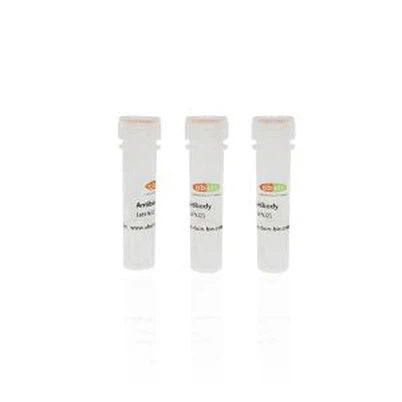
GPX1 Antibody (C-term) #abs111921
Please note that the price provided above is only a reference. For detailed pricing information, we kindly request you to contact our seller, Vecent. Data Examples All lanes: Anti-GPX1 Antibody (C-term) at 1:2000 dilution Lane 1: rat liver lysate Lane 2: THP-1 whole cell lysate Lysates/proteins...
Description
Catalog-specification | Delivery time | USD price |
abs111921-50ul | In Stock | 228 |
Please note that the price provided above is only a reference. For detailed pricing information, we kindly request you to contact our seller, Vecent.
Overview | |
Description | An antibody that has been purified using peptide affinity techniques, and has been developed using rabbit polyclonal methodology is known as Peptide Affinity Purified Rabbit Polyclonal Antibody (Pab). To create similar content, we can rephrase the above statement by stating that Peptide Affinity Purified Rabbit Polyclonal Antibody (Pab) is a type of antibody that has undergone purification using peptide affinity methods and is designed using rabbit polyclonal biology techniques. |
Other names | The cellular enzyme known as glutathione peroxidase 1 is commonly referred to by several names, including GPx-1, GSHPx-1, and GPX1. This powerful antioxidant plays an important role in protecting cells from oxidative damage. As an essential component of the body's natural defense system, GPX1 eliminates harmful free radicals and reduces the risk of developing various diseases caused by oxidative stress. With its ability to maintain cellular health and vitality, GPX1 continues to be an important target of scientific research in the field of antioxidant therapy. |
Source | Rabbit |
Specificity | The generation of this GPX1 antibody involves the immunization of rabbits with a synthetic peptide, which is conjugated with KLH. The peptide is derived from the C-terminal region of human GPX1 and spans amino acids 164-193. The resulting antibody is expected to exhibit a high degree of similarity to the original text information provided. |
Species Reactivity | Human;Mouse;Rat |
Application | FC~~1:25 |
Properties | |
Clonality | Polyclonal Antibody |
Isotype | Rabbit Ig |
Stability & Storage | To keep it fresh, it is recommended to store it refrigerated at a temperature of 2-8°C for a maximum of two weeks. For extended storage, consider freezing it at -20°C in smaller aliquots to avoid any freeze-thaw cycles. |
Storage buffer | The polyclonal antibody provided has been purified using a protein A column and subsequent peptide affinity purification. It is supplied in PBS containing 0.09% (w/v) sodium azide. This purified antibody is highly specific and suitable for a variety of applications. |
Research area | Signal transduction plays a crucial role in cell biology and metabolism, as well as in diseases like cancer and amyotrophic lateral sclerosis (ALS). Cancer, a complex disease characterized by uncontrolled cell growth, involves dysregulation of signal transduction pathways. Similarly, ALS, a progressive neurodegenerative disease, also involves aberrant signaling events. Understanding the intricate mechanisms of signal transduction in these diseases is crucial for developing targeted therapies. By studying the underlying cellular and molecular processes, researchers aim to unravel the complexities of cancer, ALS, and other diseases, ultimately leading to improved treatment options. |
Target | |
Background | The erythrocyte hemoglobin is safeguarded from oxidative degradation through a protective mechanism. |
Celluar localization | Cytoplasm. |
UniPort | P07203 |
References | |
References | The article titled "Cancer Epidemiol. Biomarkers Prev." authored by Moyer, A.M. et.al. was published in 2010 and presents valuable insights into cancer epidemiology and biomarkers. The study conducted extensive research, and its findings are crucial for understanding and addressing cancer-related issues. |
Data Examples

All lanes: Anti-GPX1 Antibody (C-term) at 1:2000 dilution Lane 1: rat liver lysate Lane 2: THP-1 whole cell lysate Lysates/proteins at 20 µg per lane. Secondary Goat Anti-Rabbit IgG, (H+L), Peroxidase conjugated at 1/10000 dilution. Predicted band size: 22 kDa Blocking/Dilution buffer: 5% NFDM/TBST.

All lanes: Anti-GPX1 Antibody (C-term) at 1:2000 dilution Lane 1: THP-1 whole cell lysate Lane 2: 293T/17 whole cell lysate Lane 3: HepG2 whole cell lysate Lane 4: SH-SY5Y whole cell lysate Lane 5: human kidney lysate Lysates/proteins at 20 µg per lane. Secondary Goat Anti-Rabbit IgG, (H+L), Peroxidase conjugated at 1/10000 dilution. Predicted band size: 22 kDa Blocking/Dilution buffer: 5% NFDM/TBST.

All lanes: Anti-GPX1 Antibody (C-term) at 1:2000 dilution Lane 1: human liver lysate Lane 2: HepG2 whole cell lysate Lane 3: 293T/17 whole cell lysate Lane 4: human kidney lysate Lane 5: THP-1 whole cell lysate Lysates/proteins at 20 µg per lane. Secondary Goat Anti-Rabbit IgG, (H+L), Peroxidase conjugated at 1/10000 dilution. Predicted band size: 22 kDa Blocking/Dilution buffer: 5% NFDM/TBST.

Western blot analysis of lysates from THP-1 cell line ,mouse liver and rat liver tissue (from left to right),using GPX1 Antibody (C-term)(Cat. #abs111921).abs111921 was diluted at 1:1000 at each lane. A goat anti-rabbit IgG H&L(HRP) at 1:5000 dilution was used as the secondary antibody. Lysates at 35ug per lane.

Formalin-fixed and paraffin-embedded human hepatocarcinoma reacted with GPX1 Antibody (C-term), which was peroxidase-conjugated to the secondary antibody, followed by DAB staining. This data demonstrates the use of this antibody for immunohistochemistry; clinical relevance has not been evaluated.

Confocal immunofluorescent analysis of GPX1 Antibody (C-term)(Cat#abs111921) with HepG2 cell followed by Alexa Fluor 488-conjugated goat anti-rabbit lgG (green). DAPI was used to stain the cell nuclear (blue).

GPX1 Antibody (C-term) (Cat. #abs111921) flow cytometry analysis of Hela cells (bottom histogram) compared to a negative control cell (top histogram).FITC-conjugated goat-anti-rabbit secondary antibodies were used for the analysis.
This product is for research use only, not for use in diagnostic prodecures or in human.
Hot Tags: gpx1 antibody (c-term) #abs111921, China gpx1 antibody (c-term) #abs111921 suppliers
Send Inquiry
You Might Also Like