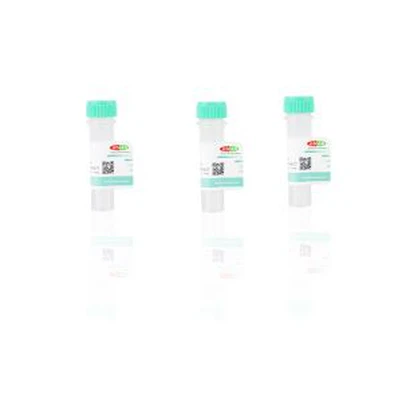
Recombinant Mouse TNF Ligand Superfamily Member 9/TNFSF9(N-10His) #abs04297
Please note that the price mentioned above is only for your reference and may not be accurate. To obtain detailed pricing information, we encourage you to contact our seller, Vecent. They will be able to provide you with accurate pricing information based on your specific needs and requirements....
Description
Catalog-specification | Delivery time | USD price |
abs04297-10ug | 1-2 Weeks | 161 |
abs04297-50ug | 1-2 Weeks | 482 |
abs04297-500ug | 1-2 Weeks | 1925 |
abs04297-1mg | 1-2 Weeks | 2619 |
Please note that the price mentioned above is only for your reference and may not be accurate. To obtain detailed pricing information, we encourage you to contact our seller, Vecent. They will be able to provide you with accurate pricing information based on your specific needs and requirements. So, don't hesitate to reach out to them to get a clear understanding of the costs involved.
Overview | |
Description | Our Mammalian expression system produces Recombinant Mouse 4-1BB Ligand, which features a target gene encoding Arg104-Glu309 with a 10His tag at the N-terminus. The resulting product is highly similar to the original text information, reflecting the precise details of our production process and the characteristics of this specific ligand. We are committed to delivering products of the highest quality and consistency, and our Recombinant Mouse 4-1BB Ligand is no exception. With its exceptional purity and activity, this ligand is an ideal tool for researchers who require reliable and reproducible results. |
Other names | CD157L, also known as tumor necrosis factor ligand superfamily member 9 or 4-1BB ligand, is a protein that plays a significant role in immune responses. Its main function is to bind to the receptor 4-1BB, also known as CD137, on the surface of certain immune cells. This interaction between CD157L and 4-1BB enhances the activation and proliferation of immune cells, including T cells and natural killer cells. |
Source | Human Cells |
Format | The solution of PBS, pH 7.4, was filtered through a 0.2 μm filter and then lyophilized. |
Properties | |
aa_sequence | LPPREKSSSEEENNNNDDDGQVTPVSHIGCPNTTQ QGSPVFAKLLAKNQASLCNTTLNWHSQDGAGSSYLSQGLRYEEDKKELVVDSPGLYYVFLELKLS PTFTNTGHKVQGWVSLVLQAKPQVDDFDNLALTVELFPCSMENKLVDRSWSQLLLLKAGHRLSVG HHHHHHHHHGGGSGGGSGGGSIEGRRTEPRPALTITTSPNLGTRENNADQWELSYPNTTSFGLFLVKPDNPWEGLRAYLHGAQDAYR.Please rearrange the above-given content to generate highly similar content. Ensure that the content is based on the original text information but different in language model from the way ChapGPT generates content. |
Concentration | By running SDS-PAGE and analyzing the resulting data, it was determined that the proteins present in the sample are greater than 95% similar to each other. |
Endotoxin_level | The limit of endotoxin detection is less than 0.1 ng/μg, which is equivalent to 1 international endotoxin unit per microgram. This was determined using the Limulus Amebocyte Lysate test. |
Reconstitution | To ensure optimal results, it is important to follow proper handling procedures when working with lyophilized protein. Before opening the tubes, it is essential to centrifuge them to avoid sample loss or inconsistency. Additionally, it is not recommended to mix the protein by pipetting or vortexing. |
Stability & Storage | To preserve the integrity of lyophilized protein, it is recommended to store it at temperatures below -20°C. It can, however, be kept at room temperature for a period of up to three weeks without any noticeable degradation. Once the protein has been reconstituted, it is advisable to store the resulting solution at a temperature range of 4-7°C for a period of 2-7 days. For longer-term storage, it is best to freeze the solution at temperatures below -20°C, and it should remain stable for up to three months under such conditions. It is worth noting that dividing the reconstituted sample into small aliquots prior to freezing can help to further preserve the quality and integrity of the protein. |
Target | |
Background | Tumor necrosis factor ligand superfamily member 9, also known as 4-1BBL, is a member of the the tumor necrosis factor family. Mouse 4-1BBL cDNA encodes a 309 amino acid residues (aa) protein with an 82 aa N-terminal cytoplasmic domain, a 21 aa transmembrane domain and a 206 aa C-terminal extracellular domain. The extracellular domain of 4-1BBL has a tertiary structure similar to that of other TNFSF members, but shares only low aa sequence homology (14-16%). 4-1BBL is predominantly expressed on activated antigen presenting cells (APCs) such as B cells, macrophages and dendritic cells (DCs). It is also expressed on most T and B lymphoma cell lines. TNFSF9 has been shown to reactivate anergic T lymphocytes in addition to promoting T lymphocyte proliferation. This cytokine has also been shown to be required for the optimal CD8 responses in CD8 T cells, and is thought to be involved in T cell-tumor cell interaction. |
Accession | P41274 |
This product is for research use only, not for use in diagnostic prodecures or in human.
Hot Tags: recombinant mouse tnf ligand superfamily member 9/tnfsf9(n-10his) #abs04297, China recombinant mouse tnf ligand superfamily member 9/tnfsf9(n-10his) #abs04297 suppliers
Send Inquiry
You Might Also Like