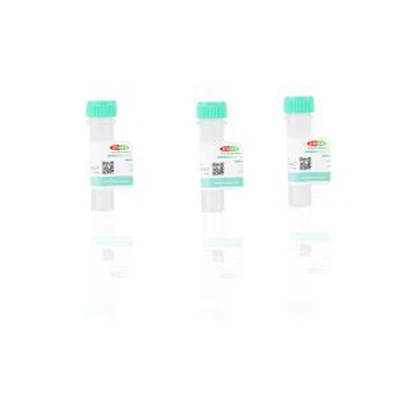
Recombinant Rat IL-4 #abs01053
Please note that the price mentioned is only for your reference. For more detailed information regarding the price, kindly get in touch with our seller Vecent. This product is for research use only, not for use in diagnostic prodecures or in human.
Description
Catalog-specification | Delivery time | USD price |
abs01053-5ug | 1-2 Weeks | 138 |
abs01053-20ug | 1-2 Weeks | 344 |
abs01053-1mg | 1-2 Weeks | 4214 |
Please note that the price mentioned is only for your reference. For more detailed information regarding the price, kindly get in touch with our seller Vecent.
Overview | |
Species | Rat |
Source | Escherichia coli. |
Format | The concentrated solution in PBS, pH 7.4, 5% trehalose was filtered through a 0.2 μm filter and then lyophilized. Let's discuss the process of lyophilization and its significance in preserving the integrity of the solution. |
Properties | |
aa_sequence | TLKDFLESLK HGCNDSPLRE DVPPCLKNKS GVLGELRKLC RVLRKFYFPR IINTLNQVTE PDVLTATRNT SCTVNESTLT KGTPCTEMFV TENELICRAS RC NKCCICGDFX MFVSLRGKYLQS CTSMSRGVSGLNSLRS. |
Concentration | > 95 % by SDS-PAGE and HPLC analyses. |
Endotoxin_level | The LAL method determined that the rRtIL-4 had less than 1 EU/μg. Can you provide me with content that conveys the same message but in a different way, using the available information? |
Activity | The potency of the sample is equivalent to the standard in terms of biological activity. In other words, it has completely preserved the standard's effectiveness.50According to an assay that measures cell proliferation in rat splenocytes, the determined concentration is below 1.0 ng/ml, indicating a specific activity greater than 1.0 × 10. Let's now generate a highly similar content by rearranging the original information.6 IU/mg. |
Reconstitution | Before opening, we suggest briefly centrifuging the vial to settle the contents at the bottom. You can reconstitute the contents in sterile distilled water or an aqueous buffer that contains 0.1% BSA, aiming for a concentration of 0.1-1.0 mg/ml. To ensure stability, divide the stock solutions into working aliquots and store them at -20 °C or below. When making further dilutions, use appropriate buffered solutions. |
Stability & Storage | The lyophilized preparation can be stored at 2-8 °C, but for long-term storage, it is recommended to keep it at -20 °C, preferably in a desiccated condition. Once reconstituted, the preparation remains stable for one week when stored at 2-8 °C. To ensure maximum stability, it is advised to divide the reconstituted preparation into smaller aliquots and store them at temperatures ranging from -20 °C to -70 °C. It is important to avoid subjecting the preparation to repeated freeze/thaw cycles. |
Target | |
Accession | P20096 |
Gene IDs | 287287 |
References | |
References | 1. Sokol CL, Barton GM, Farr AG, et al. 2008. Nat Immunol. 9:310-8. 2. Hershey GK, Friedrich MF, Esswein LA, et al. 1997. N Engl J Med. 337:1720-5. 3. Yokota T, Otsuka T, Mosmann T, et al. 1986. Proc Natl Acad Sci U S A. 83:5894-8. 4. Eder A, Krafft-Czepa H, Krammer PH. 1988. Nucleic Acids Res. 16:772. 5. Walter MR, Cook WJ, Zhao BG, et al. 1992. J Biol Chem. 267:20371-6. |
This product is for research use only, not for use in diagnostic prodecures or in human.
Hot Tags: recombinant rat il-4 #abs01053, China recombinant rat il-4 #abs01053 suppliers
Send Inquiry
You Might Also Like