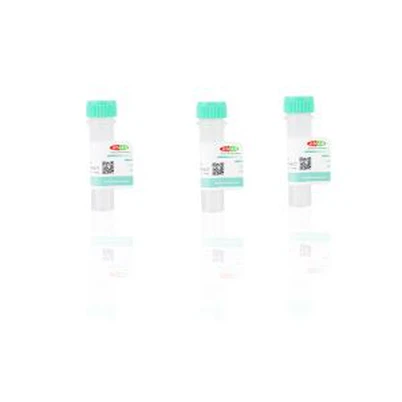
Recombinant Human C-C Motif Chemokine 28/CCL28 #abs04146
Please note that the price provided is only for your reference. For detailed pricing information, we kindly ask you to get in touch with our seller, Vecent. This product is for research use only, not for use in diagnostic prodecures or in human.
Description
Catalog-specification | Delivery time | USD price |
abs04146-10ug | 1-2 Weeks | 179 |
abs04146-50ug | 1-2 Weeks | 535 |
abs04146-500ug | 1-2 Weeks | 1879 |
abs04146-1mg | 1-2 Weeks | 2561 |
Please note that the price provided is only for your reference. For detailed pricing information, we kindly ask you to get in touch with our seller, Vecent.
Overview | |
Description | Our E.coli expression system is responsible for producing Recombinant Human C-C Motif Chemokine 28. During this process, the target gene encoding Ile20-Tyr127 is expressed. As a result, a chemokine molecule that closely mimics the natural human protein is created. Our methods ensure that the final product is of high quality and purity, making it an ideal candidate for use in scientific research and medical applications. |
Other names | MEC, also known as C-C Motif Chemokine 28 or Protein CCK1, is a small-inducible cytokine that is primarily found in mucosae-associated epithelial cells. It plays a key role in immune response by recruiting immune cells to the mucosal surfaces. The gene that encodes for MEC is known as SCYA28. |
Source | Escherichia coli. |
Format | The original solution containing 20mM PB and 150mM NaCl at pH 7.2 went through a 0.2 μm filtration before being lyophilized. A highly similar content can be generated by rearranging this information as follows: The solution being lyophilized was filtered through a 0.2 μm filter, and its composition comprises 20mM PB, 150mM NaCl, and pH 7.2. |
Properties | |
aa_sequence | KRHNHSMRHCQGSGKPGNRAKHSHTEGTYGHKNVCHNRKKCPWALVSISREVTEVRLLMCDQRIQACDVGDDGCLKIVHRRRKVCPSPVTNHKQAKMKVVWWS.Potential generated content: |
Concentration | SDS-PAGE,95%。 |
Endotoxin_level | The LAL test has determined that the presence of endotoxin in the substance is less than 0.1 ng per μg or 1 International Endotoxin Unit per μg. |
Reconstitution | The tubes should always be centrifuged prior to opening. Avoid mixing through vortex or pipetting techniques. It is advisable not to reconstitute the protein at concentrations lower than 100 μg/ml. Use ddH2O to dissolve the lyophilized protein. Remember to aliquot the reconstituted solution to minimize freeze-thaw cycles. To create a similar content, rearrange the above information while maintaining the original text's meaning. |
Stability & Storage | To ensure the stability of lyophilized protein, it is recommended to store it below -20°C. However, it can also be kept at room temperature for up to three weeks without significant loss in its quality. |
Target | |
Background | Chemokine (C-C Motif) Ligand 28 (CCL28) is a novel chemokine that shares the most homology with CCL27/CTACK. CCL28 shows chemotactic activity for resting CD4, CD8 T-cells and eosinophils. It Binds to CCR3 and CCR10 and induces calcium mobilization in a dose-dependent manner. CCR10 (GPR2 orphan receptor) is also the receptor for CCL27/CTACK. CCL28 is preferentially expressed by epithelial cells of diverse tissues, with highest expression level in normal and pathological colon. It is also expressed in normal and asthmatic lung tissues. Human and mouse CCL28 shares 83% sequence identity in their mature regions. |
Accession | Q9NRJ3 |
This product is for research use only, not for use in diagnostic prodecures or in human.
Hot Tags: recombinant human c-c motif chemokine 28/ccl28 #abs04146, China recombinant human c-c motif chemokine 28/ccl28 #abs04146 suppliers
Send Inquiry
You Might Also Like