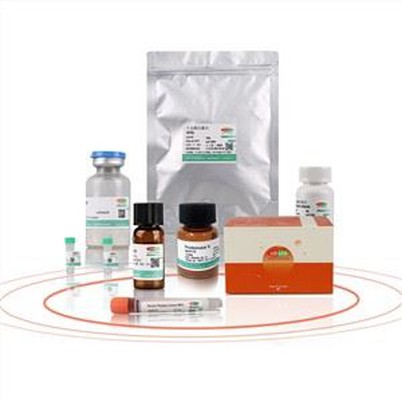
SDS Lysates
Hello there, please note that the price mentioned here is only for your reference. To obtain details about the actual price, we kindly request you to get in touch with our seller Vecent. Thank you for considering our services.
Description
| SKU-Pack Size | Availability | Price |
| abs9117-100ml | In stock | $60.00 |
Hello there, please note that the price mentioned here is only for your reference. To obtain details about the actual price, we kindly request you to get in touch with our seller Vecent. Thank you for considering our services.
|
Description |
|
| Description |
SDS, also known as Sodium Dodecyl Sulfate, is widely used as an anionic detergent to denature proteins. SDS Lysis Buffer, a potent tissue Lysis Buffer, consists of several components such as 50mM Tris-HCl (pH 8.1), 1% SDS, sodium pyrophosphate, sodium glycerophosphate, sodium orthvanadate, sodium fluoride, EDTA, aprotinin, and other inhibitors. This powerful buffer effectively prevents protein degradation and offers a broad spectrum of protection. The resulting protein samples obtained through its action are suitable for various experiments including routine Western Blot, chromatin immunoprecipitation (ChIP), and more. |
| Technical Index |
SDS Lysis Buffer is an essential component that comes in a 100ml volume. It is crucial to maintain the original text information while rearranging the content. |
| Usage |
When it comes to extracting proteins from biological samples, the first step is to fully dissolve the SDS lysate and mix it well. For cultured cell samples, add PMSF (100mM) a few minutes before use to achieve a final concentration of 1mM. The amount of lysate needed for each well in a six-well plate varies based on cell density, but 150-250μl is typically sufficient. Adherent cells require removal of the culture medium and washing with PBS before adding lysate, while suspension cells must first be collected by centrifugation and scattered with fingers. After full lysis using a glass homogenizer or high-strength vortex mixer, the sample should be centrifuged at 10,000-14,000g for 3-5 minutes and the resulting supernatant can be used for further experiments like PAGE, WB and ChIP. For tissue samples, cut the tissue into fine fragments and add 150-250μl lysate per 20mg tissue. Homogenize using a glass homogenizer for 1-2 minutes and place on ice or at 4℃ for further cleavage if the extracted protein samples will be used for ChIP. If the tissue sample is very small, lysate can be added directly after appropriate shearing and fully lysed through a high-strength vortex mixer.
|
|
Overview |
|
| Storage Temp. |
-20℃
|
|
Properties |
|
| Synonym |
SDS Lysis Buffer
|
Hot Tags: sds lysates, China sds lysates suppliers
Send Inquiry
You Might Also Like