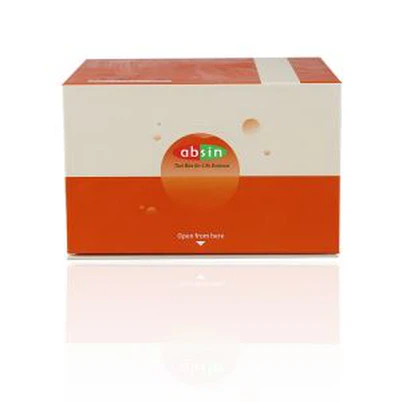
Rat IL-1 Beta/IL-1F2 ELISA Kit
Please note that the mentioned price is only for your reference and for more detailed pricing information, kindly contact our seller Vecent. It is important to understand that any deviation in generated content may be due to the use of different language models, and we apologize for any...
Description
Catalog-specification | Delivery time | USD price |
abs530002-96T | 4 weeks | 450 |
Please note that the mentioned price is only for your reference and for more detailed pricing information, kindly contact our seller Vecent. It is important to understand that any deviation in generated content may be due to the use of different language models, and we apologize for any inconvenience this may cause.
Cat: abs530002
Size: 96T
Rat IL-1 beta/IL-1F2 ELISA Kit
Testing Principle
The technique employed by this kit is quantitative sandwich enzyme immunoassay. To start with, a high affinity plate is coated with a specific anti-rat IL-1 beta antibody. Subsequently, standards, test samples, and biotinylated detection antibodies are added to the wells of the enzyme-labeled plate. The IL-1 beta present in the samples reacts with the solid-phase antibodies and detection antibodies to form immune complexes. Unbound material is then washed off, and horseradish peroxidase-labeled streptavidin (HRP) is introduced. After washing, a chromogenic substrate is added, and the color reaction is allowed to proceed in the dark. The reaction is stopped with the addition of a stop solution, and the absorbance is measured at a wavelength of 450 nm, with reference correction wavelength of either 540 nm or 570 nm.
Detection type: sandwich enzyme immunoassay
Form: pre-coated 96-well plate
Sample type: Cell culture supernatant, Serum, Plasma
Sample quantity: 100ul
Kit composition:
Our product is a 96 well polystyrene microplate that is specifically coated with a capture antibody. It also includes a standard, detection antibody, 10× reagent diluent, Color reagent (A and B), 25× wash buffer, Stop solution, and ELISA plate sealers. The specifications of this product are as follows: It is designed for use in ELISA assays and comes in a 96 well format. The microplate is made of polystyrene material, which provides excellent optical clarity and low background noise. The capture antibody is pre-coated onto the wells, ensuring high specificity and sensitivity in the detection process. The standard and detection antibody are included to facilitate quantitative analysis of the target analyte. The 10× reagent diluent is provided for convenient sample dilution, while the Color reagent (A and B) is used to generate a colorimetric signal in the presence of the target analyte. The 25× wash buffer is included to ensure proper washing steps during the assay procedure, minimizing background noise. The Stop solution is provided to halt the reaction and stabilize the color development. Lastly, the ELISA plate sealers are included to prevent evaporation and contamination during the incubation steps. This product is specifically designed to deliver reliable and accurate results in ELISA assays, making it an essential tool for researchers in various fields.
Sensitivity: 1.8pg/mL
Detection range: 62.5 - 4,000 pg/mL
Recovery rate: 82-110%
Storage: 2-8 ° C
The standard curve:

Background: IL-1 Beta
The IL-1 protein family encompasses IL-1α and IL-1β, both of which are considered classic members. Additionally, there are other members such as IL-1RA, IL-18, IL-33, and IL-1F5-F10. IL-1α and IL-1β share the same cell-surface binding receptor and exhibit similar biological functions. Normally, healthy individuals do not produce IL-1 unless in specific cases, like skin keratinocytes, certain epithelial cells, and cells within the central nervous system. However, when confronted with inflammatory factors, infections, or microbial endotoxins, macrophages and other cell types experience a significant increase in IL-1 expression.
The role of IL-1β is crucial in immune and inflammatory responses, as well as in bone remodeling, fever regulation, carbohydrate metabolism, and GH/IGF-1 physiology. Dysregulated or delayed expression of IL-1 is associated with various diseases, including sepsis, rheumatoid arthritis, inflammatory bowel disease, acute and chronic myeloid leukemia, insulin-dependent diabetes mellitus, atherosclerosis, nerve injury, and age-related diseases.
IL-1α and IL-1β are structurally similar polypeptides, sharing about 25% amino acid homology. They both start as 31kDa precursors and then undergo cleavage to produce mature proteins approximately 17.5kDa in size. The activation of IL-1β precursor by Caspase-1/ICE is a crucial step in triggering the inflammatory response. Despite lacking a typical hydrophobic signaling peptide, both IL-1α and IL-1β can be secreted extracellularly through non-classical pathways. Interestingly, untreated IL-1α can be found on cell membranes and may retain its biological activity. On the other hand, IL-1β precursors hold limited to no biological activity as compared to the mature form. Both the precursor and mature IL-1β are capable of being transported out of the cell.
Il-1 and IL-1 exert their effects by binding to IL-1RA through immunoglobulin superfamily receptors.Type I transmembrane receptor (IL-1RI) of 80kDa is expressed in a variety of cells, including T cells, fibroblasts, keratinocytes, endothelial cells, synovial lining cells, chondrocytes, and hepatocytes.Type II transmembrane receptor (IL-1RII) of 68kDa is expressed in B cells, neutrophils, and bone marrow cells.The extracellular domains of IL-1RI and IL-1RII share 28% homology.
But other regions were significantly different. The intracellular domain of type II receptors contained only 29 amino acids, while the intracellular domain of type I receptors contained 213 amino acids. IL-1RII does not seem to respond to IL-1 signals, and its function is to act as a decoy receptor to impair IL-1.IL-1 receptor ligand protein (IL-1RAcP) interaction with IL-1RI is necessary for IL-1RI signaling.IL-1RA is a secretory molecule and a competitive inhibitor of IL-1.Soluble IL-1RI and IL-1RII are present in human plasma, joint fluid, and conditioned medium of several cell lines. In addition, vaccinia virus encodes IL-1 binding proteins similar to soluble IL-1RII.
Technical hints: For research use only, not for in vitro diagnosis.
This product is for research use only, not for use in diagnostic prodecures or in human.
Hot Tags: rat il-1 beta/il-1f2 elisa kit, China rat il-1 beta/il-1f2 elisa kit suppliers
Send Inquiry
You Might Also Like