


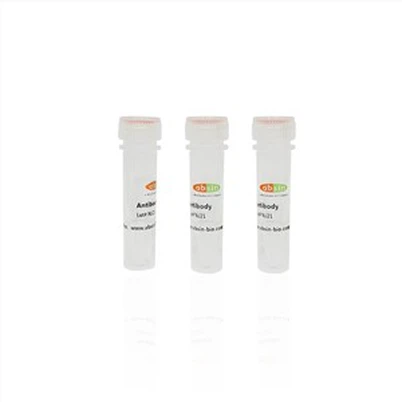
Rabbit Anti-ESR1 Polyclonal Antibody#abs135614
Please note that the price mentioned above is only for your reference. If you need more detailed pricing information, please feel free to contact our seller, Vecent. We want to ensure that you have accurate information, so please don't hesitate to reach out to us. Western blot analysis of...
Description
| Catalog-specification | Delivery time | USD price |
abs135614-50ug | 1-2 Weeks | 201.0 |
abs135614-100ug | 1-2 Weeks | 301.0 |
Please note that the price mentioned above is only for your reference. If you need more detailed pricing information, please feel free to contact our seller, Vecent. We want to ensure that you have accurate information, so please don't hesitate to reach out to us.
| Overview | |
catalog | abs135614 |
Description | ERα is a steroid receptor superfamily member that contains DNA binding (DBD) and ligand binding domains (LBD), both of which are highly conserved (1). ERα plays a critical role in transcription regulation by employing its estrogen-independent and estrogen-dependent activation domains (AF-1 and AF-2) to recruit coactivator proteins and interact with general transcriptional machinery (2). To regulate ERα activity, phosphorylation provides an important mechanism (3,4). Multiple sites are phosphorylated in ERα (5). Of these sites, Ser104, 106, 118, and 167 are located in the AF-1 domain of the amino-terminal transcription activation function, and phosphorylation of these serines is crucial for regulating ERα activity. CDK7, a transcription regulatory kinase, may catalyze the phosphorylation of Ser118 (5). Moreover, p90RSK and Akt may phosphorylate Ser167 (4,6), and this phosphorylation may confer tamoxifen resistance in breast cancer patients (4). |
| Other names | Estradiol receptor, also known as ER or ER-alpha, is a crucial protein involved in hormone signaling. It plays a significant role in various physiological processes. ER-alpha, encoded by ESR1 gene, is a part of the estrogen receptor family. It exists in different isoforms such as ER-alpha 3*,4,5,6,7*/822 isoform, ER-alpha delta 3*,4,5,6,7*,8*/941 isoform, and ER-alpha delta 3*,4,5,6,7*/819 2 isoform. Another variant is ER-alpha delta 4 +49 isoform. Furthermore, there are ER-alpha delta 4*,5,6,7*/654 isoform and ER-alpha delta 4*,5,6,7,8*/901 isoform. This versatility allows ER-alpha to exert its functions in response to estradiol and other ligands. Overall, ER-alpha, also known as estrogen receptor alpha, is a vital component of the estrogen signaling pathway and functions as a nuclear receptor. |
| Source | Rabbit |
| Specificity | The antibody ESR1 can detect the total levels of endogenous ESR1. This information can be rearranged to convey a similar message that the ESR1 Antibody has the ability to identify the complete endogenous levels of ESR1 present in a biological sample. |
| Species Reactivity | Human;Mouse;Rat |
| Antigen | ESR1 |
| Application | 。: ,。,(Western Blot),1:5001:2000;/(IF/ICC),1:1001:500;ELISA,,1:200001:40000。 ,,。 |
| Immunogen | A synthesized peptide derived from human ESR1. |
| MW | 66kDa |
| Properties | |
Concentration | 1mg/ml |
| purification | The antiserum was purified by peptide affinity chromatography using SulfoLink™ Coupling Resin . |
| Clonality | Polyclonal Antibody |
| Stability & Storage | Store at -20 °C for one year. Avoid repeated freeze/thaw cycles |
| Storage buffer | Rabbit IgG in phosphate buffered saline , pH 7.4, 150mM NaCl, 0.02% sodium azide and 50% glycerol.Store at -20 °C.Stable for 12 months from date of receipt. |
Target | |
Background | Nuclear hormone receptor. The steroid hormones and their receptors are involved in the regulation of eukaryotic gene expression and affect cellular proliferation and differentiation in target tissues. Ligand-dependent nuclear transactivation involves either direct homodimer binding to a palindromic estrogen response element (ERE) sequence or association with other DNA-binding transcription factors, such as AP-1/c-Jun, c-Fos, ATF-2, Sp1 and Sp3, to mediate ERE-independent signaling. Ligand binding induces a conformational change allowing subsequent or combinatorial association with multiprotein coactivator complexes through LXXLL motifs of their respective components. Mutual transrepression occurs between the estrogen receptor (ER) and NF-kappa-B in a cell-type specific manner. Decreases NF-kappa-B DNA-binding activity and inhibits NF-kappa-B-mediated transcription from the IL6 promoter and displace RELA/p65 and associated coregulators from the promoter. Recruited to the NF-kappa-B response element of the CCL2 and IL8 promoters and can displace CREBBP. Present with NF-kappa-B components RELA/p65 and NFKB1/p50 on ERE sequences. Can also act synergistically with NF-kappa-B to activate transcription involving respective recruitment adjacent response elements; the function involves CREBBP. Can activate the transcriptional activity of TFF1. Also mediates membrane-initiated estrogen signaling involving various kinase cascades. Isoform 3 is involved in activation of NOS3 and endothelial nitric oxide production. Isoforms lacking one or several functional domains are thought to modulate transcriptional activity by competitive ligand or DNA binding and/or heterodimerization with the full-length receptor. Essential for MTA1-mediated transcriptional regulation of BRCA1 and BCAS3. Isoform 3 can bind to ERE and inhibit isoform 1. |
| Tissue specificity | Widely expressed. Isoform 3 is not expressed in the pituitary gland. |
| Posttranslational modification | Phosphorylated by cyclin A/CDK2 and CK1. Phosphorylation probably enhances transcriptional activity. Self-association induces phosphorylation. Dephosphorylation at Ser-118 by PPP5C inhibits its transactivation activity. Phosphorylated by LMTK3 in vitro.Glycosylated; contains N-acetylglucosamine, probably O-linked.Ubiquitinated; regulated by LATS1 via DCAF1 it leads to ESR1 proteasomal degradation (PubMed:21602804, PubMed:28068668). Deubiquitinated by OTUB1 (PubMed:19383985).Dimethylated by PRMT1 at Arg-260. The methylation may favor cytoplasmic localization.Palmitoylated (isoform 3). Not biotinylated (isoform 3).Palmitoylated by ZDHHC7 and ZDHHC21. Palmitoylation is required for plasma membrane targeting and for rapid intracellular signaling via ERK and AKT kinases and cAMP generation, but not for signaling mediated by the nuclear hormone receptor. |
| Celluar localization | Golgi apparatus;Nucleus;Plasma Membrane; |
| UniPort | P03372 |

Western blot analysis of extracts of 293cells, using Estrogen R α antibody.
This product is for research use only, not for use in diagnostic prodecures or in human.
Hot Tags: rabbit anti-esr1 polyclonal antibody#abs135614, China rabbit anti-esr1 polyclonal antibody#abs135614 suppliers
Send Inquiry
You Might Also Like
-

Rabbit Anti-FGF10 Polyclonal Antibody#abs135853
-

Rabbit Anti-VGF Polyclonal Antibody#abs134546
-

Rabbit Anti-MAPK13 Polyclonal Antibody#abs132739
-

Rabbit Anti-Cdx2 Polyclonal Antibody#abs131150
-

Phospho-BCL-XL (Ser62) Rabbit Polyclonal Antibody#ab...
-
Phospho-Histone H2A.X (Ser139) Rabbit Polyclonal Ant...