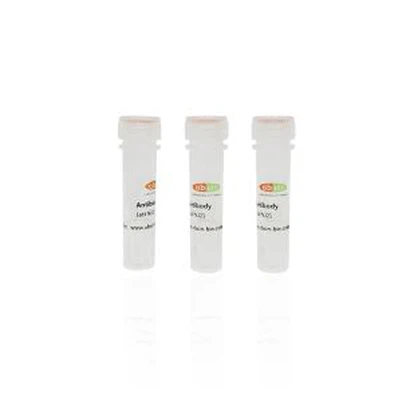
Rabbit Anti-Caveolin1 Polyclonal Antibody#abs131472
Please note that the price provided above is solely for your reference. For exact pricing details, we kindly request you to get in touch with our sales representative, Vecent. Western blot analysis of Caveolin 1 expression in HuvEc cell extracts This product is for research use only, not for use...
Description
| Catalog-specification | Delivery time | USD price |
abs131472-100ug | 1-2 Weeks | 301.0 |
abs131472-50ug | 1-2 Weeks | 201.0 |
Please note that the price provided above is solely for your reference. For exact pricing details, we kindly request you to get in touch with our sales representative, Vecent.
| Overview | |
catalog | abs131472 |
Description | This protein may play a critical role as a scaffolding molecule within the caveolar membranes. It has been shown to interact with the alpha subunits of G-proteins, which can modulate their biological activity. It also plays a crucial role in mediating the costimulatory signal required for T-cell receptor (TCR)-mediated T-cell activation. By binding with DPP4, it is able to induce T-cell proliferation and activate NF-kappa-B, which is a T-cell receptor/CD3-dependent process. Overall, this protein is a key regulator of T-cell function and may have therapeutic potential in the treatment of various immune-related disorders. |
| Other names | CAV1, also known as caveolin 1 or VIP21, is a caveolae protein that is important for inhibiting cell growth. It is encoded by the BSCL3 gene and can be found in two isoforms - alpha and beta. With a molecular weight of 22kDa, CAV1 is integral to the formation of caveolae, which are small membrane invaginations found in many cell types. The protein has been linked to several diseases, including LCCNS and PPH3. Despite its important role in cellular function, the exact mechanisms by which CAV1 exerts its effects are not fully understood. Overall, CAV1 is a crucial component of cell biology and is the focus of ongoing research efforts to better understand its functions and implications. |
| Source | Rabbit |
| Specificity | The Caveolin 1 Antibody is designed to detect the total amount of Caveolin 1 that is present in the body at normal levels. This means that it can accurately identify any endogenous levels of the protein that are present in a given sample. By using this antibody, researchers can obtain valuable insights into the functioning of Caveolin 1 and its role in various biological processes. It is an essential tool for anyone working in the fields of cell biology, biochemistry, and medical research. |
| Species Reactivity | Human;Mouse |
| Predictive reaction species | Horse |
| Antigen | Caveolin1 |
| Application | The dilutions commonly used for Western Blot (WB) range from 1:500 to 1:2000, while for Immunofluorescence (IF), the dilutions range from 1:100 to 1:500. On the other hand, ELISA (Enzyme-Linked Immunosorbent Assay) using peptide antigens requires higher dilutions, typically ranging from 1:20000 to 1:40000. It is vital to maintain these dilutions to ensure accurate results in these laboratory techniques. |
| Immunogen | Caveolin 1, a human-derived protein, can serve as a source for synthesizing a peptide. The synthesized peptide, which closely resembles Caveolin 1, can be developed using the original text information. To ensure similarity, rearranging the content while maintaining the accuracy of the information is important. |
| MW | 20 kDa |
| Properties | |
Concentration | 1mg/ml |
| purification | Using SulfoLink™ Coupling Resin, we purified the antiserum through peptide affinity chromatography. |
| Clonality | Polyclonal Antibody |
| Stability & Storage | Store at -20 °C for one year. Avoid repeated freeze/thaw cycles |
| Storage buffer | Rabbit IgG in phosphate buffered saline , pH 7.4, 150mM NaCl, 0.02% sodium azide and 50% glycerol.Store at -20 °C.Stable for 12 months from date of receipt. |
Target | |
Background | May act as a scaffolding protein within caveolar membranes. Interacts directly with G-protein alpha subunits and can functionally regulate their activity (By similarity). Involved in the costimulatory signal essential for T-cell receptor (TCR)-mediated T-cell activation. Its binding to DPP4 induces T-cell proliferation and NF-kappa-B activation in a T-cell receptor/CD3-dependent manner. Recruits CTNNB1 to caveolar membranes and may regulate CTNNB1-mediated signaling through the Wnt pathway. Negatively regulates TGFB1-mediated activation of SMAD2/3 by mediating the internalization of TGFBR1 from membrane rafts leading to its subsequent degradation (PubMed:25893292). Mediates the recruitment of CAVIN proteins (CAVIN1/2/3/4) to the caveolae (PubMed:19262564). |
| Tissue specificity | Skeletal muscle, liver, stomach, lung, kidney and heart (at protein level). Expressed in the brain. |
| Posttranslational modification | Ubiquitinated. Undergo monoubiquitination and multi- and/or polyubiquitination (PubMed:21822278). Monoubiquitination of N-terminal lysines promotes integration in a ternary complex with UBXN6 and VCP which promotes oligomeric CAV1 targeting to lysosomes for degradation (PubMed:23335559).The initiator methionine for isoform 2 is removed during or just after translation. The new N-terminal amino acid is then N-acetylated.Phosphorylated at Tyr-14 by ABL1 in response to oxidative stress. |
| Celluar localization | Endoplasmic reticulum;Endosome;Golgi apparatus;Plasma Membrane; |
| UniPort | Q03135 |

Western blot analysis of Caveolin 1 expression in HuvEc cell extracts
This product is for research use only, not for use in diagnostic prodecures or in human.
Hot Tags: rabbit anti-caveolin1 polyclonal antibody#abs131472, China rabbit anti-caveolin1 polyclonal antibody#abs131472 suppliers
Send Inquiry
You Might Also Like