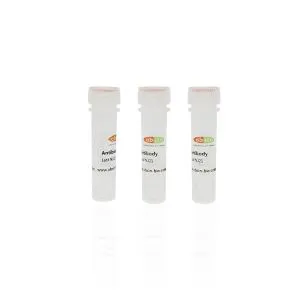
Rabbit Anti-Brd4 Polyclonal Antibody#abs133244
Please note that the price provided above is for your reference only. To obtain the detailed price information, please get in touch with our seller, Vecent. It is important to contact Vecent directly for accurate pricing details. Western blot analysis Brd4 using HT-29 whole cell lysates This...
Description
| Catalog-specification | Delivery time | USD price |
abs133244-100ug | 1-2 Weeks | 301.0 |
abs133244-50ug | 1-2 Weeks | 201.0 |
Please note that the price provided above is for your reference only. To obtain the detailed price information, please get in touch with our seller, Vecent. It is important to contact Vecent directly for accurate pricing details.
| Overview | |
catalog | abs133244 |
| Other names | The fusion protein BRD4-NUT, also known as BRD4-NUT fusion oncoprotein, is a variant form of the BRD4 protein. BRD4 is a human protein that contains bromodomains, which are important for chromatin binding and transcriptional regulation. The fusion of BRD4 with NUT (Nuclear Protein in Testis) results in the formation of BRD4-NUT fusion oncoprotein. This fusion protein has been implicated in certain types of cancers. Another name for BRD4 is Bromodomain-containing protein 4 or bromodomain containing protein 4. It is also referred to as CAP (chromosome associated protein) due to its association with chromosomes during mitosis. Additionally, it is identified by the names HUNK1 (human protein kinase 1) and MCAP (mitotic chromosome-associated protein). These alternate names reflect its various roles and functions in cellular processes. To summarize, BRD4 and its fusion variant BRD4-NUT are proteins involved in chromatin binding and transcriptional regulation. They are associated with chromosome organization during mitosis and have implications in cancer development. Another name for BRD4 is CAP, and it is also referred to as HUNK1 and MCAP. |
| Source | Rabbit |
| Specificity | The endogenous levels of total Brd4 can be accurately detected using the Brd4 Antibody. |
| Species Reactivity | Human;Mouse;Rat |
| Predictive reaction species | Pig;Chicken;Sheep;Dog;Horse;Bovine; |
| Antigen | Brd4 |
| Application | IHC 1:200, ICC/IF, ELISA (peptide) 1:20000-1:40000 and WB 1:1000-3000 are the recommended dilutions for various immunological techniques. These dilutions are crucial in achieving accurate and reliable results. |
| Immunogen | A synthesized peptide derived from human Brd4. |
| MW | 152kDa |
| Properties | |
Concentration | 1mg/ml |
| purification | Using SulfoLink™ Coupling Resin, the antiserum underwent peptide affinity chromatography for purification. Would you like to know more about the process? |
| Clonality | Polyclonal Antibody |
| Stability & Storage | To maintain quality, store the product for one year at a temperature of -20 °C. It is important to prevent the product from going through multiple freeze-thaw cycles. |
| Storage buffer | It is recommended to store Rabbit IgG in a solution of phosphate buffered saline with a pH value of 7.4, 150mM NaCl, and 0.02% sodium azide, along with 50% glycerol, at a temperature of -20 °C. This solution is stable for up to 12 months from the date of receipt. It is essential to adhere to the recommended storage conditions to ensure the viability and efficacy of Rabbit IgG. |
Target | |
Background | Chromatin reader protein that recognizes and binds acetylated histones and plays a key role in transmission of epigenetic memory across cell divisions and transcription regulation. Remains associated with acetylated chromatin throughout the entire cell cycle and provides epigenetic memory for postmitotic G1 gene transcription by preserving acetylated chromatin status and maintaining high-order chromatin structure. During interphase, plays a key role in regulating the transcription of signal-inducible genes by associating with the P-TEFb complex and recruiting it to promoters: BRD4 is required to form the transcriptionally active P-TEFb complex by displacing negative regulators such as HEXIM1 and 7SKsnRNA complex from P-TEFb, thereby transforming it into an active form that can then phosphorylate the C-terminal domain (CTD) of RNA polymerase II. Promotes phosphorylation of 'Ser-2' of the C-terminal domain (CTD) of RNA polymerase II. According to a report, directly acts as an atypical protein kinase and mediates phosphorylation of 'Ser-2' of the C-terminal domain (CTD) of RNA polymerase II; these data however need additional evidences in vivo (PubMed:22509028). In addition to acetylated histones, also recognizes and binds acetylated RELA, leading to further recruitment of the P-TEFb complex and subsequent activation of NF-kappa-B. Also acts as a regulator of p53/TP53-mediated transcription: following phosphorylation by CK2, recruited to p53/TP53 specific target promoters. |
| Tissue specificity | Ubiquitously expressed. |
| Posttranslational modification | Phosphorylation by CK2 disrupt the intramolecular binding between the bromo domain 2 and the NPS region and promotes binding between the NPS and the BID regions, leading to activate the protein and promote binding to acetylated histones. In absence of phosphorylation, BRD4 does not localize to p53/TP53 target gene promoters, phosphorylation promoting recruitment to p53/TP53 target promoters. |
| Celluar localization | Cytosol;Nucleus; |
| UniPort | O60885 |

Western blot analysis Brd4 using HT-29 whole cell lysates
This product is for research use only, not for use in diagnostic prodecures or in human.
Hot Tags: rabbit anti-brd4 polyclonal antibody#abs133244, China rabbit anti-brd4 polyclonal antibody#abs133244 suppliers
Send Inquiry
You Might Also Like