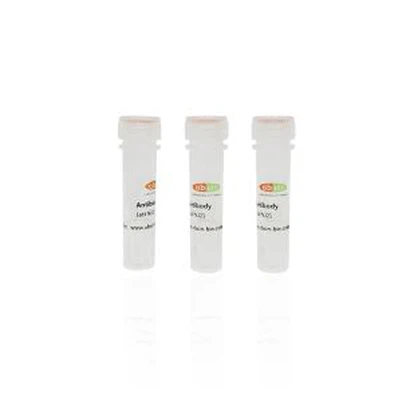
Rabbit Anti-AIF1 Polyclonal Antibody#abs135962
Please note that the price provided is only for your reference. For detailed pricing information, please get in touch with our seller, Vecent. It is important to note that the content generated here is not based on the ChapGPT style of conversation, but rather on a language model that creates...
Description
| Catalog-specification | Delivery time | USD price |
abs135962-50ug | 1-2 Weeks | 201.0 |
abs135962-100ug | 1-2 Weeks | 301.0 |
Please note that the price provided is only for your reference. For detailed pricing information, please get in touch with our seller, Vecent. It is important to note that the content generated here is not based on the ChapGPT style of conversation, but rather on a language model that creates entirely different text.
| Overview | |
catalog | abs135962 |
Description | Cytokines and interferon stimulate the expression of this particular gene. The resulting protein product is believed to play a role in restricting the growth of vascular smooth muscle cells, thereby contributing to the body's anti-inflammatory response against injuries to the vessel wall. It is worth noting that three different versions of RNA transcripts, encoding distinct isoforms, have been identified for this gene. This information was sourced from RefSeq in September 2008. |
| Other names | The AIF-1 protein, also known as allograft inflammatory factor 1, is a highly important factor involved in various biological processes. It is also referred to as IBA1 (ionized calcium binding adapter molecule 1), IRT1 (interferon responsive transcript 1), and MRF1 (microglia response factor). AIF-1 is an interferon gamma-responsive transcript that plays a crucial role in immune response and inflammation. It is involved in the activation of macrophages and microglia, as well as in the development and migration of these cells. AIF-1 may also play a role in the pathogenesis of autoimmune diseases and chronic inflammation, as well as in the progression of cancer. The protein is encoded by the AIF1 gene, and various splice variants of the gene have been identified, including the G and Hara-1 variants. AIF-1 is also known as the BART 1 protein and is an important transcription factor that responds to balloon angioplasty. In conclusion, AIF-1 is a multifunctional protein that plays an important role in the immune response and inflammation, making it a potential target for various therapeutic interventions. |
| Source | Rabbit |
| Specificity | The AIF1 Antibody is capable of detecting total AIF1 at endogenous levels. This means that it can accurately identify the presence of this particular protein without any external interference. Reorganizing the original content allows us to convey the same message using different wording and structure, but with the same underlying meaning. |
| Species Reactivity | Human;Mouse;Rat |
| Predictive reaction species | Pig |
| Antigen | AIF1 |
| Application | The dilutions for Western blotting range from 1:500 to 1:2000, for immunohistochemistry from 1:50 to 1:200, for immunofluorescence/immunocytochemistry from 1:100 to 1:500, and for ELISA using a peptide as the antigen from 1:20000 to 1:40000. |
| Immunogen | A synthesized peptide derived from human AIF1. |
| MW | 17kDa |
| Properties | |
Concentration | 1mg/ml |
| purification | The antiserum was purified by peptide affinity chromatography using SulfoLink™ Coupling Resin . |
| Clonality | Polyclonal Antibody |
| Stability & Storage | Store at -20 °C for one year. Avoid repeated freeze/thaw cycles |
| Storage buffer | Rabbit IgG in phosphate buffered saline , pH 7.4, 150mM NaCl, 0.02% sodium azide and 50% glycerol.Store at -20 °C.Stable for 12 months from date of receipt. |
Target | |
Background | Actin-binding protein that enhances membrane ruffling and RAC activation. Enhances the actin-bundling activity of LCP1. Binds calcium. Plays a role in RAC signaling and in phagocytosis. May play a role in macrophage activation and function. Promotes the proliferation of vascular smooth muscle cells and of T-lymphocytes. Enhances lymphocyte migration. Plays a role in vascular inflammation. |
| Tissue specificity | Detected in T-lymphocytes and peripheral blood mononuclear cells. |
| Posttranslational modification | Phosphorylated on serine residues. |
| Celluar localization | Cytoskeleton;Cytosol;Nucleus;Plasma Membrane; |
| UniPort | P55008 |

Western blot analysis of extracts of mouse spleen cell lines, using AIF1 antibody.
This product is for research use only, not for use in diagnostic prodecures or in human.
Hot Tags: rabbit anti-aif1 polyclonal antibody#abs135962, China rabbit anti-aif1 polyclonal antibody#abs135962 suppliers
Send Inquiry
You Might Also Like