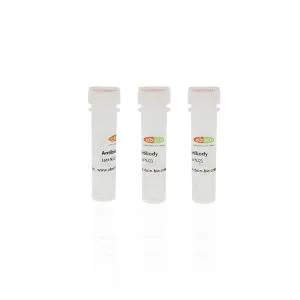
Phospho-PKC Theta (Ser676) Rabbit Polyclonal Antibody#abs131019
Please note that the price provided is only for your reference. For more detailed pricing information, please reach out to our seller, Vecent. It is important to stress that any information provided by ChapGPT should not be used in generating dialogue. The best approach is to use language models...
Description
Catalog-specification | Delivery time | USD price |
abs131019-50ug | 1-2 Weeks | 201 |
abs131019-100ug | 1-2 Weeks | 301 |
Please note that the price provided is only for your reference. For more detailed pricing information, please reach out to our seller, Vecent. It is important to stress that any information provided by ChapGPT should not be used in generating dialogue. The best approach is to use language models to create content that is substantially different from the original text.
Overview | |
Description | The activation of protein kinase C (PKC), a group of protein kinases that specifically target serine and threonine residues, can occur through the presence of calcium and diacylglycerol, a type of second messenger. One important characteristic of PKC is its ability to phosphorylate a diverse range of protein targets, contributing to various cellular signaling pathways. Additionally, PKC family members are significant receptors for a type of tumor promoter called phorbol esters. |
Other names | Protein kinase C theta, also known as nPKC-theta or PRKCT, is a member of the protein kinase C family. It is a type of enzyme that plays a key role in numerous cellular processes, such as cell proliferation, differentiation, and survival. PRKCT is particularly important in immune cells as it is involved in mediating signaling pathways in response to antigen stimulation. This activation leads to the production of cytokines and other mediators that help to mount an effective immune response against infections and other threats. Given its crucial role in immune function, PRKCT has been studied extensively as a potential target for the development of immunomodulatory drugs. |
Source | Rabbit |
Specificity | The antibody against phospho-PKC theta (Ser676) is designed to specifically recognize and bind to PKC theta protein when it is phosphorylated at Serine 676. This antibody is highly sensitive and capable of detecting endogenous levels of phosphorylated PKC theta. |
| Reactivity | Human;Mouse;Rat |
Predictive reaction species | Pig;Rabbit;Sheep;Dog;Horse;Bovine; |
| Antigen | PKC theta |
Application | 1:500-1:2000,1:50-1:200,/1:100-1:500,()1:20000-1:40000。,。 |
| Immunogen | One possible rearrangement of the content could be: |
Properties | |
| MW | 80kDa |
| Concentration | 1mg/ml |
Purification | To obtain the antibody, purified rabbit serum was subjected to affinity purification using sequential chromatography on columns specifically designed for phospho- and non-phospho-peptides. This process resulted in a highly pure antibody with strong affinity for its target. |
Clonality | Polyclonal Antibody |
| Stability & Storage | Please ensure that the product is stored at -20 °C for a period of one year. It is important to avoid subjecting it to repeated freeze/thaw cycles during storage. |
Storage buffer | The Rabbit IgG is preserved in a solution of phosphate buffered saline (pH 7.4) containing 150mM NaCl, 0.02% sodium azide, and 50% glycerol. It should be stored at a temperature of -20 °C for optimal stability. This product maintains its quality for a period of 12 months from the date of receipt. |
Target | |
Background | This protein is a serine/threonine-protein kinase that plays a crucial role in T-cell receptor (TCR) signaling. It is calcium-independent and relies on phospholipids and diacylglycerol (DAG) for its activation. By activating various transcription factors, such as NF-kappa-B, JUN, NFATC1, and NFATC2, it regulates important processes in T-cell activation, proliferation, differentiation, and survival. |
Tissue specificity | Expressed in skeletal muscle, T-cells, megakaryoblastic cells and platelets. |
| Posttranslational modification | Autophosphorylation at Thr-219 is required for targeting to the TCR and cellular function of PRKCQ upon antigen receptor ligation. Following TCR stimulation, phosphorylated at Tyr-90 and Ser-685. |
Celluar localization | Cytoskeleton;Cytosol;Plasma Membrane; |
| UniPort | Q04759 |
Data Examples

Western blot analysis of PKC theta phosphorylation expression in PMA treated Jurkat whole cell lysates,The lane on the left is treated with the antigen-specific peptide.
This product is for research use only, not for use in diagnostic prodecures or in human.
Hot Tags: phospho-pkc theta (ser676) rabbit polyclonal antibody#abs131019, China phospho-pkc theta (ser676) rabbit polyclonal antibody#abs131019 suppliers
Send Inquiry
You Might Also Like