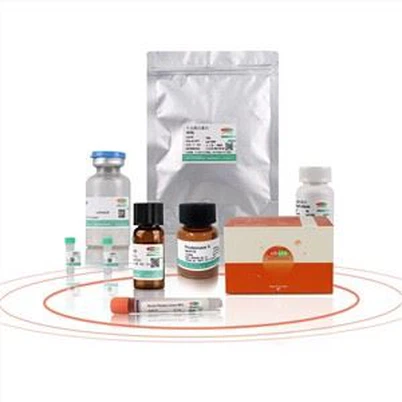
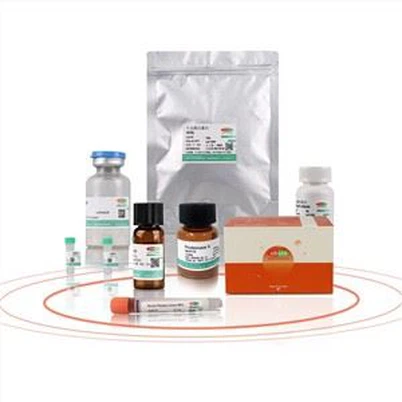
Osteogenic Induction Kit For Human Mesenchymal Stem Cells
Please note that the price mentioned above is for your reference only. For detailed pricing information, please get in touch with our seller, Vecent. We suggest contacting Vecent for accurate and up-to-date pricing details. Detection of mesenchymal stem cell osteogenic induction 1 Mesenchymal...
Description
| SKU-Pack Size | Availability | Price |
| abs9453-100ml | In stock | $310.00 |
Please note that the price mentioned above is for your reference only. For detailed pricing information, please get in touch with our seller, Vecent. We suggest contacting Vecent for accurate and up-to-date pricing details.
Description | |
| Description | In vitro conditions can induce the differentiation of mesenchymal stem cells (MSC) into adipocytes, osteoblasts, and chondrocytes. These versatile cells have the potential to transform into these specific cell types.The International Society for Cell Therapy (ISCT) established three essential indicators for identifying mesenchymal stem cells (MSCs) in 2006. These three indicators have since been utilized in current MSC-focused research reports, demonstrating their continued importance in accurately identifying MSCs.To ensure the quality control of MSC drugs derived from different tissue sources and prepared using various methods, it is important to assess their osteogenesis, adipogenesis, and chondrogenesis capabilities. These indicators provide valuable information on the efficacy and safety of the drugs, and help to maintain consistent standards of quality across the board. Whether using bone marrow, adipose tissue, or other tissue sources, MSC drugs must meet these benchmarks to ensure their effectiveness and safety for use in clinical treatments. Overall, the use of these indicators helps to ensure that MSC drugs are of the highest quality and have the best chance of providing positive outcomes for patients. To fulfill the demands of scientific and pharmaceutical research on identifying MSC differentiation ability, we have optimized the MSC induction kit based on our extensive experience in MSC research. We have ensured the stability and ease of use, and incorporated small packaging to make it simple and convenient. Our objective is to produce a product that meets the requirements of researchers and helps to advance MSC research and pharmaceutical development.The primary goal of this kit is to assess the osteogenic differentiation ability of human MSCs and ensure that they meet the MSC quality control standards. This design serves to confirm the quality and ability of MSCs for future usage in various research and therapeutic applications.Additionally, induction medium has diverse applications in regenerative medicine and tissue engineering studies. Apart from serving as scaffolds, it can be utilized as a culture system. This alternative use of induction medium provides researchers with further flexibility and options in their experimental approaches. Therefore, induction medium not only plays a pivotal role in providing mechanical support to engineered tissues but also serves as a nurturing environment for cell growth and development. This dual functionality enhances the efficacy and versatility of induction medium in tissue engineering research, further contributing to the advancement of regenerative medicine.Furthermore, various tests can be conducted using the induction medium to investigate different aspects of the induction differentiation process. These tests include the detection of mRNA, lncRNA, microRNA, protein expression, calcium deposition, immunohistochemical staining, and more. The induction medium serves as a valuable tool in facilitating these investigations and understanding the underlying mechanisms involved in cellular differentiation. By employing these tests, researchers can gain insights into the specific factors and processes that regulate the differentiation of cells. Composition: Serial number name quantity storage A Human basal medium for osteogenic induction of mesenchymal stem cells 90ml 2-8℃ B Osteogenic induction additive B 10ml-20 ℃ C coating solution 10ml 2-8℃ D Alizarin red solution 5ml 2-8℃ Product features: Small package. Using 100ml, use more economical, more convenient; Simple outfit, upgrade products, more concise composition, more convenient operation; More stable, product system error is smaller, more stable use. Applicable cell types: Human mesenchymal stem cells are derived from bone marrow, fat, umbilical cord, amniotic membrane, skin, dental pulp, umbilical cord blood, peripheral blood, etc. |
| Usage | < p style = "max-width: 100%; clear: both; min-height: 1em; 1. Preparation of the reagent: < BR /> Melt the additive B at room temperature, add the melted solution to the basic medium A, and mix well. < p style = "margin-bottom: 0pt; margin-bottom: 0pt; margin-bottom: 0pt; margin-bottom: 0pt; The whole process must be aseptic, with surfaces wiped with 75% alcohol before each reagent is opened. 2. Petri dish treatment: Add appropriate amount of the coating solution C to the culture vessel, gently shake it to cover the whole bottom of the culture vessel, and let it stand at room temperature for 30-60 minutes. Discard the solution and let dry at room temperature. Note: The coating solution C must be reheated at room temperature before use. It is recommended to use a six-well plate and add 1 ml of liquid C to each well. Stability of the results should be considered when using other culture vessels. The whole process should be operated in a super clean workbench to avoid contamination. 3, self prepared reagent: (1) Digestive fluid (0.25% trypsin-0.04% EDTA or other) (2) Phosphate buffer (DPBS) (3) MSC complete medium (4) 4% neutral paraformaldehyde solution Note: < span style = "max-width: 100%; clear: both; min-height: 1em; MSC digestion is extremely easy to overdo. It is recommended to dilute 0.25% trypsin digestion solution twice and strictly control the digestion time. < span style = "box-sizing: border-box; color: RGB (93, 93, 93); font-family: arial, helvetica, sans-serif; font-size: 14px! Important; white-space: inherit! Important;" < p style = "margin-bottom: 0pt; margin-bottom: 0pt; 104 cells/cm2 density The cells were inoculated in the coated six-well plates with 2 mL MSC complete medium per well and cultured in a 5%CO< SUB >2 incubator at 37℃. < p style = "max-width: 100%; clear: both; clear: both; min-height: 1em; Or the inoculation density is low, until the cells grow to the next required density induction. 3. When the cell fusion reached 60%, the culture supernatant was discarded, and MSC osteogenic induction complete medium 2 mL/well was added to each well, and cultured at 37℃ in 5%CO< SUB >2 incubator. < p style = "margin-bottom: 0pt; margin-bottom: 0pt; margin-bottom: 0pt; margin-bottom: 0pt; Add the medium gently, slowly along the side wall of the vessel, remembering to avoid blowing up the cells. 4. Replace fresh MSC osteogenic induction complete medium every 3 days and continue to culture for 2-4 weeks. < p style = "margin-bottom: 0pt; margin-bottom: 0pt; margin-bottom: 0pt; margin-bottom: 0pt; Calcium deposits occur around 7-10 days. In general, large and thick calcium deposits occur within 2 weeks, and the light transmittance becomes poor. Calcium deposition occurs later in some cells, generally less than 3 weeks, and no significant deposition occurs after 3 weeks. Please pay attention to the analysis of operation procedures and other reasons. Termination time can be selected according to specific experimental requirements, but it is not likely to exceed 4 weeks. Specific time according to their own laboratory cells and other conditions to determine. 5. At the end of induction culture, the culture supernatant was discarded, the cells were washed twice with DPBS, and the cells were fixed with 4% neutral paraformaldehyde solution at room temperature for 20 minutes. < p style = "max-width: 100%; clear: both; min-height: 1em; 6. Discard the fixing solution, wash twice with DPBS, add alizarine red 1 ml/ well and stain for 15 minutes. 7. Discard alizarin red dye, wash DPBS for 3 times, and add fresh DPBS. < p style = "margin-bottom: 0pt; margin-bottom: 0pt; margin-bottom: 0pt; During the dyeing process, it is necessary to avoid the air drying of tissue cells, which will affect the microscopic observation effect. 8. Observe and take pictures under a microscope. < p style = "max-width: 100%; clear: both; min-height: 1em; 9. Result Determination: after the procedure was completed, red staining points were observed under low power microscope, which were calcium nodules, indicating that MSC used in the experiment had osteogenic ability. Otherwise, the MSC used had no osteogenic capacity. |
Overview | |
| Storage Temp. | Components A, C and D were stored at 2-8 ℃ in the dark, and component B was stored at -20 ℃ in the dark. All components must avoid repeated freezing and thawing and reheating. Each component is valid for 1 year at the required temperature. The complete culture prepared is stored at 2-8 ℃ and valid for 1 month. |

Detection of mesenchymal stem cell osteogenic induction 1

Mesenchymal stem cell osteogenic induction assay 2
Hot Tags: osteogenic induction kit for human mesenchymal stem cells, China osteogenic induction kit for human mesenchymal stem cells suppliers
Send Inquiry
You Might Also Like