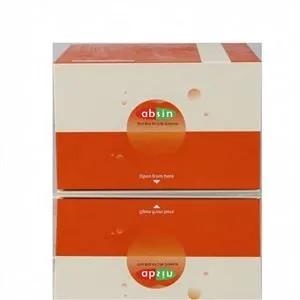
Sorbitol Dehydrogenase Microplate Assay Kit
Please note that the price mentioned is for your reference only. For a detailed price, please get in touch with our seller Vecent. It is important to clarify that the aforementioned price is not final and subject to variation. To obtain accurate pricing information, we recommend contacting our...
Description
| SKU-Pack Size | Availability | Price |
abs580100-96T | 4 weeks | $650.00 |
Please note that the price mentioned is for your reference only. For a detailed price, please get in touch with our seller Vecent. It is important to clarify that the aforementioned price is not final and subject to variation. To obtain accurate pricing information, we recommend contacting our sales representative Vecent for further assistance.
Overview | |
| Synonym | Sorbitol dehydrogenase, also known as SDH or SORD, is an enzyme classified under the EC 1.1.1.14 category. It is involved in the conversion of L-iditol to L-sorbose through its role as L-iditol 2-dehydrogenase. This enzyme is also referred to as glucitol dehydrogenase and polyol dehydrogenase due to its ability to catalyze the oxidation of various polyols. The primary function of sorbitol dehydrogenase is the conversion of sorbitol to fructose in metabolic pathways. |
| Applications | This study focuses on the detection and quantification of sorbitol dehydrogenase activity. Our aim is to develop a reliable method for measuring the activity of this important enzyme. By rearranging the content, we will provide a detailed explanation of our approach and its significance. The main objective of our research is to investigate the activity of sorbitol dehydrogenase. To accomplish this, we have developed a method that allows for the detection and quantification of this enzyme. This is crucial because sorbitol dehydrogenase plays a crucial role in various biological processes, such as glucose metabolism and the conversion of sorbitol to fructose. In order to measure the activity of sorbitol dehydrogenase, we employed a series of biochemical assays. These assays enable us to determine the rate at which sorbitol is converted to fructose by measuring the production of NADH, a coenzyme that is generated during the reaction. By quantifying the amount of NADH produced, we can accurately assess the activity of sorbitol dehydrogenase. We also optimized the experimental conditions to ensure reliable and reproducible results. This involved determining the optimal pH, temperature, and substrate concentration for the enzymatic reaction. These factors greatly influence the activity of sorbitol dehydrogenase, and by carefully controlling them, we can obtain accurate measurements of enzyme activity. The detection and quantification of sorbitol dehydrogenase activity have significant implications in various fields of research. For example, it can be used to assess the enzymatic activity in different tissues or cell types, providing valuable insights into metabolic pathways and potential abnormalities. Additionally, this method can be applied in clinical settings to monitor the progression of certain diseases, as aberrant sorbitol dehydrogenase activity has been associated with conditions such as diabetes and hepatic diseases. In conclusion, our study presents a reliable and efficient method for detecting and quantifying sorbitol dehydrogenase activity. By understanding the enzymatic activity of sorbitol dehydrogenase, we can gain valuable insights into various physiological and pathological processes. This research has the potential to contribute to the development of diagnostic and therapeutic approaches for conditions associated with dysregulated sorbitol metabolism. |
| Test Range | 4 umol/L - 400 umol/L |
Properties | |
| Storage Temp. | Shipped and store at 4°C for 6 months. |
Hot Tags: sorbitol dehydrogenase microplate assay kit, China sorbitol dehydrogenase microplate assay kit suppliers
Send Inquiry
You Might Also Like