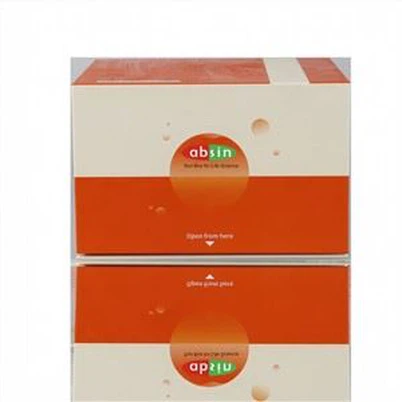
Polyphenol Oxidase Microplate Assay Kit
Please note that the price mentioned above is for your reference only. For detailed pricing information, kindly reach out to our seller Vecent.
Description
| SKU-Pack Size | Availability | Price |
abs580013-96T | 4 weeks | $440.00 |
Please note that the price mentioned above is for your reference only. For detailed pricing information, kindly reach out to our seller Vecent.
| Overview | |
| Synonym | Polyphenol oxidase, also referred to as PPO or monophenol monooxygenase, is an enzyme that plays a crucial role in various metabolic processes. This enzyme is responsible for catalyzing the oxidation of monophenols to o-diphenols, which further undergo enzymatic polymerization to produce melanins and related pigments. The gene encoding PPO has been identified and characterized in various plant species, with a specific isoform, Polyphenol oxidase I chloroplastic, identified in the chloroplasts of plants. Overall, this vital enzyme has significant implications in a range of physiological processes, and its study is vital for understanding many biological mechanisms. |
| Applications | Polyphenol oxidase activity can be detected and quantified through various methods. This involves measuring the enzymatic activity of polyphenol oxidase, an enzyme responsible for the oxidation of phenolic compounds. By rearranging the content, we can elaborate on the techniques used to detect and quantify this activity. The detection of polyphenol oxidase activity relies on assessing the enzymatic reaction between the enzyme and its substrate. One commonly used method is spectrophotometry, which measures the changes in absorbance caused by the oxidation of phenolic compounds. This technique allows for the quantification of enzyme activity by determining the rate of substrate oxidation. Another approach involves using a colorimetric assay, such as the catechol assay. In this assay, the enzyme converts catechol into a colored product, and the intensity of the color is directly proportional to the enzyme activity. By measuring the optical density of the colored product, the amount of polyphenol oxidase activity can be determined. Electrochemical methods, such as amperometry and cyclic voltammetry, can also be employed to detect and quantify polyphenol oxidase activity. These techniques involve measuring the current generated during the oxidation of phenolic compounds by the enzyme. The magnitude of the current can be used to determine the enzyme activity. Moreover, gel electrophoresis can provide information about the presence and activity of polyphenol oxidase. This technique separates proteins based on their molecular weight and electrical charge. By visualizing the enzyme bands on the gel, one can assess the activity and abundance of polyphenol oxidase. In conclusion, the detection and quantification of polyphenol oxidase activity can be carried out using various methods, including spectrophotometry, colorimetric assays, electrochemical methods, and gel electrophoresis. These techniques enable researchers to study the enzymatic activity of polyphenol oxidase in different samples and better understand its role in various biological processes. |
| Properties | |
| Storage Temp. | Shipped and store at 4°C for 6 months. |
Hot Tags: polyphenol oxidase microplate assay kit, China polyphenol oxidase microplate assay kit suppliers
Send Inquiry
You Might Also Like