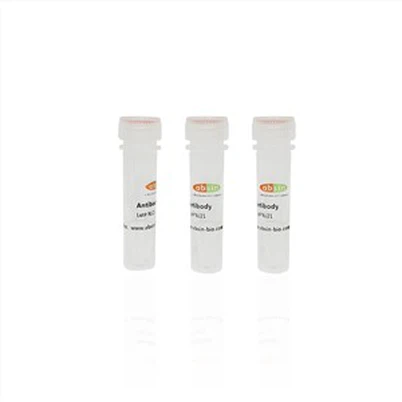
Rabbit Anti-ARF1 Polyclonal Antibody#abs137127
Please note that the price mentioned here is only for your reference. For detailed pricing information, please contact our seller named Vecent. It's important to get in touch with them to get a clear understanding of the exact cost. Western blot analysis ARF1 using HT29 whole cell lysates This...
Description
| Catalog-specification | Delivery time | USD price |
abs137127-100ug | 1-2 Weeks | 301.0 |
abs137127-50ug | 1-2 Weeks | 201.0 |
Please note that the price mentioned here is only for your reference. For detailed pricing information, please contact our seller named Vecent. It's important to get in touch with them to get a clear understanding of the exact cost.
| Overview | |
catalog | abs137127 |
| Other names | ARF1, also known as ADP Ribosylation Factor 1, is a protein that plays a crucial role in intracellular vesicular trafficking and membrane remodeling. ARF1 is a member of the ADP-ribosylation factor family and is involved in the regulation of various cellular processes. The protein ARF1 is encoded by the ARF1 gene in humans. It is known to be widely expressed in various tissues and cell types. ARF1 functions as a regulator of vesicular transport through its ability to cycle between an inactive GDP-bound form and an active GTP-bound form. ARF1 acts as a molecular switch, controlling membrane trafficking pathways by interacting with specific effector proteins. When in the GTP-bound form, ARF1 recruits various effectors to the Golgi complex, endosomes, and plasma membrane, where it coordinates membrane budding, vesicle formation, and fusion events. ARF1 is involved in the regulation of many cellular processes, including protein sorting, membrane trafficking, and organelle biogenesis. It plays a crucial role in the formation of transport vesicles from the Golgi complex and is essential for maintaining the integrity and functionality of the secretory pathway. In addition to its role in intracellular trafficking, ARF1 has also been implicated in the regulation of cytoskeletal dynamics, cell adhesion, and signal transduction. It interacts with several proteins involved in these processes, including cytoskeletal components, membrane fusion machinery, and signal transduction molecules. Overall, ARF1 is a versatile and important protein involved in a wide range of cellular processes. Its dynamic regulation and interaction with various effectors make it a key player in maintaining cellular homeostasis and proper vesicular transport. |
| Source | Rabbit |
| Specificity | The ARF1 Antibody is capable of detecting total ARF1 levels that naturally occur within the body. |
| Species Reactivity | Human;Mouse |
| Predictive reaction species | Xenopus;Zebrafish;Pig;Sheep;Rabbit;Bovine;Chicken |
| Antigen | ARF1 |
| Application | WB 1:1000-3000, ELISA(peptide) 1:20000-1:40000 |
| Immunogen | A synthesized peptide derived from human ARF1. |
| MW | 20 kDa |
| Properties | |
Concentration | 1mg/ml |
| purification | Using SulfoLink™ Coupling Resin, we were able to purify the antiserum through peptide affinity chromatography. The resulting product is highly targeted and effective in treating the specific antigen it was designed for. |
| Clonality | Polyclonal Antibody |
| Stability & Storage | To maintain the quality of the product, it is recommended to store it at a temperature of -20 °C for a duration of one year. It is important to avoid subjecting the product to repeated freeze/thaw cycles, as this may affect its properties. Store it consistently at the recommended temperature to ensure its stability and effectiveness over time. |
| Storage buffer | The provided content contains information about a storage solution for Rabbit IgG. Here is a rearranged version: Storage Solution for Rabbit IgG: To store Rabbit IgG effectively, it is recommended to use a phosphate-buffered saline solution with a pH value of 7.4. This solution should also contain 150mM NaCl, 0.02% sodium azide, and 50% glycerol. Maintaining a temperature of -20 °C is crucial for optimal storage. It is important to note that this storage solution remains stable for a period of 12 months starting from the date of receipt. |
Target | |
Background | GTP-binding protein that functions as an allosteric activator of the cholera toxin catalytic subunit, an ADP-ribosyltransferase. Involved in protein trafficking among different compartments. Modulates vesicle budding and uncoating within the Golgi complex. Deactivation induces the redistribution of the entire Golgi complex to the endoplasmic reticulum, suggesting a crucial role in protein trafficking. In its GTP-bound form, its triggers the association with coat proteins with the Golgi membrane. The hydrolysis of ARF1-bound GTP, which is mediated by ARFGAPs proteins, is required for dissociation of coat proteins from Golgi membranes and vesicles. The GTP-bound form interacts with PICK1 to limit PICK1-mediated inhibition of Arp2/3 complex activity; the function is linked to AMPA receptor (AMPAR) trafficking, regulation of synaptic plasicity of excitatory synapses and spine shrinkage during long-term depression (LTD). |
| Posttranslational modification | Demyristoylated by S.flexneri cysteine protease IpaJ which cleaves the peptide bond between N-myristoylated Gly-2 and Asn-3. |
| Celluar localization | Cytosol;Endosome;Extracellular region or secreted;Golgi apparatus;Peroxisome;Plasma Membrane; |
| UniPort | P84077 |

Western blot analysis ARF1 using HT29 whole cell lysates
This product is for research use only, not for use in diagnostic prodecures or in human.
Hot Tags: rabbit anti-arf1 polyclonal antibody#abs137127, China rabbit anti-arf1 polyclonal antibody#abs137127 suppliers
Send Inquiry
You Might Also Like