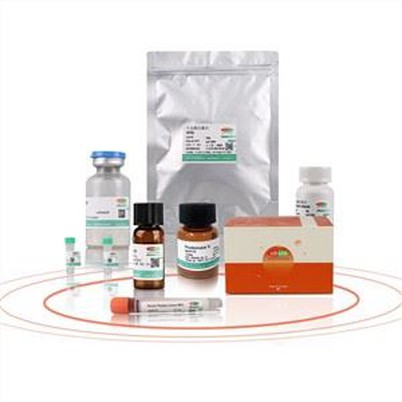
Poly-D-lysine(MW: 70000-150000)
Please note that the price mentioned above is provided for your reference only. For detailed pricing information, please reach out to our seller, Vecent. It is important to contact Vecent to get accurate and updated information regarding prices.
Description
| SKU-Pack Size | Availability | Price |
| abs9171-10mg | In stock | $180.00 |
| abs9171-100mg | In stock | $1000.00 |
Please note that the price mentioned above is provided for your reference only. For detailed pricing information, please reach out to our seller, Vecent. It is important to contact Vecent to get accurate and updated information regarding prices.
Description | |
| Description | Poly-Lysine is a versatile positively charged amino acid polymer that can bind to various molecules such as DNA, erythrocyte membrane, or any negatively charged protein. This non-specific cell adhesion factor is widely used in cell biology research to promote cell adhesion to a solid substrate. The underlying mechanism of this action is based on enhancing the electrostatic interaction between the cell membrane's negatively charged ions and the solid surface, such as a cell culture dish or glass slide. By adsorbing to the culture surface, polylysine can increase the number of cationic binding sites for cell attachment. The viscosity of polylysine depends on its molecular weight, with higher molecular weight leading to higher viscosity and more adhesion sites. Typically, polylysine with a molecular weight higher than 30,000 is recommended for promoting cell adhesion to a solid matrix. There are two common subtypes of polylysine, D- and L-. Both subtypes can be used as a coating for solid matrices to promote cell growth in cell culture, as they are non-specific adhesion factors for cell binding. Poly-D-Lysine (Poly-D-Lysine) is a great option for cell culture with a molecular weight of 30,000-70,000 and can be used with a concentration of 0.1mg/mL of polylysine solution, about 0.5mL-1.0mL using a 25cm2 culture plate as a substrate. Overall, polylysine is a reliable and versatile tool in cell biology research that can promote cell adhesion to a solid matrix and aid in various cell culture experiments. |
| Usage | 1. Storage liquid preparation To prepare 5mg/mL Poly-D-Lysine storage solution for cell culture, 10mg of powder was dissolved in 2mL of sterile deionized water. The resulting solution was then filtered and debacterialized with a 0.2μm low-protein adsorbed membrane. This solution can be stored in single-use, sterile tubes at either 4° C or -20° C for up to 1 year to prevent contamination caused by repeated use. It is important to follow this storage protocol to ensure the long-term viability of the solution for future cell culture experiments. 2. Coating substrate for cell culture To achieve successful cell-related coating experiments with polyD-lysine, it is crucial to optimize the coating conditions, considering the specific cell lines and applications involved. The process includes several general steps that need to be followed. Firstly, it is essential to determine the appropriate coating conditions for each cell line and application. This involves conducting preliminary experiments and adjusting parameters such as coating concentration, coating time, and temperature. Next, the polyD-lysine solution should be prepared according to the optimized conditions. This requires accurately measuring the desired concentration of polyD-lysine and preparing a suitable volume of solution. Once the polyD-lysine solution is ready, the cell culture surfaces, such as tissue culture plates or coverslips, should be treated. This involves carefully adding the polyD-lysine solution onto the surface and allowing sufficient time for the coating to occur. The duration of the coating process may vary depending on the cell line and application. After the coating process, it is recommended to rinse the surface with a suitable buffer or medium to remove any excess polyD-lysine solution. This step helps to ensure that the coating is uniform and prevents potential cytotoxicity or interference with cellular processes. Finally, the coated surfaces are ready for cell seeding. The appropriate cell density and culture medium should be used to maintain optimal cell growth and viability. Following these steps will enable researchers to perform experiments using polyD-lysine coating, tailored to specific cell lines and applications. In summary, the successful implementation of polyD-lysine coating experiments relies on careful optimization of coating conditions for different cell lines and applications. By following the general steps outlined above, researchers can ensure consistent and reliable results in their cell-related coating experiments. To prepare the coating solution for your experimental system, you can dilute the 5mg/mL Poly-D-Lysine storage solution with either sterile tissue culture grade water or PBS. The recommended concentration for coating petri dishes/plates is usually 0.1mg/mL, which is approximately 50 times diluted from the storage solution. It is important to adjust the coating concentration according to your specific experimental requirements. 2) Coated cell culture plates under aseptic conditions, using 0.5mL-1.0ml /25cm2.Gently shake the bottom of the board to cover the entire surface. 3) After 5min, the surface solution of the culture plate was removed with a gun, and the surface of the culture plate was cleaned with sterile tissue culture grade water or PBS;Note: In some cases, it takes 1~2 hours to complete the planking, sometimes overnight planking is needed.It depends. 4) Cell culture can be carried out after drying for at least 2h. Note: If the coated glassware or glass slides need to be sterile, γ-ray irradiation (rather than autoclastic sterilization) can be used to sterilize them. 3. Histological study (cover of glass slides) 0.1% (w/v) Poly-D-Lysine solution is generally recommended for the preparation of histological slides.After the slides were treated with the corresponding concentration of polylysine solution for 5min, the slides were washed and dried overnight at room temperature or in an oven at about 60° C for 1h.Note: This working solution is stored in a plastic bottle at 4° C, and is limited to 4 times of use. |
| Storage Temp. | Store at -20°C and keep dry for 3 years. |
| General Notes | 1) In some cell culture applications, some cells will digest and absorb polyL-lysine, and excessive ingestion of polyL-lysine will produce certain cytotoxicity.Therefore, in this case, it is recommended to choose Poly-D-Lysine, such as Poly-D-Lysine (MW70,000-150,000). 2) This product is provided in the form of hydrobromic acid (HBR) with approximately one HBR per lysine residue.The presence of HBR allows polylysine to dissolve in neutral buffers and remove salt ions by dialysis. 3) For your safety and health, please wear a lab coat and disposable gloves to operate. |
Properties | |
| Synonym | Poly-D-lysine (Mw 70,000-150,000) |
| Appearance | White solid |
| Solubility | Soluble in water |
Hot Tags: poly-d-lysine(mw: 70000-150000), China poly-d-lysine(mw: 70000-150000) suppliers
Send Inquiry
You Might Also Like