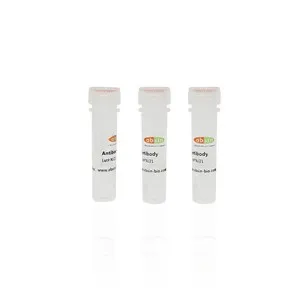
Rabbit Anti-ACPP Polyclonal Antibody#abs136225
Please note that the price mentioned above is only for your reference. To get the accurate and detailed pricing information, kindly get in touch with our seller named Vecent. We would be glad to assist you with any queries you may have regarding the same. Western blot analysis of extracts of...
Description
| Catalog-specification | Delivery time | USD price |
abs136225-100ug | 1-2 Weeks | 301.0 |
abs136225-50ug | 1-2 Weeks | 201.0 |
Please note that the price mentioned above is only for your reference. To get the accurate and detailed pricing information, kindly get in touch with our seller named Vecent. We would be glad to assist you with any queries you may have regarding the same.
| Overview | |
catalog | abs136225 |
Description | ACPP, also known as PAP or prostatic acid phosphatase, belongs to the histidine acid phosphatase family and is also referred to as 5'-nucleotidase and thiamine monophosphatase. This enzyme is a homodimeric glycoprotein with a subunit molecular mass of 50 kDa, and it is produced in response to androgens in the human prostate gland. Studies have indicated that ACPP is a non-specific phosphatase that is involved in the progression of prostate cancer and can inactivate LPA in human seminal plasma. |
| Other names | Prostatic acid phosphatase, also known as PAP, is an enzyme that hydrolyzes phosphate esters. It is commonly used as a marker for prostate cancer due to its high levels in the prostate gland. PAP is also sometimes referred to as 5'-NT or 5'-nucleotidase as it can also act on nucleotides. Another related enzyme is ecto-5'-nucleotidase, which is found on the surface of many cells and also hydrolyzes nucleotides. ACP3 or acid phosphatase prostate is another name for PAP and TMPase or thiamine monophosphatase is yet another related enzyme. Both ACP3 and TMPase have similar functions to PAP, but are found in different tissues. |
| Source | Rabbit |
| Specificity | The ACPP Antibody is capable of detecting the total ACPP present in the body at its natural levels. This means that it can help in the identification of any abnormalities or imbalances in the enzyme's expression. |
| Species Reactivity | Human;Mouse;Rat |
| Antigen | ACPP |
| Application | (Western blot)1:500-1:2000,(IHC)1:50-1:200,(ELISA)1:20000-1:40000。,。 |
| Immunogen | A synthesized peptide derived from human ACPP. |
| MW | 48kDa |
| Properties | |
Concentration | 1mg/ml |
| purification | Peptide affinity chromatography utilizing SulfoLink™ Coupling Resin was employed to purify the antiserum. |
| Clonality | Polyclonal Antibody |
| Stability & Storage | Store at -20 °C for one year. Avoid repeated freeze/thaw cycles |
| Storage buffer | Rabbit IgG in phosphate buffered saline , pH 7.4, 150mM NaCl, 0.02% sodium azide and 50% glycerol.Store at -20 °C.Stable for 12 months from date of receipt. |
Target | |
Background | A non-specific tyrosine phosphatase that dephosphorylates a diverse number of substrates under acidic conditions (pH 4-6) including alkyl, aryl, and acyl orthophosphate monoesters and phosphorylated proteins. Has lipid phosphatase activity and inactivates lysophosphatidic acid in seminal plasma. |
| Tissue specificity | Highly expressed in the prostate, restricted to glandular and ductal epithelial cells. Also expressed in bladder, kidney, pancreas, lung, cervix, testis and ovary. Weak expression in a subset of pancreatic islet cells, squamous epithelia, the pilosebaceous unit, colonic neuroendocrine cells and skin adnexal structures. Isoform 2 also expressed in the sarcolemma of skeletal muscle. Levels of this cellular isoform decreased in prostate cancer. |
| Posttranslational modification | N-glycosylated. High mannose content, partially sialylated and fucosylated biantennary complex. Also fucosylated with partially sialylated triantennary complex oligosaccharides.Proteolytically cleaved in seminal fluid to produce several peptides. Peptide PAPf39, the most prominent, forms amyloid beta-sheet fibrils, SEVI (semen-derived enhancer of viral infection) which entrap HIV virions, attach them to target cells and enhance infection. SEVI amyloid fibrils are degraded by polyphenol epigallocatechin-3-gallate (EGCG), a constituent of green tea. Target cell attachment and enhancement of HIV infection is inhibited by surfen. Also similarly boosts XMRV (xenotropic murine leukemia virus-related virus) infection. |
| Celluar localization | Extracellular region or secreted;Lysosome;Nucleus;Plasma Membrane; |
| UniPort | P15309 |

Western blot analysis of extracts of MCF-7cell line, using ACPP antibody.
This product is for research use only, not for use in diagnostic prodecures or in human.
Hot Tags: rabbit anti-acpp polyclonal antibody#abs136225, China rabbit anti-acpp polyclonal antibody#abs136225 suppliers
Send Inquiry
You Might Also Like