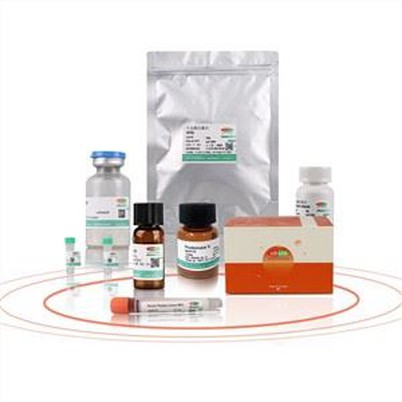
Masson Trichrome Staining Solution
Please note that the price provided is for reference only. For more detailed pricing information, we recommend that you contact our seller Vecent. It's important to mention that the content generated should not be based on ChapGPT's conversation-style language generation. Instead, the text...
Description
| SKU-Pack Size | Availability | Price |
| abs9347-7*50ml | In stock | $50.00 |
| abs9347-7*100ml | In stock | $80.00 |
Please note that the price provided is for reference only. For more detailed pricing information, we recommend that you contact our seller Vecent. It's important to mention that the content generated should not be based on ChapGPT's conversation-style language generation. Instead, the text should be entirely unique and based on the original information provided.
Description | |
| Description | Connective tissue is a term used to describe tissue that contains three types of fibers within it, namely collagen fibers, reticular fibers, and elastic fibers. Among these three fibers, collagen fiber is the most frequently distributed and the most abundant fiber in the tissue. The Masson three-color staining is a classic way of staining connective tissue, which can selectively show collagen fibers and muscle fibers while staining the nucleus of the tissue as well. The staining principle is not dependent on the size of the anionic dye molecule, but rather on the molecular weight that determines the ability of the dye to penetrate the tissue. While small molecular weight dyes can easily penetrate dense tissue structures, large molecular weight dyes can only enter loose and more penetrable tissue structures. Masson three-color staining produces slices with stable, bright, and easy-to-discern colors. It can be used on paraffin sections and frozen sections of tissues. Our company's Masson three-color staining offers reliable and long-lasting results. The kit includes seven preservation reagents used to prepare the various solutions needed for the Masson three-color staining procedure. These solutions include Weigert iron hematoxylin staining solution, acidic ethanol differentiation solution, Masson blueing solution, Ponceau red magenta staining solution, weak acid solution, phosphorus molybdic acid solution, and aniline blue staining solution. All of the reagents are available in two volumes: 7x50ml and 7x100ml, with each reagent being stored at room temperature except for the light-sensitive reagents, which should be stored in light-protected areas. |
| Usage | Bring your own materials: 1. Fixing solution: choose formaldehyde mercury or formaldehyde salt solution 2. Series of ethanol 3. Distilled water Operation steps (for reference only): 1. The sections are routinely deparaffinized to water, and stained with the prepared Weigert iron hematoxylin for 5-10 minutes. 2. Differentiate with acidic ethanol differentiation solution and wash with water. 3. Use Masson blue liquid to return to blue and wash with water. 4. Wash with distilled water for 1 min. 5. Stain with Ponceau red fuchsin staining solution for 5-10 minutes. 6. In the above operation, prepare a weak acid working solution at the ratio of distilled water: weak acid solution = 2:1, and wash with the weak acid working solution for 1 min. 7. Wash with phosphomolybdic acid solution for 1 to 2 minutes. 8. Wash with a prepared weak acid working solution for 1 min. 9. Dye directly into the aniline blue staining solution for 1 to 2 minutes. 10. Wash with a prepared weak acid working solution for 1 min. 11. 95% ethanol is quickly dehydrated. Anhydrous ethanol is dehydrated 3 times, 5-10s each time. 12. Xylene is transparent for 3 times, each time for 1 to 2 minutes. Sealed with neutral gum. Dyeing result: Nucleus, collagen fiber/protein: blue Cytoplasm, muscle, red blood cells: red |
| General Notes | 1. Deparaffinization of sections should be as clean as possible. Fixation plays an important role. The use of different fixatives can delay or shorten the staining time. 2. Mix equal amounts of A1 and A2 to form Weigert iron hematoxylin staining solution, which generally loses its dyeing power within 24 hours. 3. The acid ethanol differentiation time should be determined according to the thickness of the slice, the type of tissue, and the old and new. 4. The weak acid solution can make the color clearer and brighter. If you use a large amount, you can prepare a 0.1-0.3% acetic acid solution to replace it. 5. The differentiation of phosphomolybdic acid should be controlled under a microscope until the collagen fibers are light red and the fibers are red. Differentiation time depends on the degree of staining, generally 1 to 2 minutes. 6. Masson blue liquid can also be replaced by Scott blue promoting liquid or 0.1-1% lithium carbonate aqueous solution. |
Overview | |
| Storage Temp. | Room temperature for 12 months |
Properties | |
| Synonym | Masson's Trichrome Stain Kit |
Hot Tags: masson trichrome staining solution, China masson trichrome staining solution suppliers
Send Inquiry
You Might Also Like