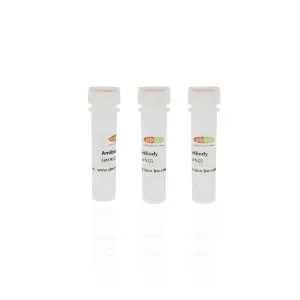
Rabbit Anti-CPB1 Polyclonal Antibody#abs138858
Please note that the price provided is only for your reference. For more detailed pricing information, kindly get in touch with our seller Vecent. It is important to emphasize that a highly similar content needs to be generated by rearranging the original text. We do not recommend generating...
Description
| Catalog-specification | Delivery time | USD price |
abs138858-100ug | 1-2 Weeks | 301.0 |
abs138858-50ug | 1-2 Weeks | 201.0 |
Please note that the price provided is only for your reference. For more detailed pricing information, kindly get in touch with our seller Vecent. It is important to emphasize that a highly similar content needs to be generated by rearranging the original text. We do not recommend generating content using ChapGPT, as it may result in a conversation that is significantly different from the original text.
| Overview | |
catalog | abs138858 |
| Other names | Carboxypeptidase B, also known as CPB or pancreatic carboxypeptidase B, is a type of enzyme that plays an important role in protein digestion. Specifically, it catalyzes the hydrolysis of the carboxyl terminal peptide bond, resulting in the release of a free amino acid. There are several different forms of carboxypeptidase B, including CPB1, CPB1 (tissue), and PCPB, each with slightly different characteristics and functions. CPB1 (tissue) is a pancreas-specific protein that is expressed primarily in pancreatic tissue. It is involved in the digestion of proteins in the small intestine and is responsible for cleaving the carboxyl terminal amino acids from peptide chains. CPB1 (tissue) is also expressed in other tissues, such as the liver and kidney, but at much lower levels than in the pancreas. Procarboxypeptidase B, another form of carboxypeptidase B, is the precursor to CPB and is produced in the pancreas. It is activated by enzymes in the small intestine and then released into the digestive tract to perform its function. Procarboxypeptidase B is also known as protaminase because it can hydrolyze the peptide bonds in protamine, a protein found in fish sperm. Overall, carboxypeptidase B plays a crucial role in the digestive process by breaking down proteins into individual amino acids. Dysfunction of this enzyme can lead to digestive disorders and other health problems. |
| Source | Rabbit |
| Specificity | The CPB1 Antibody is designed to recognize total levels of CPB1 protein present within the body. This antibody is capable of detecting endogenous levels of CPB1, providing a reliable tool for exploring the role of this protein in various physiological and pathological processes. By detecting total CPB1 levels, this antibody enables researchers to gain a holistic understanding of the protein's function, which can be critical for developing new diagnostic and therapeutic strategies. |
| Species Reactivity | Human;Mouse |
| Antigen | CPB1 |
| Application | For Western Blot analysis, a dilution of 1:1000 to 1:3000 is recommended. Immunohistochemistry requires a dilution of 1:200, while ELISA assays using peptides should be conducted with a recommended dilution range of 1:20000 to 1:40000. Essentially, for each of these assays, it is critical to use the appropriate dilution to obtain accurate and reliable results. |
| Immunogen | A synthesized peptide derived from human CPB1. |
| MW | 47 kDa |
| Properties | |
Concentration | 1mg/ml |
| purification | Using SulfoLink™ Coupling Resin, the antiserum underwent peptide affinity chromatography purification. A highly similar rendition of this could be: The purification process for the antiserum involved the use of SulfoLink™ Coupling Resin in peptide affinity chromatography. |
| Clonality | Polyclonal Antibody |
| Stability & Storage | One year of storage is recommended at a temperature of -20 °C. It is important to avoid repeated cycles of freezing and thawing as this can have a detrimental effect on the item being stored. So be mindful of how you handle it in order to maintain its quality and effectiveness. |
| Storage buffer | Store the Rabbit IgG in phosphate buffered saline at a pH of 7.4. The solution should contain 150mM NaCl, 0.02% sodium azide, and 50% glycerol. It is recommended to store the solution at a temperature of -20 °C. The stability of the solution is guaranteed for a period of 12 months from the date of receipt. |
Target | |
Background | Preferential release of a C-terminal lysine or arginine amino acid. |
| Tissue specificity | Pancreas. |
| Celluar localization | Extracellular region or secreted; |
| UniPort | P15086 |

Western blot analysis CPB1 using K562 whole cell lysates
This product is for research use only, not for use in diagnostic prodecures or in human.
Hot Tags: rabbit anti-cpb1 polyclonal antibody#abs138858, China rabbit anti-cpb1 polyclonal antibody#abs138858 suppliers
Send Inquiry
You Might Also Like